(Publish from Houston Texas USA)
(By Asim Siddiqui | Washington)
STEM Learning and Student Innovation in the United States
Across the United States, STEM education is reshaping how young people learn, think, and prepare for the challenges of tomorrow. From classrooms to community centers, high school students are increasingly drawn to science, technology, engineering, and mathematics—not merely as academic subjects, but as practical tools for solving real-world problems.
STEM—short for Science, Technology, Engineering, and Mathematics—brings these disciplines together through hands-on learning. Students design robots, write code, conduct experiments, and collaborate in teams, building not only technical knowledge but also creativity, critical thinking, and innovation—skills essential for today’s workforce.
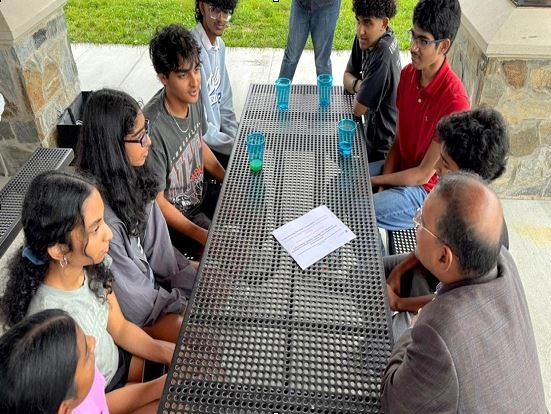
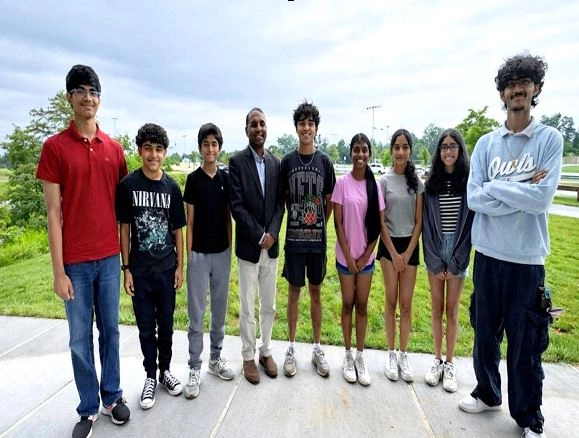
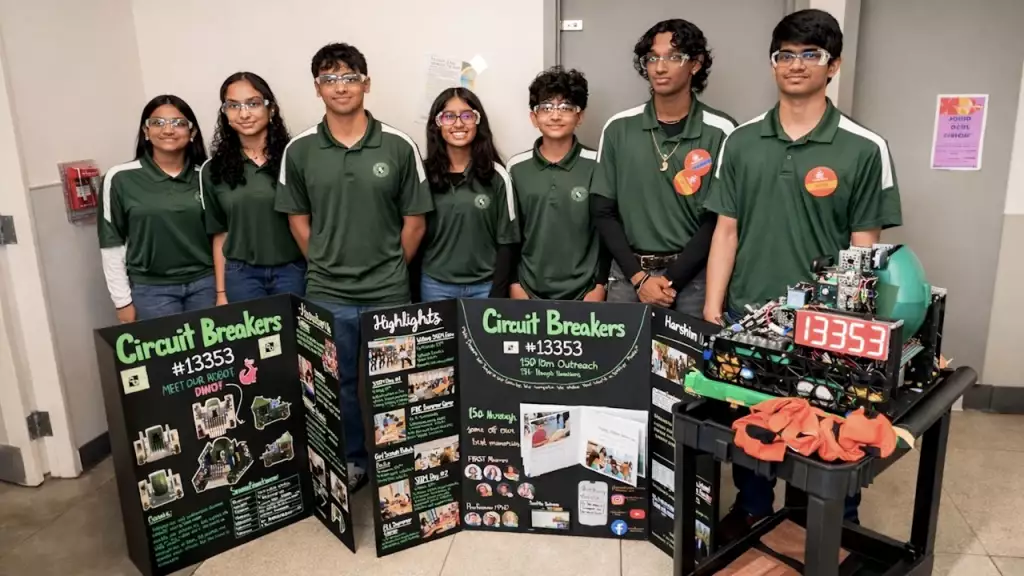
This shift is particularly visible in Virginia, where students are taking the initiative to expand STEM learning within their communities. One example is FTC Robotics Team 13353, the Circuit Breakers, based in Aldie. The team includes Nikhil Doma (Team Captain), Sharan Thangaraj (Co-captain), Manu Thangamani, Maanya Duppati, Sriram Balguri, Ananya Raj, Shray Panchamia, and Harshini Amarnath. Together, they compete in the international First Tech Challenge (FTC), where students design, build, and program robots while learning engineering principles, teamwork, and problem-solving.
For these students, however, competition is only part of their mission.
Community Outreach and Global Impact
The Circuit Breakers are actively working to expand access to STEM education. Over the past year, they have hosted community STEM days at libraries and schools, giving younger students hands-on experience with robotics and engineering challenges. They have organized summer robotics camps introducing elementary and middle school students to FTC and FIRST LEGO League (FLL), while also mentoring new and rookie teams.
Their outreach extends well beyond local efforts. The team has supported STEM initiatives in low-income government schools in India by introducing robotics and coding concepts, donating Raspberry Pi kits, and working with educators to help establish a new FTC team. In Ethiopia, they have partnered with international organizations to help launch FIRST LEGO League teams, offering resources, mentorship, and technical guidance.
At the county level, the students advocate for broader access to robotics programs and sustainable STEM funding, aiming to ensure that more students across Loudness County can participate in programs like FIRST.
Educators and industry leaders increasingly view student-led initiatives like these as a model for the future of STEM learning. These efforts not only develop technical skills but also nurture leadership, community engagement, and global awareness.
As the team prepares for its upcoming state competition, its work reflects a broader transformation taking place across the country: students are no longer just learners—they are innovators, mentors, and change-makers.
Whether in local libraries, international classrooms, or competitive arenas, their efforts demonstrate how STEM education can inspire the next generation to think differently, build confidently, and lead with purpose.
All eyes now turn to the competition ahead—and to the young minds determined to shape what comes next.
For more reading please visit our Articles.