Strait of Hormuz ships Iran is allowing through has increased significantly according to maritime tracking data — with vessel movement analytics showing a measurable uptick in commercial shipping transiting the waterway that had been effectively closed since the Iran war began on February 28 2026.
Strait of Hormuz ships Iran is permitting through appear to be selectively chosen — with maritime tracking data suggesting that Iran is allowing certain categories of vessels including food and medicine cargo ships to transit while continuing to threaten oil tankers and vessels associated with US and Israeli commercial interests. The selective Strait of Hormuz open pattern reflects a sophisticated Iranian strategy of partial economic relief that reduces global pressure for a ceasefire while maintaining enough disruption to sustain the economic cost it is imposing on the US-led coalition.
Iran opens Strait of Hormuz partially rather than completely — a distinction that maritime analysts and oil market traders are carefully parsing to determine whether the development represents a genuine strategic shift toward de-escalation or a tactical adjustment designed to manage global economic pressure without abandoning the Iran war Strait of Hormuz closure strategy that has been one of Tehran’s most effective economic weapons.
Background: Strait of Hormuz Ships Iran — Why the Waterway Matters
Strait of Hormuz — The World’s Most Critical Maritime Chokepoint
Strait of Hormuz ships Iran allowing through represents one of the most significant developments in the Iran war economic dimension — and understanding why requires understanding the extraordinary global significance of the waterway at the centre of the dispute.
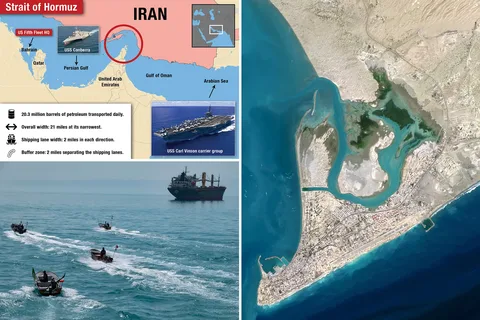
The Strait of Hormuz is the narrow maritime passage connecting the Persian Gulf to the Gulf of Oman and the broader Indian Ocean — with the strait measuring approximately 33 kilometres at its narrowest point and containing shipping lanes of just 3 kilometres width in each direction. Despite its geographic modesty the Strait of Hormuz ships Iran controls passage through represents the single most important maritime chokepoint on earth.
Strait of Hormuz ships Iran data shows the waterway normally handles approximately 19 to 21 million barrels of crude oil per day — representing approximately 20 to 21 percent of total global oil consumption and approximately 25 to 30 percent of global liquefied natural gas trade. The Strait of Hormuz open question therefore has direct consequences for global energy prices economic growth and inflation in virtually every country on earth.
Strait of Hormuz ships Iran controls access to include the exports of Saudi Arabia UAE Kuwait Iraq Bahrain Qatar and Iran itself — with every major Gulf oil and gas producer depending on Strait of Hormuz transit to reach global markets. The Iran war Strait of Hormuz closure has therefore imposed costs not only on US and Israeli interests but on the Gulf states that Iran is simultaneously attacking — creating a paradox in which Iran’s economic weapon harms its own neighbours and theoretical allies alongside its declared adversaries.
Iran War Strait of Hormuz — How the Closure Happened
Iran war Strait of Hormuz effective closure beginning on day one of the conflict was achieved not through a formal legal closure declaration — which would constitute an unambiguous act of war against every nation dependent on the waterway — but through the combination of Iranian drone boats sea mines ballistic missile threats and IRGC naval patrol activity that created de facto conditions making commercial shipping transit prohibitively dangerous and uninsurable.
Iran war Strait of Hormuz closure mechanism was sophisticated precisely because it avoided the formal declaration that would have triggered immediate and unambiguous international legal response. By creating conditions of extreme risk rather than physical blockade Iran maintained legal ambiguity while achieving the economic effect of closure — with commercial shipping companies and their insurers making the rational decision that Strait of Hormuz transit was too dangerous regardless of what Iranian authorities officially stated about access rights.
Strait of Hormuz ships Iran began withdrawing from transit within hours of the Iran war beginning — with the combination of Iranian drone boat attacks on 6 vessels sea mine deployment reports and explicit IRGC threats against commercial shipping creating the risk environment that drove major shipping companies including Maersk MSC and BP Shipping to reroute via the Cape of Good Hope.
What the Data Shows — Strait of Hormuz Ships Iran
Maritime Tracking Data — The Evidence of Partial Opening
Strait of Hormuz ships Iran allowing through data comes from multiple maritime tracking sources — including AIS automatic identification system vessel tracking platforms maintained by organisations including MarineTraffic Lloyd’s List Intelligence and TankerTrackers that provide near-real-time visibility into vessel movements across global shipping lanes.
Strait of Hormuz ships Iran transit data shows vessel movement in the waterway increasing from near zero in the first 2 weeks of the Iran war to a partial but measurable flow of ships transiting in both directions over the past 48 to 72 hours. The Strait of Hormuz open signal in maritime tracking data represents the first sustained increase in commercial vessel transit since the Iran war Strait of Hormuz closure began.
Strait of Hormuz ships Iran vessel category breakdown from maritime tracking data reveals the selective nature of the partial opening — with the vessels currently transiting falling primarily into 3 categories. Food and medicine cargo ships — particularly vessels documented as carrying humanitarian goods — appear to have received implicit IRGC permission to transit without interference. Vessels flying flags of nations not directly involved in the Iran war including China Russia Turkey and several Asian nations appear to be transiting with lower interference risk than vessels associated with US UK or Israeli commercial interests. LNG tankers from Qatar — whose gas exports are critical to European energy security and whose government hosts the primary back-channel between Washington and Tehran — appear to be among the vessels currently being allowed Strait of Hormuz ships Iran passage.
Iran Opens Strait of Hormuz — The Selective Pattern
Iran opens Strait of Hormuz partially in a pattern that maritime analysts describe as revealing Iran’s strategic calculation with considerable precision — allowing enough shipping through to reduce the most acute global economic pressure while maintaining enough threat to sustain the economic cost on US-aligned interests that has been the Iran war Strait of Hormuz strategy’s primary objective.
Iran opens Strait of Hormuz for Chinese vessels — reflecting the China Iran strategic relationship and China’s status as Iran’s most important oil customer whose continued economic goodwill Iran depends on. Iran opens Strait of Hormuz for humanitarian cargo — reflecting both genuine concern about international humanitarian law criticism and the diplomatic calculation that blocking medicine and food ships would generate condemnation far exceeding any additional strategic benefit.
Iran opens Strait of Hormuz for Qatari LNG — the most diplomatically significant aspect of the partial opening — reflecting Iran’s recognition of Qatar’s unique mediating role and its calculation that maintaining Qatar’s economic functionality preserves the back-channel that represents Iran’s best diplomatic tool for eventually securing a ceasefire on acceptable terms.
Strait of Hormuz Open — How Much and For Whom
Strait of Hormuz Open — Volume Assessment
Strait of Hormuz open volume as measured by maritime tracking data represents approximately 15 to 20 percent of pre-war transit levels — a partial opening that provides meaningful but far from complete relief to global shipping and energy markets.
Strait of Hormuz open oil flow based on visible vessel transit data suggests approximately 3 to 4 million barrels per day are now moving through the waterway — compared to the pre-war average of 19 to 21 million barrels per day and the near-zero transit of the Iran war’s first 2 weeks. The Strait of Hormuz open partial flow represents a reduction of approximately 80 percent from normal levels — significant economic disruption that nonetheless represents a meaningful improvement from complete closure.
Strait of Hormuz open LNG flow data shows Qatari LNG tankers resuming transit in the direction of Asian and European markets — a development with particular significance for European energy security given Europe’s heavy dependence on Qatari LNG following the reduction of Russian gas supplies.
Strait of Hormuz Open — Who Is Still Excluded
Strait of Hormuz open pattern in maritime tracking data is equally revealing for what it excludes as for what it includes — with specific vessel categories continuing to face IRGC interference threats that make their transit effectively impossible despite the partial opening.
Strait of Hormuz open exclusions identified in maritime tracking data include vessels registered in the United States United Kingdom or Israel whose flag states or beneficial ownership is associated with the US-Israel war coalition. Saudi Arabian crude oil tankers — reflecting the ongoing Iran-Saudi confrontation despite Saudi Arabia not being a direct party to the US-Israel war coalition. Vessels operated by shipping companies that have publicly committed to applying war risk insurance requirements that implicitly acknowledge IRGC military threat — with Iran interpreting such acknowledgment as commercial collaboration with the blockade narrative it has consistently rejected.
Iran War Strait of Hormuz — Strategic Context
Iran War Strait of Hormuz — Why Iran Is Allowing More Ships Through
Iran war Strait of Hormuz partial opening on day 18 to 19 of the conflict reflects several simultaneous strategic calculations that Iranian decision-makers appear to be making in response to the accumulated economic and diplomatic pressures of 18 days of conflict.
Iran war Strait of Hormuz partial opening first strategic driver is the management of China relations — with Beijing having communicated to Tehran through diplomatic channels that the complete Strait of Hormuz closure was imposing unacceptable energy security costs on China and that Iran’s most important economic partner expected meaningful access for Chinese-affiliated shipping. China’s role as Iran’s largest oil customer largest trading partner and most important diplomatic shield at the UN Security Council gives Beijing leverage with Tehran that few other actors possess — and the Iran war Strait of Hormuz partial opening for Chinese vessels reflects Tehran responding to that leverage.
Iran war Strait of Hormuz partial opening second strategic driver is the management of global economic pressure — with Iranian decision-makers apparently calculating that complete Strait of Hormuz closure was generating international economic pain severe enough to build a coalition for military or diplomatic intervention that could threaten Iran’s negotiating position. Goldman Sachs recessionary risk warnings European energy emergency declarations and Indian Chinese and Japanese diplomatic pressure have collectively created an economic diplomacy environment that Iran needed to partially relieve.
Iran war Strait of Hormuz partial opening third strategic driver is the Qatar mediation dimension — with Iran’s partial Strait of Hormuz open gesture for Qatari LNG representing a signal to Qatar that Tehran values the mediation back-channel enough to make a concrete concession that directly benefits Qatar’s economy and diplomatic standing.
Iran War Strait of Hormuz — Military Dimension
Iran war Strait of Hormuz partial opening does not represent disarmament or the removal of the threat infrastructure that made the closure effective — with IRGC naval forces maintaining their mine-laying drone boat and patrol boat capabilities throughout the partial opening.
Iran war Strait of Hormuz partial opening therefore represents a political decision to selectively allow certain vessels to transit rather than a military incapacity to prevent them — a distinction that Iranian authorities appear to be deliberately emphasising to maintain the threat credibility that gives the partial opening its diplomatic value.
Iran Opens Strait of Hormuz — What It Means
Iran Opens Strait of Hormuz — Diplomatic Signal
Iran opens Strait of Hormuz partially as what diplomatic analysts describe as a calibrated signal designed to communicate several messages simultaneously to different audiences without making an irrevocable commitment.
Iran opens Strait of Hormuz message to Washington — that Iran retains full control of the waterway and can open or close it on its own terms demonstrating that any eventual settlement must address Iranian sovereignty concerns rather than simply demanding Iranian capitulation.
Iran opens Strait of Hormuz message to Beijing and Moscow — that Iran is responding to the concerns of its most important supporters and is not indifferent to the economic costs its actions impose on friendly nations whose continued support Tehran requires to sustain the conflict.
Iran opens Strait of Hormuz message to Gulf states — that Iran can distinguish between adversaries and non-adversaries and that nations that maintain appropriate distance from the US-Israel war coalition can access the economic benefits of Strait of Hormuz transit.
Iran opens Strait of Hormuz message to the international community — that Iran is not engaged in blanket economic warfare against the world and that the Strait of Hormuz closure has been a targeted instrument of pressure rather than a maximalist strategy whose continuation Iran is committed to regardless of developments.
Iran Opens Strait of Hormuz — What It Does Not Mean
Iran opens Strait of Hormuz partially does not mean that the Iran war Strait of Hormuz crisis is over — with the selective nature of the opening leaving the majority of pre-war commercial shipping transit still unable to occur and the underlying security environment unchanged.
Iran opens Strait of Hormuz partially does not mean ceasefire negotiations have concluded or that Iran has accepted any of the US terms that the Trump administration has maintained as conditions for ending the conflict. Iran opens Strait of Hormuz as a unilateral tactical adjustment rather than a negotiated outcome — leaving Iran with the ability to reverse the partial opening if the diplomatic or military situation changes in ways that make continued partial opening strategically suboptimal.
Economic Impact of Partial Strait of Hormuz Opening
Oil Price Response
Strait of Hormuz ships Iran allowing through has produced an immediate and significant oil market response — with Brent crude oil price falling approximately $8 to $12 per barrel from its day 18 peak of above $110 as markets priced in the partial opening’s implications for global supply.
Strait of Hormuz open partial signal has not however returned Brent crude to pre-war levels — with oil trading approximately $95 to $100 per barrel reflecting the market’s assessment that the partial Strait of Hormuz open represents a de-escalation signal rather than a resolution of the underlying supply disruption that has kept oil elevated throughout the conflict.
Shipping insurance markets have responded to the Strait of Hormuz ships Iran partial opening data — with war risk insurance premiums for partial transit categories falling from their peak levels while remaining far above pre-war benchmarks for vessel categories excluded from the partial opening.
LNG Market Response
Strait of Hormuz open for Qatari LNG has produced a particularly significant response in European natural gas markets — with European gas futures falling sharply as traders priced in the possibility of resumed Qatari LNG deliveries to European terminals that have been critically short of supply since the Iran war Strait of Hormuz closure began.
European energy security ministers have monitored the Strait of Hormuz ships Iran partial opening data closely — with several European governments issuing statements welcoming the development while urging Iran to extend the partial Strait of Hormuz open to full commercial transit restoration as part of a broader diplomatic de-escalation.
Quotes on Strait of Hormuz Ships Iran
TankerTrackers analyst Samir Madani confirmed the Strait of Hormuz ships Iran partial opening data — stating that vessel tracking showed a clear and statistically significant increase in commercial shipping transiting the waterway over the past 72 hours and that the pattern of which vessels were being allowed through was highly revealing of Iran’s strategic intent.
Lloyd’s List Intelligence maritime analyst Michelle Wiese Bockmann described the Strait of Hormuz open partial development as the most significant positive economic signal since the Iran war began — adding that the selective nature of the opening suggested Iran was managing global economic pressure rather than making a strategic commitment to full waterway restoration.
Iranian Foreign Minister Abbas Araghchi stated that Iran had never formally closed the Strait of Hormuz — adding that Iran respected freedom of navigation for vessels of nations respecting international law and Iranian sovereignty and that the movement of humanitarian and neutral nation shipping through the waterway was entirely consistent with Iran’s stated position throughout the conflict.
US National Security Advisor Mike Waltz stated that any Strait of Hormuz ships Iran partial opening was insufficient and that the US would accept nothing less than full commercial shipping restoration — adding that the partial opening did not represent a genuine de-escalation gesture and that US military pressure on Iran would continue until Iran’s military capacity to threaten global shipping was permanently eliminated.
Qatar’s Energy Minister Saad al-Kaabi expressed cautious welcome for the Strait of Hormuz open partial development — confirming that Qatari LNG tankers were beginning to resume transit and stating that Qatar hoped the partial opening would expand into full commercial shipping restoration as part of a broader diplomatic settlement of the Iran war.
Goldman Sachs commodity analyst Jeff Currie revised his oil price forecast following the Strait of Hormuz ships Iran partial opening — stating that if the partial opening expanded to 50 percent of pre-war transit levels Brent crude could fall to $85 to $90 per barrel but that full price normalisation required complete Strait of Hormuz open restoration that the current selective approach did not yet represent.
Impact: What Strait of Hormuz Ships Iran Partial Opening Means
For the Iran War
Strait of Hormuz ships Iran partial opening is the most significant potential de-escalation signal since the conflict began — representing the first concrete Iranian action that reduces rather than intensifies the economic costs of the war and that provides a potential foundation for the diplomatic engagement that the Qatar back-channel has been attempting to structure.
Iran war Strait of Hormuz partial opening creates a new and potentially important dynamic — with Iran demonstrating that it can use Strait of Hormuz access as a positive diplomatic tool rather than purely a negative economic weapon. This demonstration of calibrated control gives Iran something to offer in negotiations that it could not offer while the waterway was completely closed and maintained full economic disruption regardless of diplomatic developments.
For Global Energy Markets
Strait of Hormuz open partial development has provided meaningful but incomplete relief to global energy markets — with oil falling from its $110 peak while remaining significantly above pre-war levels and insurance markets partially normalising for permitted vessel categories while remaining extreme for excluded categories.
The full economic normalisation that global markets require depends on complete Strait of Hormuz ships Iran restoration — a development that cannot occur until the underlying Iran war conflict is resolved through either military outcome or diplomatic agreement. The partial opening buys time and reduces immediate recessionary pressure but does not resolve the structural energy market disruption that the Iran war Strait of Hormuz closure has created.
For Diplomatic Prospects
Iran opens Strait of Hormuz partially as its most significant diplomatic concession since the conflict began — providing the Qatar mediation channel with a concrete Iranian de-escalation gesture that could form the foundation of a broader diplomatic framework if Washington chooses to respond with reciprocal flexibility.
The Iran opens Strait of Hormuz development therefore creates both an opportunity and a test — an opportunity for the Qatar back-channel to translate a unilateral Iranian concession into a structured diplomatic process, and a test of whether the Trump administration has the political will to respond to Iranian partial de-escalation with the reciprocal flexibility that negotiations require.
Frequently Asked Questions
How Is Iran Blocking the Strait of Hormuz?
Iran has blocked Strait of Hormuz ships through a combination of 4 simultaneous threat mechanisms that together created de facto closure conditions without requiring a formal blockade declaration. Iranian drone boats — unmanned surface vessels packed with explosives and guided remotely by IRGC Naval Forces — have attacked commercial vessels in the waterway making transit extremely dangerous. Sea mines deployed by the IRGC in Strait of Hormuz shipping lanes have created persistent subsurface threats that persist regardless of surface patrol activity. Ballistic missile and drone threats against commercial vessels and the Gulf ports they serve have made war risk insurance for Strait of Hormuz transit prohibitively expensive. IRGC naval patrol boats have conducted harassment operations including the seizure and boarding of commercial vessels that have deterred transit even for vessels willing to accept elevated risk premiums. The combination of these threat mechanisms achieved effective Strait of Hormuz closure without Iran having to physically block the waterway — maintaining legal ambiguity while achieving the economic effect of blockade.
Does Iran Control the Straits of Hormuz?
Iran shares sovereignty over the Strait of Hormuz with Oman — with the narrowest point of the waterway falling partially within Iranian territorial waters and partially within Omani territorial waters. Under international law the UN Convention on the Law of the Sea guarantees the right of transit passage through international straits used for international navigation — a right that applies to all nations including those in conflict with Iran and that Iran cannot legally revoke. However Iran’s practical military capacity to threaten and deter commercial shipping transit — through drone boats sea mines ballistic missiles and IRGC naval patrols — gives it de facto control over Strait of Hormuz ships Iran access that its legal obligations under UNCLOS do not confer. The distinction between legal rights and practical control is the central tension of the Strait of Hormuz ships Iran crisis — with Iran exercising practical control through military means while maintaining the legal fiction that it has not formally closed the waterway.
How Is the Strait of Hormuz Closed?
The Strait of Hormuz has not been formally or physically closed — it has been effectively closed through the threat environment that Iran has created using drone boats sea mines ballistic missile threats and IRGC naval harassment. Strait of Hormuz ships Iran avoidance has been driven by commercial and insurance decisions rather than physical blockade — with shipping companies determining that the risk of transiting the waterway exceeds acceptable commercial thresholds and war risk insurers either refusing to cover Strait of Hormuz transit or charging premiums so extreme that they make commercial shipping economically unviable. The Strait of Hormuz open question therefore involves not just the removal of physical threats but the restoration of the insurance and commercial confidence that allows shipping companies to make economically rational transit decisions. Even if all Iranian military threat systems were removed tomorrow full commercial Strait of Hormuz open restoration would take additional time as insurance markets reassessed risk and shipping companies resumed their pre-war routing patterns — a restoration timeline that mine-clearing operations and confidence-building measures would further extend.
Conclusion
Strait of Hormuz ships Iran allowing through in greater numbers is the most significant positive development of the Iran war since hostilities began — a partial but real signal that Iran retains the ability and apparently the willingness to use Strait of Hormuz access as a diplomatic instrument rather than purely a military weapon.
Iran opens Strait of Hormuz selectively and strategically — for Chinese vessels for humanitarian cargo for Qatari LNG and for nations maintaining neutrality in the conflict. This selectivity is not a weakness of the signal but its most important feature — demonstrating Iranian control sophistication and diplomatic awareness that makes the partial opening a more credible foundation for diplomatic engagement than a blanket reopening would be.
Iran war Strait of Hormuz partial opening does not end the conflict does not resolve the underlying strategic disputes and does not restore the global energy supply normalcy that markets require. But it creates something that 18 days of escalating military confrontation had not produced — a foundation on which the Qatar back-channel can build the diplomatic framework that the world desperately needs.