
Survive Being Shot Down — Lessons From Those Who Know
The ability to survive being shot down over hostile territory is one of the most demanding and least understood skills in military aviation. When an aircraft goes down in enemy territory the pilot’s chances of survival depend not on luck but on training preparation and the application of hard-won knowledge that ex-airmen who have actually faced this situation describe with remarkable clarity and specificity. Survive being shot down is not a passive hope but an active set of skills and decisions that begin the moment the aircraft is hit and continue until rescue or capture brings the ordeal to an end. The shooting survivor stories of pilots and aircrew who have lived through being shot down offer the most powerful and practical guide available to what actually works when everything goes wrong at thirty thousand feet.
Background: Why Knowing How to Survive Being Shot Down Matters More Than Ever
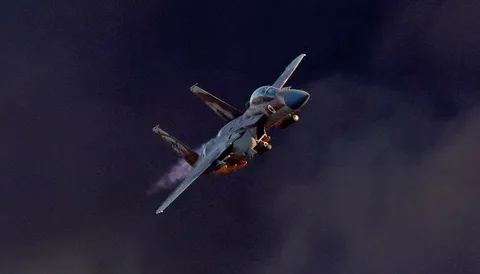
The ability to survive being shot down has taken on new urgency in the context of modern conflicts where American and allied aircrew are operating over heavily defended hostile territory for the first time in decades. The recent US fighter jet crash Iran incident has brought the reality of being shot down back into public consciousness and highlighted that the survival skills needed to survive being shot down remain as critically important as they were during the Vietnam era when many of the foundational shooting survivor stories that still inform military survival training were first recorded.
Ex-airmen who served during conflicts in Vietnam Korea the Gulf War and more recent operations have accumulated a body of shooting survivor stories that military training programmes have drawn on for decades. The principles they describe for how to survive being shot down have remained remarkably consistent across generations and conflict zones because the fundamental challenges of evasion finding water avoiding capture and maintaining mental resilience are universal regardless of the specific operational environment.
Details: What Ex-Airmen Say About How to Survive Being Shot Down
The first and most critical instruction that ex-airmen give about how to survive being shot down is deceptively simple. Hide immediately and hide well. The moments immediately after ejection or crash landing are when the pilot is most visible most vulnerable and most likely to be located by hostile forces. Every shooting survivor story from pilots who successfully evaded capture emphasises the critical importance of moving quickly away from the aircraft wreckage which serves as an immediate locator beacon for enemy forces and finding concealment before any search can be organised.
The aircraft wreckage will be seen and will be searched. Every shooting survivor story makes this point with absolute consistency. Survive being shot down means understanding that your first priority is not to signal for rescue but to distance yourself from the crash site and find cover that will protect you from visual detection by ground forces conducting a sweep of the area.
Finding Water to Survive Being Shot Down
After immediate concealment the most urgent physical requirement to survive being shot down is finding water. Ex-airmen with shooting survivor stories from hot climate operations describe dehydration as one of the most rapidly incapacitating threats facing a downed pilot particularly in desert or tropical environments where temperatures can be extreme and physical exertion during evasion depletes fluid reserves quickly.
The ability to survive being shot down over extended periods depends almost entirely on water access. Ex-airmen describe following natural terrain features to find water sources using vegetation patterns to identify areas of higher moisture and collecting morning dew as an emergency hydration source when no standing water is available. Every shooting survivor story from pilots who evaded successfully for more than forty-eight hours includes a water finding strategy that was implemented within the first day of evasion.
Survive being shot down in cold climate environments presents different challenges but water remains equally critical. Snow and ice must be melted before consumption and ex-airmen with shooting survivor stories from cold weather operations describe fire craft and improvised heating methods as essential survival skills that must be mastered during training before they are ever needed in the field.
Movement and Evasion to Survive Being Shot Down
The decision of when and how to move is one of the most tactically complex aspects of learning to survive being shot down. Ex-airmen with shooting survivor stories across multiple conflict environments describe movement as a calculated risk that must be balanced against the danger of remaining stationary in a location that may already be compromised.
Survive being shot down through successful evasion requires moving at night whenever possible using terrain features for cover avoiding roads tracks and settlements and maintaining constant awareness of the human activity patterns of the local environment. Shooting survivor stories from the Vietnam era describe pilots who were captured because they moved during daylight hours or chose evasion routes that took them through populated areas where local civilians could report their presence to military forces.
School shooting safety measures share some conceptual overlap with survive being shot down training in that both emphasise the importance of having a prepared mental framework for crisis response rather than improvising under extreme stress. School shooting safety measures teach individuals to have a plan to move decisively and to prioritise concealment over confrontation in ways that parallel the fundamental evasion principles that ex-airmen describe for surviving being shot down.
Signalling for Rescue While Surviving Being Shot Down
Knowing when and how to signal for rescue is among the most nuanced aspects of the survive being shot down skill set. Ex-airmen with shooting survivor stories describe signalling as a calculated act that must be timed and executed with precision because the same signal that attracts friendly rescue forces can also attract hostile search parties.
Survive being shot down successfully means understanding that survival radios emergency beacons and visual signals must be used selectively and strategically rather than continuously. Shooting survivor stories from pilots who were successfully extracted describe careful coordination with rescue forces that allowed signalling to occur only when friendly aircraft were confirmed in the area and hostile forces were at a safe distance.
Expert Quotes on Survive Being Shot Down
Ex-airmen sharing shooting survivor stories in military training contexts consistently emphasise that the mental dimension of surviving being shot down is as important as any physical skill. Pilots who have survived describe maintaining a problem-solving mindset as the factor that most clearly distinguished successful survivors from those who were captured or did not make it.
Combat survival instructors drawing on decades of shooting survivor stories note that the pilots who survive being shot down are almost never those with the best physical conditioning but those with the clearest mental framework for making decisions under extreme stress. School shooting safety measures training experts draw a parallel observation noting that prepared individuals with a clear mental framework consistently outperform physically stronger individuals who have not rehearsed their crisis response.
Impact of Survive Being Shot Down Training on Military Readiness
The systematic documentation of shooting survivor stories and their incorporation into military survival training has had a measurable impact on the rate at which downed aircrew successfully evade capture in hostile environments. Ex-airmen who survived being shot down and subsequently contributed their experiences to training programmes have directly saved lives in subsequent conflicts by ensuring that the next generation of pilots carries the practical knowledge of what actually works rather than theoretical principles untested in combat conditions.
School shooting safety measures programmes have similarly benefited from the systematic study of survivor experiences with school shooting safety measures training now incorporating the lessons of shooting survivor stories from real incidents in ways that have demonstrably improved outcomes for students and staff in active threat situations.
Conclusion: Survive Being Shot Down Demands Preparation and Mental Strength
The shooting survivor stories of ex-airmen who have lived through being shot down over hostile territory converge on a consistent set of principles that transcend the specific circumstances of any individual incident. Hide immediately find water move at night signal carefully and above all maintain the mental discipline to keep making good decisions under conditions of extreme fear isolation and physical hardship.
Survive being shot down is ultimately a test of preparation more than of luck. The pilots who make it back are those who trained seriously took their survival instruction to heart and were able to apply that training in the most extreme conditions imaginable. Their shooting survivor stories are a gift to every aviator who follows them into the sky over contested territory.
FAQs
How to Use Secondary Keywords?
Secondary keywords support the primary keyword survive being shot down by targeting related search queries that bring additional relevant traffic to the content. In this article secondary keywords like shooting survivor stories and school shooting safety measures are woven naturally throughout the content multiple times in contextually relevant ways rather than being forced into unrelated sentences. Effective secondary keyword usage means the keywords appear in subheadings body paragraphs and the conclusion in ways that feel organic to the reader while signalling relevance to search engines. Secondary keywords should complement rather than compete with the primary keyword survive being shot down ensuring that the overall content remains focused and coherent.
What is a List of Keywords?
A keyword list is a curated collection of search terms that a piece of content targets to attract relevant organic search traffic. For an article about survive being shot down a keyword list would include the primary keyword survive being shot down along with secondary keywords such as shooting survivor stories school shooting safety measures and related terms that share search intent with the primary target. A well-constructed keyword list for survive being shot down content balances high-volume terms with more specific long-tail phrases that face less competition and attract highly targeted readers. The keywords in this article including survive being shot down shooting survivor stories and school shooting safety measures represent a focused keyword list designed to capture multiple relevant search queries within a single coherent piece of content.
What is the 3 3 3 Rule in Marketing?
The 3 3 3 rule in marketing is a content and communication framework that organises messaging around three core principles each applied in groups of three to create memorable and effective marketing content. In the context of content built around keywords like survive being shot down the 3 3 3 rule suggests structuring key messages around three main points supporting each with three specific details and delivering the content within three primary formats or channels. Applied to keyword strategy for survive being shot down content the 3 3 3 rule would mean identifying three primary audience segments three core messages about survive being shot down that resonate with each segment and three distribution channels through which shooting survivor stories and school shooting safety measures content reaches the target audience most effectively.