
President Donald Trump announced Tuesday that he is pausing “Project Freedom,” the US military’s effort to guide commercial ships out of the Strait of Hormuz, just one day after the operation began. The surprise move signals either a genuine diplomatic breakthrough or another chapter in Trump’s unpredictable approach to foreign policy. The world is watching closely.
Background
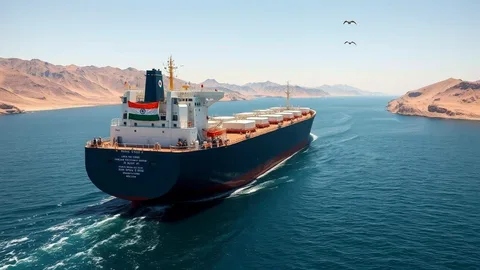
The Strait of Hormuz has been at the center of one of the most dangerous geopolitical standoffs of 2026. The maritime chokepoint, through which roughly one-fifth of the world’s energy supplies normally pass, has been effectively sealed by Iran since the US and Israel launched their war on the country on February 28.
Following a ceasefire in April, the US imposed its own blockade on Iranian ports in a bid to compel Tehran to agree to Washington’s terms in peace talks mediated by Pakistan, including reopening the key waterway and halting all nuclear enrichment. The closure sparked fears of a global recession and a worldwide food emergency.
Details: What Is Project Freedom?
Trump’s “Project Freedom” aimed to use the US military to break Tehran‘s chokehold on the critical waterway, which has throttled international shipping and sent energy prices soaring. The operation was announced Sunday evening and launched Monday, creating immediate tension.
The Trump administration said that nearly 23,000 sailors on vessels representing 87 countries have been stranded in the Persian Gulf because of Iran’s de facto closure of the Strait of Hormuz. The human cost was growing by the day, with lives at direct risk.
However, just hours after launch, the situation escalated sharply. Iran attacked US ships, hit a neighboring Gulf state for the first time in weeks, and came under American fire itself. The operation was clearly stirring the conflict rather than calming it.
Trump Announces the Pause
Then came the dramatic reversal. Trump wrote on Truth Social: “Based on the request of Pakistan and other Countries, the tremendous Military Success that we have had during the Campaign against the Country of Iran and, additionally, the fact that Great Progress has been made toward a Complete and Final Agreement with Representatives of Iran, we have mutually agreed that, while the Blockade will remain in full force and effect, Project Freedom will be paused for a short period of time to see whether or not the Agreement can be finalized and signed.”
Stock futures rose following Trump’s announcement, which raised hopes for a peace agreement that would end the US-Israeli war in Iran and reopen the economically vital strait. Markets welcomed what many saw as a step back from the brink.
It also represented a surprising about-face from the Trump administration, which just hours earlier had framed Project Freedom as a matter of life or death for thousands of civilian sailors. The speed of the reversal left many analysts puzzled.
Quotes: What Officials Are Saying
Secretary of State Marco Rubio had been forceful just hours before the pause announcement. Rubio said the goal of Project Freedom was to “rescue” sailors who have been “left for dead” by the Iranian regime, adding that “nations from around the world are now at risk, not just of losing their cargo, but the lives of their own citizens.”
Rubio also called Iran’s attacks on ships and mining of the strait “criminal,” “completely illegal, completely illegitimate and completely unacceptable.”
Meanwhile, Defense Secretary Pete Hegseth took a calmer tone. Hegseth said that the renewed violence in the Strait of Hormuz does not constitute a breach of the four-week-old truce, and that “American forces won’t need to enter Iranian waters.”
Iran’s side was far less conciliatory. Iran’s parliamentary speaker and lead negotiator Mohammad Bagher Ghalibaf stated that while the situation in the strait was clearly “unbearable” for America, Iran has “not even begun yet.” Iran’s Foreign Minister Abbas Araghchi flatly declared, “Project Freedom is Project Deadlock.”
Trump himself, when pressed on Iran’s behavior, was blunt. He said what he doesn’t like about Iran is that they talk to him “with such great respect” and then deny those conversations ever happened on television. He added that Iran “wants to make a deal,” and warned that if Iranian forces attacked American ships, they would be “blown off the face of the Earth.”
Pakistan’s Prime Minister offered a more measured call. PM Shehbaz Sharif stated it is “absolutely essential that the ceasefire be upheld and respected, to allow necessary diplomatic space for dialogue leading to enduring peace and stability in the region.”
Iran’s Position: No Submission
Iranian President Masoud Pezeshkian said the US is pursuing “a policy of maximum pressure” and “expects Iran to submit to their unilateral demands,” which is “impossible” for Tehran. Iran continues to insist it will not bend to what it views as coercion.
Iranian state media, however, saw the pause differently. State-run Tasnim described the pause as “Trump Backs Down,” while the INSA statement said Trump called off the operation “following firm positions and warnings from Iran.” Both sides are claiming victory a classic sign of fragile diplomacy.
Global Impact
The economic toll of this standoff is severe and growing. The closure of the strait has disrupted global trade, causing oil and fertilizer prices to soar and prompting fears of a global recession and a food emergency.
Oil prices retreated following the pause announcement but remained well above $100 a barrel, while average gas prices in the US climbed slightly to $4.48 a gallon. The relief was real but fragile.
Demand for oil is also falling at the fastest rate seen outside the Covid pandemic, as businesses and consumers cut consumption, and global oil stockpiles have seen their sharpest decline since the Covid-19 pandemic.
The UAE said it was attacked with ballistic missiles, cruise missiles and drones coming from Iran, resulting in three injuries, further proving how dangerously close the region came to full-scale re-escalation in just 24 hours.
Opinion: A Pause Is Not a Peace
Here is what the pause truly tells us: Trump is a president who launches operations with maximum noise and walks them back when the price becomes too high. Project Freedom was announced with the language of liberation and rescue. It lasted less than 48 hours before being suspended.
The core problem remains unsolved. The Strait of Hormuz is still blocked. Iran is still defiant. The ceasefire is still fragile. Trump has made so many later-debunked claims about the Iran war, its purportedly imminent end, and a supposedly overwhelming US victory that it is impossible to evaluate the credibility of his latest announcement.
What we can say is this: Pakistan’s mediation is the only thread keeping diplomacy alive. If that thread breaks, the world faces something far worse than $100 oil.
Conclusion: What Comes Next?
The US pause of “Project Freedom” may hint at the US and Iran trying to recapture some diplomatic initiative after talks between the two sides stalled last month. Pausing US “kinetic activity” around the Strait of Hormuz could help bring moderate voices in the Iranian regime back to the negotiating table.
A final deal, if it comes, would need to address Iran’s nuclear program, the reopening of Hormuz, the fate of thousands of stranded sailors, and the lifting of blockades on both sides. None of that is simple. None of that is fast.
The world is in a holding pattern waiting to see whether this pause becomes a breakthrough, or just another false dawn in a conflict with no easy exit.
FAQs
Has Iran ever closed the Strait of Hormuz?
Iran has never fully closed the Strait of Hormuz historically, but it has repeatedly threatened to do so. In the current 2026 conflict, Iran has implemented a de facto closure following the US-Israeli military campaign launched in February, marking the first time the waterway has been effectively blocked in modern history, with devastating consequences for global shipping and energy markets.
What if Iran stops the Strait of Hormuz?
The Strait of Hormuz is the world’s most critical oil chokepoint, carrying approximately one-fifth of global energy supplies. A full closure would trigger an immediate spike in oil prices well above $100 per barrel, disrupt food and fertilizer supply chains, and risk pushing the global economy into recession. It would also strand thousands of vessels and sailors, as is already happening in the current crisis.
How many ships are stuck in the Strait of Hormuz?
According to the Trump administration, nearly 23,000 sailors on vessels representing 87 countries have been stranded in the Persian Gulf due to Iran’s de facto closure of the Strait of Hormuz. The number of individual vessels runs into the hundreds, with cargo ranging from crude oil to grain and consumer goods.