
The Russia-Ukraine conflict has entered a critical phase in 2026, with neither side achieving a decisive breakthrough. Ukraine is slowing Russian advances, striking deep into Russian territory with homegrown drones, and redefining modern warfare. Meanwhile, Russia continues to pay an enormous human and economic price for minimal territorial gains.
Background
Russia launched its full-scale invasion of Ukraine in February 2022. What many expected to be a swift military campaign has stretched into one of the longest and most costly wars in modern European history. The conflict has reshaped global security thinking, revived NATO’s purpose, and turned Ukraine into the world’s most active laboratory for military innovation.
Four years into the war, the Russia-Ukraine conflict summary is complex. Russia controls parts of eastern and southern Ukraine but has failed to collapse Kyiv’s defenses. Ukraine, despite enormous losses, continues to fight and increasingly, to innovate.
Who Is Winning the War in Ukraine in 2025–2026?
This is arguably the most debated question in global security circles. The honest answer: neither side is decisively winning, but the momentum has shifted in important ways.
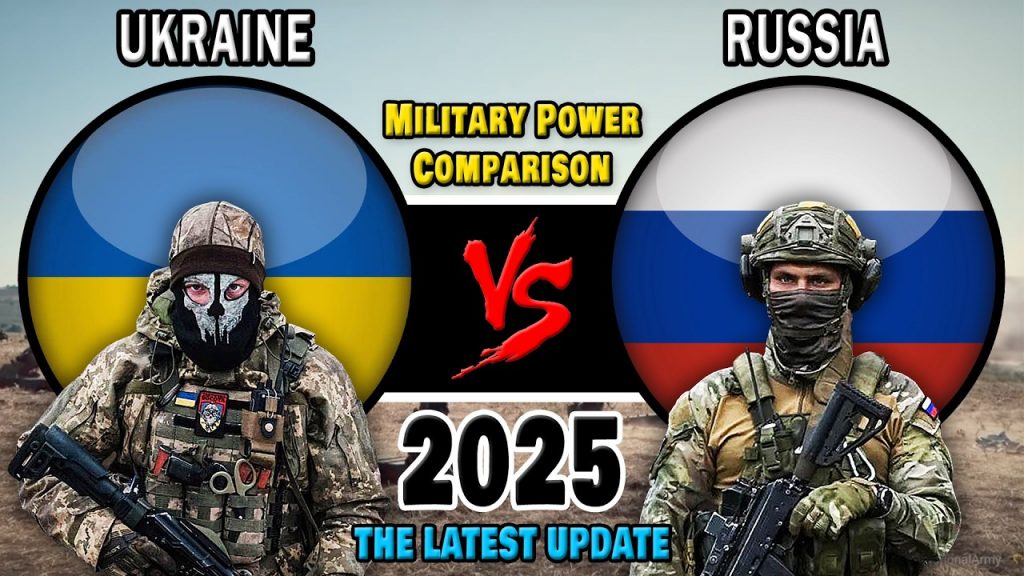
Russia has suffered nearly 1.2 million casualties since February 2022 more losses than any major power in any war since World War II. Despite claims of battlefield momentum, Russian forces have advanced at an average of just 15 to 70 meters per day in their most prominent offensives, a pace slower than almost any major offensive campaign in the last century.
Ukrainian President Volodymyr Zelenskyy stated that the front-line situation was the best it had been in ten months, noting that a Russian offensive planned for March 2026 was thwarted by Ukrainian armed forces. That is a significant claim and battlefield data largely supports it.
Russian forces advanced at a rate of 14.9 square kilometers per day from October 2024 to March 2025, but that figure dropped sharply to 5.5 square kilometers per day in the first three months of 2026. Ukraine has effectively halved Russia’s rate of advance.
So is Ukraine losing or winning the war? Ukraine is not winning in the sense of reclaiming all its territory. But it is not losing either. It is grinding Russia down strategically, economically, and militarily.
Russia’s Mounting Losses and Economic Strain
Russia’s military campaign is costing far more than Moscow anticipated. Russia’s war economy is under mounting strain, with manufacturing declining, economic growth slowing to just 0.6 percent in 2025, and no globally competitive technology firms to help drive long-term productivity.
Russian battlefield casualties and fatalities are significantly greater than Ukrainian losses, with a ratio of roughly 2.5 to 1. Ukrainian forces likely suffered between 500,000 and 600,000 casualties, including killed, wounded, and missing. The human cost on both sides is staggering, and combined casualties could reach 2 million by mid-2026.Russia has also been forced into desperate recruitment measures. The Ryazan region’s governor signed a decree forcing businesses with at least 150 employees to select workers to sign contracts with the Russian military a clear sign that voluntary recruitment has fallen short.
Ukraine’s Strategic Strikes: Hitting Russia Where It Hurts
One of the most dramatic developments in the Russia-Ukraine war latest news has been Ukraine’s ability to strike deep inside Russian territory. Ukraine began striking Russia’s two oil export terminals on the Baltic Sea at the ports of Ust-Luga and Primorsk, with the aim of counteracting Russia’s windfall from rising energy revenues.
In Operation Spiderweb in June, Ukraine used up to 117 FPV drones to strike five Russian airbases, hitting 41 aircraft including Tu-95 and Tu-22 strategic bombers and causing an estimated $7 billion in damage, according to Ukrainian officials.
These are not small tactical victories. They represent a shift from defense to strategic offense and they are changing the cost calculations of this war.
Military Lessons from the Ukraine War: Modern Warfare Redefined
The Ukraine conflict has delivered some of the most important military lessons from the Ukraine war that defense planners have seen in decades. The battlefield has become a testing ground for autonomous systems, electronic warfare, and low-cost precision weapons.
Drones Have Democratized Air Power
The proliferation of small, affordable drones has dramatically lowered the barriers to air power. As one NATO commander observed, most airpower roles can now be conducted for the price of a drone, a laptop, and some imagination. This is perhaps the single biggest lesson from the Ukraine conflict.
Ukraine reportedly produced and deployed 4 million drones in 2025. While the vast majority were small FPV drones for the tactical zone, it also produced deep-strike drones capable of reaching hundreds of kilometers into enemy territory. Despite accounting for only 20 percent of force personnel, drone units deliver over 80 percent of enemy casualties.
The New Economics of War
The lessons from the Ukraine conflict go beyond tactics they are fundamentally about cost. Russian FPV and kamikaze drones costing around $400 each have destroyed M1 Abrams tanks worth $8 million to $10 million per unit. In some sectors, similar direct-attack drones have been responsible for up to 90 percent of Russian vehicle losses.
This cost asymmetry is forcing militaries worldwide to rethink procurement. The U.S. Army is overhauling how it fights in combat based on lessons from Russia’s invasion of Ukraine, where drones have become the dominant weapon on the battlefield. War Secretary Pete Hegseth issued a directive ordering every Army squad to be equipped with unmanned systems by the end of 2026.
Autonomy Is the Next Frontier
The Ukraine war 2025 has accelerated the race toward autonomous weapons. In January 2026, Ukrainian forces captured three Russian soldiers in Zaporizhzhia using a single ground robot a moment that illustrated how far battlefield robotics have come. As of early 2026, thousands of ground robots are operating across the front line in Eastern Ukraine, used for supply delivery, evacuation, and increasingly for direct combat roles.
Machine learning and artificial intelligence integration emerged as a strategic game-changer in 2025, signaling the race toward AI coordination of multiple systems and eventually autonomous decision-making on the battlefield.
Information and Resilience as Strategic Tools
Ukraine has become a real-time laboratory for modern warfare, generating vast amounts of battlefield data and driving innovation at a pace unmatched in the West. Today, Ukraine produces more than 50 percent of the weapons it uses on the frontline, with most long-range strike capabilities developed domestically.
In modern high-intensity warfare, software integration and information management not platform performance are the primary drivers of operational tempo and combat effectiveness. That is perhaps the defining lesson from the Ukraine conflict for modern warfare in the age of autonomy, information, and resilience.
Expert Quotes
Senior defense experts interviewed by CSIS noted that unmanned systems are dramatically transforming the battlefield by extending operational reach while reducing risks to personnel, enabling longer-range engagements with adversaries while minimizing soldier exposure to danger.
The United Kingdom’s 2025 Strategic Defence Review, drawing directly on lessons from Ukraine, noted that uncrewed and autonomous systems now generate mass and lethality rather than merely enhancing high-end platforms, calling for their integration in high numbers as part of a high-low force mix.
Global Impact
The military lessons from the Ukraine war are reshaping defense strategies worldwide. Western militaries need to learn from the Russia-Ukraine war and rethink doctrines, operational models, and force development, as the conflict represents a tactical and technological inflection point.
In September 2025, nineteen Russian drones penetrated Poland’s airspace and were intercepted, but the cost of doing so far exceeded the cost of the drones themselves highlighting an alarming asymmetry that could challenge even advanced militaries under sustained drone saturation.
Ukraine’s drone expertise is also becoming an export. Zelenskyy has concluded agreements with Saudi Arabia, the UAE, Qatar, Jordan, Kuwait, Iraq, and Bahrain, offering Ukrainian drone expertise and joint drone production support in exchange for backing. Ukraine’s war is quietly reshaping global defense partnerships.
Conclusion
The Russia-Ukraine conflict summary for 2025–2026 is one of attrition, innovation, and endurance. Russia is grinding forward at enormous cost. Ukraine is slowing that advance, striking Russian infrastructure, and pioneering the future of warfare. Who is winning the war in Ukraine 2025? On the battlefield, it remains a brutal stalemate but in the war of ideas, technology, and long-term sustainability, Ukraine is punching far above its weight.
The military lessons from the Ukraine war will define how the world’s armies train, equip, and fight for the next generation. The age of autonomous warfare, information dominance, and resilient defense industries has arrived and it was born in Ukraine.
FAQs
What is the main cause of the Ukraine conflict?
The conflict stems from Russia’s refusal to accept Ukraine’s growing ties with the West, including NATO and the European Union. Russia launched a full-scale invasion in February 2022, claiming security concerns and disputing Ukraine’s sovereignty over eastern and southern territories. Most international analysts and governments regard it as an unprovoked war of aggression.
Is Zelensky a good president?
Opinions differ sharply depending on perspective. His supporters credit him with rallying Ukrainian national resistance, securing Western military aid, and maintaining democratic institutions under wartime pressure. Critics, particularly those aligned with Russian or certain Western populist narratives, question his negotiating flexibility and democratic record. Internationally, he has received significant recognition for wartime leadership, though long-term judgments will depend on the war’s outcome.
What is Putin’s religion?
Vladimir Putin publicly identifies as Russian Orthodox Christian and has frequently cited Orthodox faith as central to Russian identity and culture. However, analysts note that his religious expressions are often intertwined with political nationalism, and his personal religious convictions remain a matter of debate among scholars and observers.