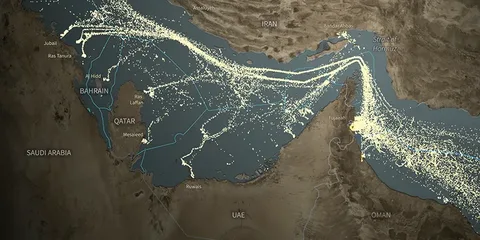

US Dollar Hegemony Faces Historic Challenge in Strait of Hormuz
The Strait of Hormuz has become the latest and perhaps most consequential battleground in the long-running global challenge to US dollar hegemony as Iran and China coordinate efforts to undermine the American financial dominance that has shaped the global economic order since the end of the Second World War. The US dollar hegemony challenge emerging from the world’s most critical oil chokepoint represents a convergence of geopolitical military and financial strategies that could accelerate the transformation of the global monetary system in ways that would have profound and lasting consequences for American power and global economic stability. Understanding the US dollar hegemony threat from the Strait of Hormuz requires grasping both the hegemony meaning in its fullest sense and the specific mechanisms through which Iran and China are working to erode it.
Background: US Dollar Hegemony and Its Origins
The hegemony meaning in international relations refers to the dominance of one power over others in a system where that dominance shapes the rules norms and structures within which all other actors must operate. The US dollar hegemony meaning in this context refers specifically to the role of the American dollar as the world’s primary reserve currency the dominant medium for international trade settlement and the foundation of the global financial system that emerged from the 1944 Bretton Woods conference.
The US dollar hegemony has given the United States extraordinary economic privileges that no other nation enjoys. The ability to run persistent trade deficits without facing currency crises to finance enormous government debt at low interest rates and to impose crippling financial sanctions on adversaries by threatening to cut them off from dollar-denominated financial systems are all expressions of US dollar hegemony that provide Washington with leverage no other nation possesses. The future of US dollar dominance in this form is precisely what Iran and China are working to challenge through their coordinated strategy in the Strait of Hormuz.
The US dollar hegemony meaning for oil markets specifically relates to the petrodollar system established in the 1970s when Saudi Arabia and other OPEC nations agreed to price and sell oil exclusively in US dollars in exchange for American security guarantees. This arrangement transformed US dollar hegemony from a purely financial phenomenon into a structural feature of global energy markets ensuring that any nation wishing to import oil needed to first acquire US dollars creating permanent global demand for the American currency regardless of underlying economic fundamentals.
Details: How Iran and China Are Targeting US Dollar Hegemony
The Iran-China strategy against US dollar hegemony in the Strait of Hormuz operates through several interconnected mechanisms that collectively aim to create a viable alternative to dollar-denominated oil trade that could gradually erode the petrodollar foundation of US dollar hegemony over time. Iran’s closure of the Strait of Hormuz to American and Israeli vessels has been accompanied by the establishment of alternative trading arrangements with China that deliberately bypass the dollar-based financial system threatening the future of US dollar dominance in energy markets.
China and Iran have been conducting bilateral oil trade in Chinese yuan and through barter arrangements that exclude the US dollar entirely demonstrating in practice that the future of US dollar dominance in global oil markets is not guaranteed and that viable alternatives can be constructed even under conditions of extreme geopolitical pressure. The US dollar hegemony meaning for these transactions is that every barrel of oil traded outside the dollar system represents a small erosion of the structural demand for American currency that has sustained US dollar hegemony for decades.
The hegemony meaning of the Strait of Hormuz closure extends beyond the immediate military and economic disruption to encompass a deliberate demonstration that American financial power has physical limits that can be exploited by determined adversaries willing to absorb significant costs in pursuit of the strategic goal of weakening US dollar hegemony. Iran’s willingness to close the Strait despite the enormous economic costs to its own oil exports reflects a calculation that damaging US dollar hegemony is worth the price of self-inflicted economic pain.
US Dollar Hegemony Meaning in the Context of Sanctions
The US dollar hegemony meaning has been most viscerally understood by Iran through decades of dollar-based financial sanctions that have crippled the Iranian economy by cutting it off from the global financial system. The US dollar hegemony that gives Washington the power to impose these sanctions is precisely what Iran has the strongest motivation to undermine making the Strait of Hormuz strategy as much about escaping the prison of US dollar hegemony as it is about winning the current military conflict.
Iran’s five-point peace plan presented to Washington through Pakistani intermediaries includes demands that reflect this anti-hegemony agenda with provisions around recognition of Iranian sovereignty over the Strait of Hormuz and international compensation mechanisms that would necessarily involve non-dollar financial instruments. The future of US dollar hegemony in the Middle East energy complex is directly implicated in these demands which Iran clearly intends to use as leverage regardless of how the current military conflict resolves.
Future of US Dollar Under Pressure From Multiple Directions
The future of US dollar hegemony was already under pressure from multiple directions before the Iran-China Strait of Hormuz strategy added a new and potentially decisive dimension to the challenge. Russia’s pivot to yuan-denominated energy trade following Western sanctions over Ukraine the BRICS nations’ discussions of alternative reserve currency arrangements and China’s ongoing development of the digital yuan as an international payments instrument all represent threads in a broader tapestry of US dollar hegemony erosion that the Strait of Hormuz developments are now accelerating.
The future of US dollar dominance in global trade depends ultimately on whether the United States can maintain the combination of military power economic productivity institutional credibility and allied support that has sustained US dollar hegemony since 1944. The Iran war has tested and in some dimensions damaged each of these foundations simultaneously creating conditions that are more favourable to US dollar hegemony challengers than any previous moment in the post-war era.
The hegemony meaning for the future of US dollar status as reserve currency will be determined not by any single event including the Strait of Hormuz crisis but by the cumulative erosion of confidence in American financial and geopolitical leadership that events like the current Iran war are generating across the global community of nations that currently hold dollar reserves and conduct dollar-denominated trade.
China’s Role in Challenging US Dollar Hegemony
China’s support for Iran’s Strait of Hormuz strategy reflects Beijing’s long-term interest in undermining US dollar hegemony as part of its broader challenge to American global primacy. China has been the most systematic and patient opponent of US dollar hegemony meaning its challenge operates across financial military diplomatic and institutional dimensions simultaneously rather than relying on any single confrontational gesture.
The future of US dollar hegemony from China’s perspective is one of gradual managed decline rather than sudden collapse with Beijing preferring an orderly transition to a multipolar currency system in which the yuan plays an increasingly central role rather than a disruptive crisis that could damage China’s own enormous dollar-denominated economic interests. The Strait of Hormuz strategy therefore serves China’s anti-hegemony agenda by accelerating the erosion of petrodollar arrangements without requiring Beijing to directly confront Washington in ways that could trigger the kind of financial crisis that would harm Chinese interests alongside American ones.
Expert Quotes on US Dollar Hegemony Challenge
International monetary economists assessing the US dollar hegemony challenge from the Strait of Hormuz described the Iran-China coordination as the most significant practical challenge to petrodollar arrangements since the system was established in the 1970s. Experts noted that the hegemony meaning of this challenge extends beyond the immediate oil market disruption to encompass a fundamental question about whether the future of US dollar dominance can survive the combination of military overextension and financial system fragmentation that the current Iran war is producing.
Geopolitical analysts familiar with the US dollar hegemony meaning in strategic terms warned that the erosion of petrodollar arrangements would have profound consequences for American fiscal and monetary policy by reducing the structural demand for dollars that has allowed Washington to finance its deficits and project its power at low cost for decades. The future of US dollar hegemony according to these analysts depends critically on whether Washington can restore the credibility and reliability of American financial and security commitments that the Iran war has damaged.
Conclusion: US Dollar Hegemony at a Crossroads
The Iran-China strategy in the Strait of Hormuz has placed US dollar hegemony at a crossroads whose implications extend far beyond the current military conflict. The hegemony meaning of what is happening in the world’s most critical oil chokepoint is that the structural foundations of American financial dominance are being deliberately and systematically targeted by actors with both the motivation and increasingly the means to accelerate its erosion.
The future of US dollar hegemony will ultimately be determined by whether the United States can adapt its approach to global leadership in ways that restore confidence and rebuild the alliances that sustain dollar dominance or whether the Iran war represents the beginning of a more fundamental transition in the global monetary order that no amount of military power can prevent.
FAQs
What is the Hegemony of the Dollar?
The hegemony of the dollar refers to the dominant role of the US dollar as the world’s primary reserve currency and the standard medium for international trade and financial transactions. The US dollar hegemony meaning encompasses the structural advantages this dominance gives the United States including the ability to finance deficits at low cost impose financial sanctions on adversaries and shape global economic rules in ways that serve American interests. The petrodollar system through which oil is priced and traded in dollars is the most important practical expression of US dollar hegemony giving the American currency a structural role in global energy markets that generates permanent international demand for dollars. The future of US dollar hegemony in this form is what Iran and China are working to challenge through their Strait of Hormuz strategy.
What is Meant by US Hegemony?
US hegemony meaning in its broadest sense refers to the dominant position of the United States in the global order across military economic financial and institutional dimensions that has characterised the post-Cold War era and in modified form the entire post-World War Two period. The hegemony meaning encompasses not just raw power but the ability to shape the rules norms and structures within which all other actors must operate giving the hegemon extraordinary leverage that extends far beyond what its material capabilities alone would justify. US dollar hegemony is the financial expression of this broader dominance and its erosion through challenges like the Iran-China Strait of Hormuz strategy reflects a wider questioning of American primacy that the future of US dollar dominance is deeply intertwined with.
Which 11 Countries Will Stop Using the US Dollar?
Several countries have been moving actively to reduce their dependence on the US dollar in international trade reflecting the growing challenge to US dollar hegemony from multiple directions. Russia has dramatically reduced its dollar usage following Western sanctions conducting increasing proportions of its trade in yuan euros and other currencies. China and Iran conduct bilateral oil trade outside the dollar system as part of the anti-US dollar hegemony strategy visible in the Strait of Hormuz. BRICS nations including Brazil Russia India China and South Africa have been discussing mechanisms to reduce dollar dependence in mutual trade. Countries facing American sanctions including Venezuela North Korea and Cuba have been forced to develop alternative payment arrangements that bypass US dollar hegemony. The hegemony meaning for these countries is that US dollar dominance represents not just a financial arrangement but a source of American coercive power that undermines their sovereignty making the future of US dollar alternatives a strategic priority rather than merely an economic preference.