
The US Iraq war legacy returned with full force in March 2026 as historians, analysts, and military strategists asked the same question the world asked in May 2003 — what happens the morning after the bombs stop falling? The US Iraq war legacy of the Mission Accomplished banner — unfurled on the USS Abraham Lincoln when President Bush declared major combat operations over in Iraq — now haunts every administration claim about the Iran strikes, every strategic assessment of Operation Epic Fury, and every question about what comes next. The US Iraq war legacy answer to who won the Iraq War is stark and settled: Iran won. And as the Second Iraq War’s lessons echo through Washington’s 2026 Iran policy, the defining question is whether America is about to make the same mistake twice — at three times the scale.
Background: What Is the US Iraq War Legacy and Why Does It Haunt 2026?
The US Iraq war legacy is the accumulated strategic, human, and political consequence of America’s March 2003 decision to invade Iraq — justified by two claims that were later proven false: that Iraq possessed weapons of mass destruction and that Saddam Hussein maintained operational links with the September 11 attackers.
The US military achieved every tactical objective it set when it launched the Second Iraq War. Saddam Hussein was captured, tried, and executed. Air dominance was established within days. The Iraqi government fell in 21 days. By every short-term military metric, the Second Iraq War appeared to confirm the Mission Accomplished banner.
The US Iraq war legacy of that tactical brilliance, however, is a strategic catastrophe that unfolded over the following two decades. Iraq is governed today by political parties with deep institutional ties to Tehran. Iranian-backed militias operate openly on Iraqi soil — some holding official positions within the Iraqi state. The country America spent $2 trillion and 4,488 American lives to transform is, by any reasonable analysis, within Iran’s sphere of influence.
That is the US Iraq war legacy in three sentences. The Second Iraq War removed Iran’s most dangerous regional rival, eliminated Tehran’s western flank threat, and handed Iran a client state on its border. The US Iraq war legacy answer to who benefited from the Iraq War is not America. It is Iran.
Details: US Iraq War Legacy — How 2003 Haunts 2026
US Iraq War Legacy — The Mission Accomplished Moment That Defined an Era
On May 1, 2003, President George W. Bush stood on the deck of the USS Abraham Lincoln under a banner reading Mission Accomplished and declared that major combat operations in Iraq had ended. The US Iraq war legacy of that moment — premature, triumphalist, and catastrophically wrong about what followed — has become the most enduring symbol of American strategic overconfidence in modern history.
The US Iraq war legacy of Mission Accomplished is not that the battle was lost — the battle was won exactly as Bush said. The US Iraq war legacy is that winning a battle and winning a war are entirely different things. America won every battle of the Second Iraq War. Iran won the war.
In 2026, the US Iraq war legacy of Mission Accomplished echoes in every White House statement about Operation Epic Fury. White House spokesperson Karoline Leavitt claimed US and Israeli strikes had obliterated Iran’s nuclear facilities. The US Iraq war legacy demands the world ask: obliterated as in finished, or obliterated as in the beginning of something far worse?
Second Iraq War — The De-Baathification Catastrophe
The US Iraq war legacy was not determined by the invasion. It was determined by what Washington did after the shooting stopped. In April 2003, American administrator L. Paul Bremer arrived in Baghdad and issued two orders that defined the next two decades of the US Iraq war legacy.
Order 1 dissolved the Baath Party and purged all senior members from government — removing the administrative class that ran Iraq’s ministries, hospitals, schools, and water systems. Order 2 disbanded the Iraqi army without disarming it. Approximately 400,000 trained soldiers went home with their weapons and without their salaries. The US Iraq war legacy of those two orders was immediate — Washington had handed the insurgency its entire recruiting pool, its weapons supply, and its grievance narrative in a single afternoon.
The US Iraq war legacy of de-Baathification was intuitive in theory and catastrophic in practice. The Second Iraq War became a decade-long insurgency because of those decisions. The US Iraq war legacy of administrative collapse — hospitals without administrators, ministries without managers, an army without officers — created the power vacuum that Iran filled methodically over the following twenty years.
Who Won the Iraq War — The US Iraq War Legacy Answer
The US Iraq war legacy answer to who won the Iraq War has been clear for over a decade — Iran won the Iraq War without firing a single shot in the Second Iraq War itself.
The US Iraq war legacy of the Second Iraq War eliminated Saddam Hussein — the only regional leader capable of militarily threatening Tehran. The US Iraq war legacy handed Iran a neighbouring government penetrated by Iranian-backed parties and militias. The US Iraq war legacy created the conditions for Hezbollah’s regional expansion, for the growth of Hamas’s strategic depth, and for the broad arc of Iranian proxy power that ran from Baghdad to Beirut to Gaza when the 2026 conflict began.
The US Iraq war legacy answer to who benefited from the Iraq War is therefore the country that is now the target of American bombs — proving that the US Iraq war legacy is not just historical embarrassment but active strategic consequence.
US Iraq War Legacy — The 2026 Iran Parallel Takes Shape
The US Iraq war legacy parallel with 2026 is not subtle. In 2003, the official line was WMD elimination — not regime change. The neoconservative wing argued for democracy promotion and regional transformation. The president’s public statements suggested something more visceral and personal. The administration spoke with multiple contradictory voices — and the US Iraq war legacy of that internal confusion was twenty years of strategic incoherence.
In 2026, Vice President JD Vance stated clearly that the US goal was Iran’s nuclear programme — not the Iranian regime. Defence Secretary Pete Hegseth made the same distinction. President Trump immediately contradicted them both, posting publicly about regime change under the hashtag MIGA — Make Iran Great Again. The US Iraq war legacy is repeating with near-perfect fidelity — three voices, one podium, and no shared answer to what victory looks like.
The US Iraq war legacy of coalition-building has also been reversed. The Second Iraq War at least assembled 49 countries into a Coalition of the Willing — however reluctant many were. The 2026 Iran war has one full partner: Israel. The United Kingdom reportedly refused to allow the US to use Diego Garcia for strikes on Iran — forcing B-2 bombers to fly 18-hour missions from the American mainland. The US Iraq war legacy of multilateral legitimacy is entirely absent from the 2026 campaign.
US Iraq War Legacy — Intelligence Manipulation Then and Now
The US Iraq war legacy of intelligence manipulation to justify the Second Iraq War — aluminium tubes, mobile biological labs, the 45-minute WMD deployment claim — created institutional and public skepticism of government war justifications that persists to this day.
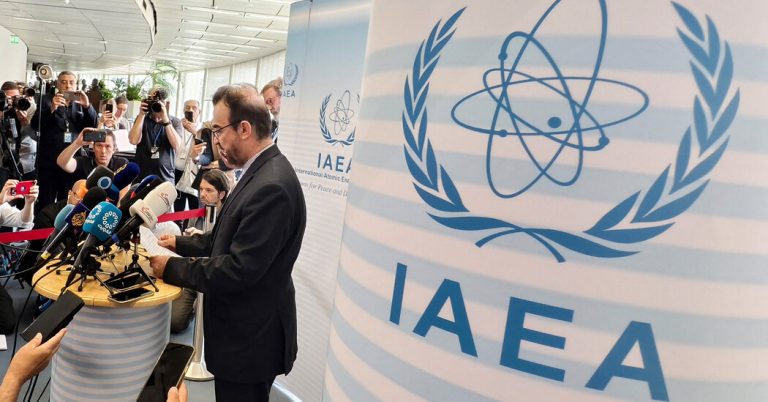
In 2026, the US Iraq war legacy of intelligence distortion appears to be repeating with one critical difference. In 2003, US intelligence was manipulated and shaped to align with the administration’s predetermined conclusion. In 2026, the intelligence assessments themselves — from the CIA, DIA, and IAEA — actually contradicted the administration’s claims about the imminence and completeness of Iran’s nuclear weapons programme. The US Iraq war legacy of WMD that did not exist has given way to the Iran nuclear threat that intelligence agencies assessed was being exaggerated.
The US Iraq war legacy of false justifications created a generation of global opinion that will not trust American war claims at face value. That US Iraq war legacy trust deficit is playing out in real time as America’s allies — who lived through the Second Iraq War deception — decline to join the 2026 Iran campaign.
Who Benefited From Iraq War — And Who Will Benefit From the Iran War?
The US Iraq war legacy answer to who benefited from the Iraq War being Iran rather than America raises the most uncomfortable strategic question of 2026 — who benefits from the Iran war?
Iran’s Revolutionary Guard survived the initial strikes of Operation Epic Fury. The IRGC’s succession planning functioned perfectly — Mojtaba Khamenei, son of the slain Ayatollah Ali Khamenei and a man with deep IRGC institutional ties since age 17, was named supreme leader on March 8, 2026. The US Iraq war legacy of regime change producing maximum continuity with the old regime — rather than the clean democratic transition promised — has reproduced itself in Tehran within days of the new conflict beginning.
The US Iraq war legacy of Iraqi exile opposition also haunts the Iran planning. Ahmed Chalabi promised Washington a democratic, pro-American Iraq that would recognise Israel and open its oil fields. The US Iraq war legacy of that promise is that Chalabi delivered nothing — because he had Washington access and no domestic legitimacy. Iran’s exile opposition groups — the Mujahedeen-e-Khalq, the monarchists, the various democratic factions — present exactly the same profile. The US Iraq war legacy suggests their promises will be worth exactly as much as Chalabi’s.
Second Iraq War — Congressional Oversight Then and Now
The Second Iraq War’s US Iraq war legacy included bipartisan promises to restore congressional oversight of military action — promises made after the Authorization for Use of Military Force gave presidents near-unlimited war-making power without declaration. Twenty years later, those US Iraq war legacy reforms have yielded the same result as Mission Accomplished — a declared success followed by an open-ended conflict with no exit strategy and no congressional authorisation.
Efforts by US Representatives Ro Khanna and Thomas Massie to invoke War Powers Act procedures to force a congressional vote on the Iran strikes have so far failed to gain sufficient support. The US Iraq war legacy of unlimited executive war power — one of the Second Iraq War’s most damaging constitutional consequences — is being applied in 2026 exactly as it was in 2003.
Quotes
President George W Bush, USS Abraham Lincoln, May 1, 2003: “Major combat operations in Iraq have ended. In the Battle of Iraq, the United States and our allies have prevailed.”
JD Vance, on 2026 Iran war objectives — echoing the US Iraq war legacy of WMD framing: “We are not at war with Iran. We are at war with Iran’s nuclear programme.”
Donald Trump, contradicting Vance and echoing the US Iraq war legacy regime change impulse: “If the current Iranian Regime is unable to MAKE IRAN GREAT AGAIN, why wouldn’t there be regime change??? MIGA!!!”
Osama Abu Irshaid, Washington political analyst, on the US Iraq war legacy intelligence parallel: “The administration is exaggerating the nuclear threat exactly as the Bush administration did with the smoking gun metaphor — but with one key difference: in 2026, the intelligence assessments actually contradict Trump’s claims.”
Fortune analysis, on the US Iraq war legacy answer to who won the Iraq War: “The country the US spent $2 trillion and 4,488 American lives to remake is, by any reasonable measure, within the sphere of Iran’s influence.”
Middle East Monitor, on the US Iraq war legacy of unaccountable decisions: “Those responsible for the Iraq war were never held to account. Today they pursue careers in think tanks and journalism with their reputations for judgment intact — ready to advise on Iran.”
Winston Churchill, El-Alamein 1942 — the measured assessment the US Iraq war legacy’s Mission Accomplished moment rejected: “Now is not the end. It is not even the beginning of the end. But it is, perhaps, the end of the beginning.”
Impact: What the US Iraq War Legacy Means for the Iran Conflict
For the Mission Accomplished Question in Iran
The who benefited from Iraq War does not say America cannot win military battles — it says winning battles does not determine who wins wars. In 2026, America has won the opening military battle against Iran. The US Iraq war legacy asks what the morning after looks like — and the answer, so far, is a Revolutionary Guard-backed dynastic succession, an unaccounted 880 pounds of highly enriched uranium, and a regional proxy network that has not been dismantled.
For Who Benefited From Iraq War — Applied to Iran
The US Iraq war legacy of who benefited from the Iraq War being Iran rather than America must now be applied to 2026. If Iran’s institutional structures survive — as appears to be happening with Mojtaba Khamenei’s succession — and if Iran’s proxy networks activate rather than dissolve across Lebanon, Yemen, Iraq, and Syria, then the US Iraq war legacy suggests America may again find it has degraded a regime without defeating it, and destabilised a region without transforming it.
For Global Multilateral Order
The US Iraq war legacy of the Second Iraq War fractured the post-Cold War multilateral consensus, damaged NATO cohesion, and destroyed American credibility on intelligence claims for a generation. The 2026 Iran war — conducted without UN authorisation, without a meaningful coalition, and against the explicit advice of European allies — risks completing that erosion. The US Iraq war legacy cost America its moral authority. The Iran war may cost it what remains.
For the Region
The US Iraq war legacy destabilised the entire Middle East for two decades — creating the conditions for ISIS, empowering Iranian proxies, and generating refugee flows that reshaped European domestic politics. Iran — with 92 million people, 880 pounds of unaccounted highly enriched uranium, and proxy networks across six countries — represents a potential US Iraq war legacy at three times the scale if the post-conflict management fails as completely as it did after the Second Iraq War.
Conclusion
The US Iraq war legacy is not a historical footnote. It is the operating manual for understanding what is happening in Iran in March 2026. The Second Iraq War taught the world three lessons that have not been learned.
The US Iraq war legacy lesson one: who won the Iraq War was not the country that did the bombing. The US Iraq war legacy answer to who won the Iraq War is Iran — and Iran has just named a new supreme leader with deeper Revolutionary Guard ties than the father America killed.
The US Iraq war legacy lesson two: who benefited from the Iraq War was not the country that spent $2 trillion and 4,488 lives. The US Iraq war legacy answer to who benefited from the Iraq War is the country America is now bombing again.
The US Iraq war legacy lesson three: Mission Accomplished is the most dangerous two words in American foreign policy — not because the mission was not accomplished, but because accomplishing the mission is the beginning of the war, not the end.
The Second Iraq War’s US Iraq war legacy was a banner on a carrier deck over a conflict that lasted another eight years. The 2026 Iran conflict has its own Mission Accomplished moments building in Washington’s press briefings.
The US Iraq war legacy knows how this story goes. The question is whether anyone in Washington is reading it.
FAQs
What happened after the US attacked Iraq?
The war began on March 20, 2003, when the US, joined by the UK, Australia, and Poland, initiated a “shock and awe” bombing campaign. Coalition forces launched a ground invasion, defeating Iraqi forces and toppling the Ba’athist regime. Saddam Hussein was captured in 2003 and executed in 2006.
What are the main causes of conflict in Iraq?
The main causes of the Iraq War were the US desire for regime change in Iraq and the desire to stop its alleged weapons programs. US officials argued that Iraq had weapons of mass destruction, including a nuclear program, and also had ties to terrorism.
Why did the US invade Iraq?
The primary rationalization for the Iraq War was articulated by a joint resolution of the United States Congress known as the Iraq Resolution. The United States intent was to “disarm Iraq of weapons of mass destruction, to end Saddam Hussein’s support for terrorism, and to free the Iraqi people”.