
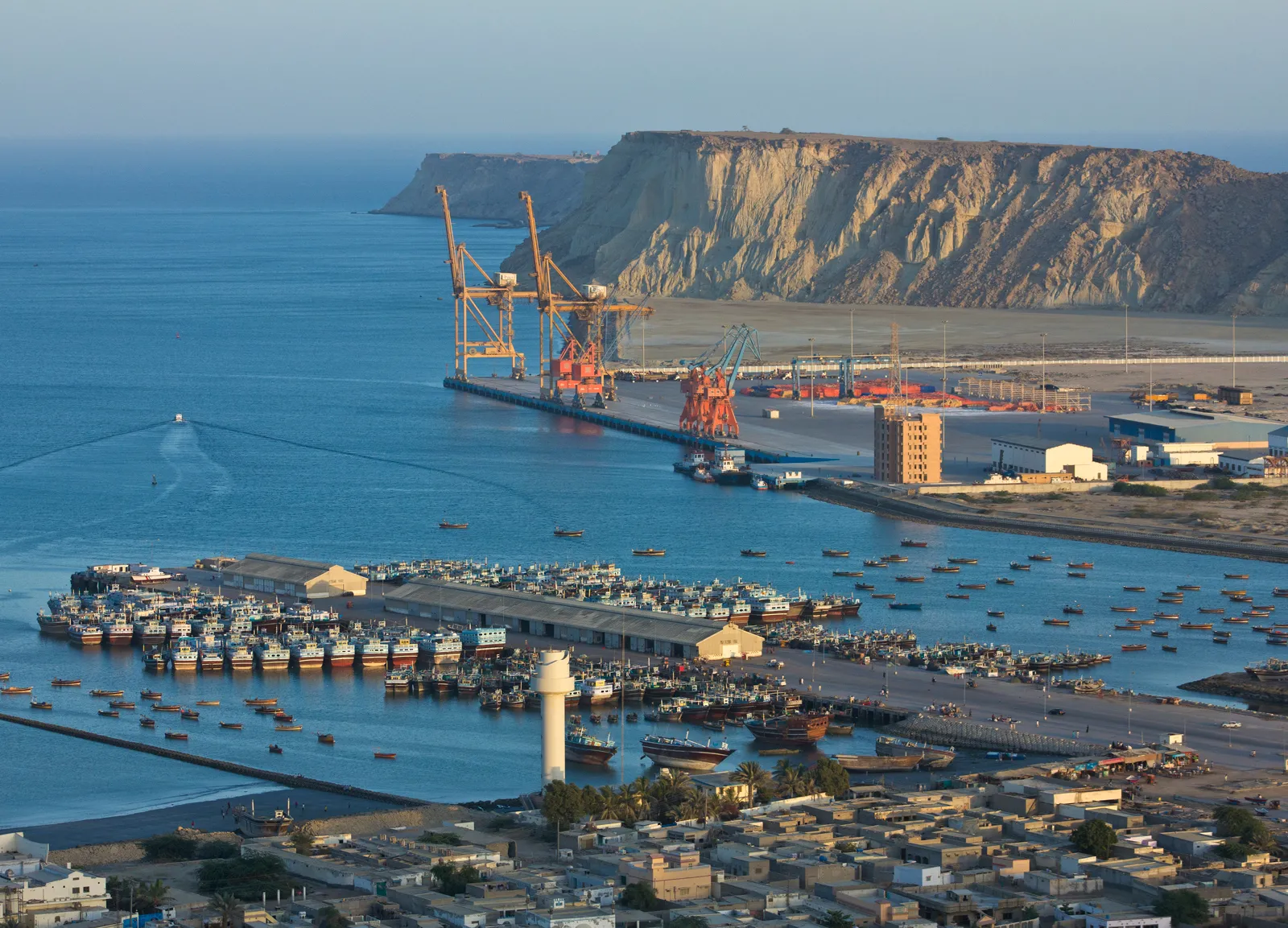

Pakistan and Oman have taken a fresh step toward turning Gwadar Port and Oman’s Sohar Port into sister ports. The plan is meant to open a direct sea route between the two countries, cut shipping times, and pull in new investment on both sides. Officials from Gwadar Port Authority and Oman’s consulate in Karachi met this week to push the idea forward.
A Meeting With Years of History Behind It
This is not a brand-new idea. The proposal to link Gwadar and Sohar first came up back in April 2021, when Oman’s then Minister of Transport, Communications and Information Technology raised the subject and asked Pakistan to prepare a draft agreement. It sat on the shelf for a while. Now, five years later, both governments seem ready to actually move on it.
Gwadar Port Chairman Noor-ul-Haq Baloch sat down with Oman’s Consul General in Karachi, Engineer Sami Abdullah Salem Al Khinji, to talk through where things stand. The tone from both sides suggests this round of talks was more concrete than earlier ones.
What the Two Sides Actually Discussed
The centerpiece of the meeting was a direct port-to-port connection between Gwadar and Sohar. In practice, that means ships moving cargo straight between the two ports instead of routing through longer, more congested paths. Officials say this would shave down transit times and make regional trade smoother for exporters and importers alike.
A few other items came up too, and they’re worth spelling out because they show this isn’t only about ships:
- Direct air links between Gwadar and Oman through SalamAir, using the recently built Gwadar International Airport for passengers and business travelers.
- Omani investment opportunities inside the Gwadar Free Zone, with logistics, warehousing and fisheries named as priority sectors.
- Technical cooperation covering port management, dredging, digital port systems and staff training.
None of this is locked in yet. But the range of topics on the table suggests both sides are thinking beyond a single MoU and toward a broader working relationship.
Why Gwadar and Sohar Make Sense as Partners
Geography does a lot of the work here. Gwadar sits at the mouth of the Persian Gulf, close to the Strait of Hormuz, and roughly 380 kilometers by sea from the Omani coast. Sohar, meanwhile, is one of the busiest deep-sea ports in the Gulf and already handles heavy industrial and container traffic.
There’s also a shared history that gets mentioned often in these discussions. Gwadar was under Omani control from 1783 until 1958, when Oman transferred it to Pakistan. That backstory doesn’t change modern shipping logistics, but it does give the relationship a certain weight in how officials talk about it.
Linking the two ports would give Pakistan’s China-Pakistan Economic Corridor (CPEC) a more direct maritime bridge into Gulf and Central Asian markets. For Oman, it’s a chance to widen Sohar’s reach and attract cargo that might otherwise bypass it.
Officials Weigh In
According to reports from the meeting, both sides described the sister-port framework as a way to strengthen maritime cooperation and deepen trade ties between Pakistan and Oman. Officials also pointed to the potential for Gwadar to grow into a wider regional connectivity hub if the plan moves forward as intended.
Neither side has released a signed agreement or a timeline for one. What’s been confirmed so far is a shared intent to keep negotiating, with technical teams expected to work out the operational details in the coming months.
What This Could Mean for the Region
If the sister-port arrangement goes through, the immediate winners would be shipping companies and traders who currently deal with slower, indirect routes between Pakistan and the Gulf. Faster cargo movement usually pulls in more shipping lines, and more shipping lines usually mean lower freight costs over time.
There’s a bigger picture too. Pakistan has spent years trying to position Gwadar as a genuine alternative to Karachi and a gateway for landlocked Central Asian trade. A working link to Sohar, plus Oman’s existing Duqm Port project, would give Pakistan two access points into the Omani coast instead of relying on a single relationship.
For Oman, closer ties with Gwadar fit into its own push to diversify trade partners beyond its traditional Gulf neighbors.
Where Things Go From Here
Nothing here is finalized. The next real marker to watch for is whether Pakistan and Oman actually sign the memorandum of understanding that’s been under discussion since 2021. Port officials on both sides are expected to keep talking through the remaining technical and legal details, including how customs, dredging standards and digital systems will be aligned between Gwadar and Sohar.
If the deal is signed, expect follow-up announcements on shipping schedules, SalamAir’s Gwadar route, and specific investment commitments in the Gwadar Free Zone.
Frequently Asked Questions
Who is Pakistan’s biggest ally?
China is widely regarded as Pakistan’s closest and most consistent ally, largely because of decades of military cooperation, diplomatic backing at forums like the United Nations, and the massive economic footprint of the China-Pakistan Economic Corridor (CPEC), which includes major investment in Gwadar Port itself. That said, Pakistan also maintains long-standing security and economic ties with Gulf states such as Saudi Arabia and the UAE, and its relationship with the United States has historically played a major role in defense and financial assistance, even though it has cooled and warmed at different points over the years.
Why did Oman sell Gwadar to Pakistan?
Gwadar was ruled by Oman from 1783 until 1958, a period during which it functioned as a small fishing settlement rather than a major port. After Pakistan’s independence in 1947, the newly formed government approached Oman about acquiring the territory, partly because a 1954 US Geological Survey had flagged Gwadar’s potential as a deep-sea port site. In September 1958, Oman agreed to transfer Gwadar to Pakistan in exchange for a payment reportedly facilitated with support from Aga Khan IV, and the United Kingdom, which held influence over the region at the time, approved the transfer.
How many Pakistanis live in Oman?
Pakistan has one of the larger expatriate communities in Oman, made up mostly of workers in construction, retail, hospitality, healthcare and skilled trades. Estimates from Pakistani missions and labor migration data have generally placed the number in the range of a few hundred thousand, though exact figures shift depending on labor market conditions, visa policies and the flow of new workers versus those returning home. The Pakistani community has been present in Oman for decades and is often cited as one of the human links underpinning the broader Pakistan Oman relationship, alongside trade and maritime cooperation.