

The Supreme Court’s decision to uphold Bait-ul-Mal assistance for two Hindu girls isn’t just about one family’s maintenance dispute. It sets a template for how courts should route people toward state welfare support instead of trying to legislate the details themselves, and that has implications for minority rights Pakistan-wide.
Background
The dispute traces back to a Jacobabad family court case filed by Shrimati Reeta on behalf of her two daughters, Jasika and Sanika, after her husband Ravi Kumar died in 2017. Reeta had sought maintenance from the girls’ grandfather, Ram Raj, and initially won that claim at Rs3,000 per child per month.
When Ram Raj challenged the decision before the Sindh High Court, the court agreed he had no legal duty to support his granddaughters. Faced with two minors who would otherwise be left without any income, the Larkana circuit bench turned to Pakistan Bait-ul-Mal instead and ordered it to pay Rs10,000 monthly to each girl, increasing 10 percent every year until marriage.
Details
Pakistan Bait-ul-Mal wasn’t happy with being told, by court order, exactly how much to pay and for how long. It took the matter to the Supreme Court, arguing that decisions about the amount, form, and duration of Bait-ul-Mal aid should sit with the institution itself, guided by its own statutory rules and eligibility criteria rather than a court’s directive.
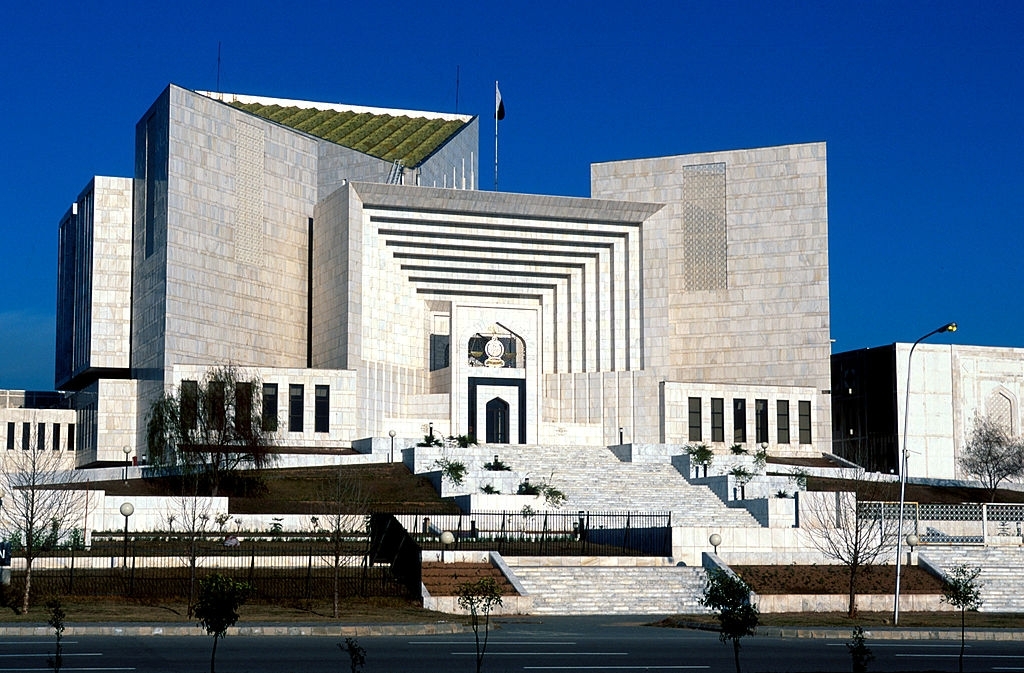
A three-judge bench led by Chief Justice Yahya Afridi, along with Justice Naeem Akhtar Afghan and Justice Miangul Hassan Aurangzeb, agreed with that principle in general terms but still upheld the specific order for Jasika and Sanika. The judgment acknowledged the high court’s concern for the girls’ welfare while laying out a clearer process for similar cases in the future.
Instead of courts fixing payment amounts directly, the Supreme Court said the better approach is for a court to refer a deserving case to Bait-ul-Mal, which can then assess it under its own policy and decide what support fits. This keeps the institution’s internal framework intact while still giving courts a way to make sure vulnerable people, including from minority communities, don’t fall through the cracks.
Quotes
According to the 13-page judgment authored by CJP Afridi, courts often deal with situations where resolving the strict legal question doesn’t fully address the underlying hardship in front of them. He wrote that referring such cases to Bait-ul-Mal lets the institution “facilitate the making of the necessary application” and assess each applicant against its policy before deciding on the extent of assistance.
The bench was careful to frame this as a process fix rather than a criticism of the Sindh High Court, noting that the lower court’s concern for the girls’ welfare was appreciated even as the Supreme Court set new guardrails for how such matters should be raised going forward.
Impact
This ruling gives lower courts a repeatable model instead of a one-off fix. Any judge who runs into a case involving a minority family, or any citizen really, with no legal avenue for support can now point them toward Bait-ul-Mal through a formal referral, rather than trying to craft a payment order from the bench.
For Pakistan’s Hindu community and other religious minorities, the case is a reminder that welfare institutions like Bait-ul-Mal are meant to be a backstop when family or legal remedies run out. How consistently that backstop gets used, and how fast Bait-ul-Mal can actually process referrals, will determine whether this framework helps people quickly or just adds another step to an already long process.
There’s also a practical question for Bait-ul-Mal’s own resources. If courts across Sindh, Punjab, and other provinces start referring more cases under this framework, the institution’s caseload and budget will need to keep up, or deserving families could end up waiting.
Conclusion
The Supreme Court has drawn a line between what courts should decide and what a welfare institution should administer, while still making sure two girls in Jacobabad keep getting paid. Whether this framework speeds up help for other minority families or becomes another bureaucratic layer will likely become clearer as more cases get referred to Bait-ul-Mal under this new precedent.
Frequently Asked Questions
Who is eligible to receive the Bait-ul-mal Scholarship in Pakistan?
Eligibility for the Bait-ul-Mal scholarship generally centres on demonstrated financial need, so applicants are usually asked to provide income certificates, a poverty scorecard result, or similar proof that the household cannot otherwise afford education costs. Orphaned students, children from widow-headed households, and those referred through PBM’s own assessment process, including court referrals like the one in this case, are often given priority. Students need to be currently enrolled at a recognised school, college, or university and typically must reapply or renew their status periodically as PBM reviews ongoing cases. Since the exact income thresholds and required paperwork can shift between funding cycles, checking directly with a local Pakistan Bait-ul-Mal office before applying is the safest way to avoid delays.
What is the role of Bait-ul-Mal in Pakistan?
Bait-ul-Mal functions as a state-run safety net for people who don’t have another way to meet basic needs, covering everything from medical assistance and food support to education stipends and rehabilitation programs for people with disabilities. This case shows another dimension of that role: when courts find that no one else, such as a relative, is legally bound to support a vulnerable person, they can direct that individual toward Bait-ul-Mal for consideration. The institution then applies its own eligibility rules and decides on the type and amount of Bait-ul-Mal assistance appropriate to the case, rather than simply following a fixed court order. This structure is meant to keep the institution’s resources going to those it’s designed to help, while still giving the judiciary a way to flag urgent cases.
Are there any jobs available at Pakistan Bait-ul-Mal in 2026?
Pakistan Bait-ul-Mal does hire for a range of positions throughout the year, including administrative staff, project officers, finance personnel, and field workers who assess welfare applications, but there’s no single fixed hiring window each year. Vacancy announcements are usually published in major newspapers and posted on the organisation’s official website, and sometimes routed through the Federal Public Service Commission for certain grades. Given how often job scams circulate using the names of government welfare bodies, anyone interested in current openings should verify vacancies only through Pakistan Bait-ul-Mal’s official website or confirmed government job portals rather than unverified social media posts or third-party listings.