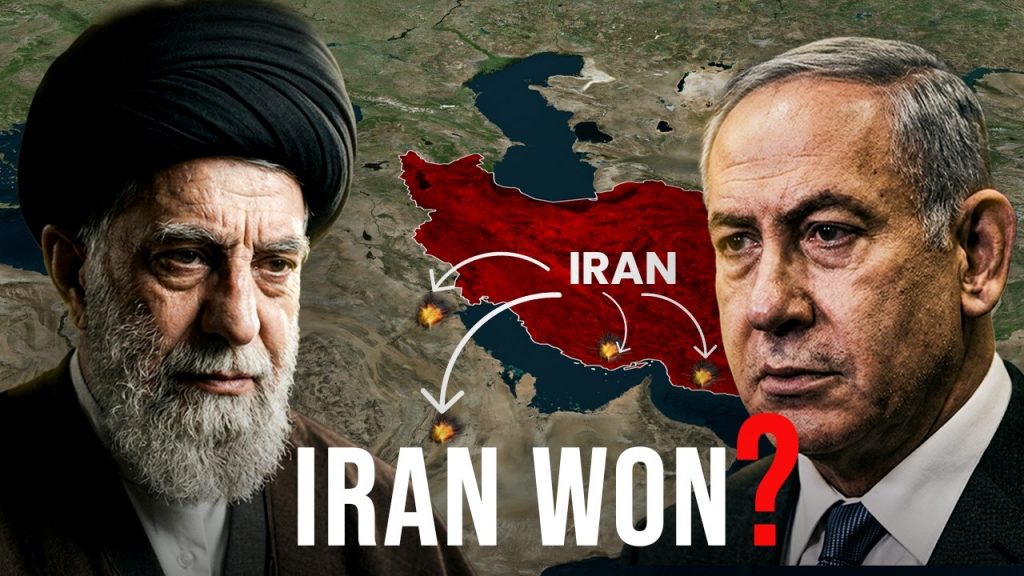

The Middle East is engulfed in a war that has shocked the world. On 28 February 2026, the United States and Israel launched airstrikes on Iran targeting military and government sites, assassinating several Iranian officials including Supreme Leader Ali Khamenei. Iran responded with missile and drone strikes against Israel, US bases, and US-allied Arab countries, and the closure of the Strait of Hormuz, disrupting global trade.As of today, April 24, 2026, a fragile ceasefire is holding but barely.
Background: The Iran Israel Conflict History
To understand the Iran Israel war 2026, one must look back decades. The Israel and Iran conflict history did not begin overnight.
Once allies from 1948 to 1979, Israel and Iran became bitter enemies after the Iranian Revolution of 1979, in which the new Islamic regime blamed the United States and Israel for the region’s greatest grievances.
In 1979, Iran’s pro-Western leader, Mohammed Reza Shah, who regarded Israel as an ally, was swept from power in an Islamic Revolution. Israel would eventually see Hezbollah set up by Iran in 1982 as the most dangerous adversary on its borders.
The Iran–Israel conflict involves proxy hostilities since 1985 and direct clashes since 2024. Over the following decades, the rivalry expanded through proxy forces, including Iran’s support for Hezbollah and Hamas, as well as its nuclear program and ballistic missile development.
The conflict entered a new, more dangerous phase in October 2023 when Hamas attacked Israel. On October 26, 2024, Israel openly attacked Iran for the first time, striking air defense systems and sites associated with its missile program.That was just the beginning.
Who Started the Iran Israel War 2026?
This is one of the most asked questions globally: who started the Iran Israel war 2026? The answer requires looking at the full chain of events.
On 28 February 2026, Israel and the United States began a series of strikes against Iran. They said they aimed to induce regime change in Iran and target its nuclear and ballistic missile programme.
However, the roots go deeper. The attacks came when the Iranian regime was arguably at its weakest point for some years. There were extensive protests in Iran in early 2026, motivated by a weakened economy as well as struggling infrastructure, illustrating the regime’s weakened legitimacy within the country.
The 12-Day War in June 2025 was the first significant test between the two militaries, and it demonstrated Israel’s ability to overwhelm Iran’s air defenses and sabotage its military assets with apparent ease.That war ended with a US-brokered ceasefire, but tensions never truly cooled.
The Iran Israel war 2025 set the stage for the far larger confrontation that began in February 2026, making the current conflict a continuation of a boiling crisis rather than a sudden outbreak.
Details: What Happened on February 28, 2026?
The opening of the Iran Israel US war 2026 was swift and devastating.
On 28 February 2026, Ali Khamenei, the Supreme Leader of Iran, was assassinated in an Israeli air attack. On 1 March, Iranian state media announced Khamenei’s death. The IRGC-controlled Fars News Agency announced that Khamenei’s daughter, son-in-law, grandchild, and daughter-in-law had also been killed
In retaliation, Iran launched hundreds of drones and ballistic missiles at Israel and at US military bases in neighboring Arab countries including Bahrain, Jordan, Kuwait, Qatar, Saudi Arabia, and the United Arab Emirates. A drone struck Britain’s Akrotiri military base on Cyprus, and missiles were shot down over Turkey.
The US attacks Iran narrative became global headline news instantly. The 2026 Iran war disrupted global travel and trade, halted flights in and out of the Middle East, and led to shipping reroutes to avoid the Strait of Hormuz and the Red Sea.
Israel Attacks Iran Today: The Current Situation (April 24, 2026)
Even as ceasefire talks continue, Israel attacks Iran today remains an active concern. The situation on April 24, 2026 remains highly volatile.
US President Donald Trump said he is under no pressure to end his war with Iran, though time is limited for Tehran. “I have all the time in the World, but Iran doesn’t the clock is ticking!” Trump wrote on social media.
Iranian President Masoud Pezeshkian said Tehran seeks “dialogue and agreement” but that “breach of commitments, blockade and threats” are hindering negotiations. The White House said Trump has set no deadline for the extension he made on the ceasefire with Iran.
Iran’s parliament speaker said his country would not reopen the Strait of Hormuz as long as the US naval blockade remained in place, calling the latter a “blatant violation” of the ceasefire. The IRGC reported that it captured two foreign vessels in the Strait of Hormuz and opened fire on a third ship for violating its restrictions.
The US attacks Iran through a sustained naval blockade, while Israel attacks Iran and Lebanon continues through airstrikes.
US vs Iran War: Who Would Win?
The question of US vs Iran war who would win is one analysts have debated for years. Military experts largely agree that in direct conventional confrontation, the US holds an overwhelming advantage.
The Strait of Hormuz is the world’s most critical energy chokepoint, with approximately 20 million barrels of oil passing through it daily. This accounts for nearly 20 to 21 per cent of total global petroleum consumption, making it vital for market stability.Iran’s ability to threaten or close this waterway remains its most powerful leverage card.
The US, along with Israel, launched a major operation targeting sites across Iran. The US said its goal was to disable Iran’s nuclear efforts, disarm its ballistic missile capabilities, and also prompt change in government leadership. On pure military terms, the US-Israel coalition has dominated the battlefield. However, Iran’s ability to wage economic warfare through the Hormuz Strait means the war’s cost extends far beyond the battlefield.
Iran war who is winning militarily appears to favor the US-Israel alliance, but Iran’s disruption of global shipping has already caused severe economic pain worldwide.
Quotes: Key Statements from Leaders
Trump posted on social media: “I have all the time in the World, but Iran doesn’t the clock is ticking!”
Iranian President Pezeshkian stated that Tehran seeks “dialogue and agreement” but blames the US “breach of commitments, blockade and threats” for stalling negotiations.
Iran’s “5-point counter-proposal” included an end to US-Israeli attacks on Iran, security guarantees to prevent future Israeli and US aggression, war reparations, and international recognition of Iranian sovereignty over the Strait of Hormuz.
US military officials are developing new plans to target Iran’s capabilities in the Strait of Hormuz if the current ceasefire falls apart. Trump has ordered the US Navy to attack any Iranian boats placing mines in the waterway.
Iran Israel War: When Will It End?
The most pressing question globally is: Iran Israel war when will it end? As of April 24, 2026, there is no definitive answer.
On 7 April, Trump announced on Truth Social that he agreed to a two-week ceasefire with Iran, brokered by Pakistan, stating that Iran would immediately open the Strait of Hormuz and work on finalizing a peace agreement.
After the failure of the Islamabad Talks, Trump said he no longer cared about negotiations and announced a naval blockade of Iran. A ten-day ceasefire in Lebanon was announced on 16 April. Iran announced that commercial shipping would be allowed through the Hormuz strait during this ceasefire. However, on 18 April, Iran said that it had again closed the strait because the US refused to lift its naval blockade.
Trump posted that he will extend the ceasefire with Iran until its leaders “can come up with a unified proposal.” The ceasefire was set to expire on Wednesday. He also said that the naval blockade of Iran’s ports will continue.
The Iran Israel war when will it end remains the world’s most urgent unanswered question. Both sides are talking, but neither has fully committed to peace.
Impact: Global Consequences of the Iran War
The Iran war who is winning debate aside, the world is already feeling severe consequences.
The 2026 Iran war left enormous damage, thousands of people dead in Iran and Lebanon, dozens dead in Israel and the Gulf Arab states, and millions of people displaced in the region, including more than one-sixth of the population in Lebanon.
Businesses are paying up to $4 million to cross the Panama Canal during the Strait of Hormuz chokehold, a direct consequence of Iran’s blockade. Oil prices have surged and global supply chains are under severe pressure. The Iran Israel US war 2026 has become the most economically disruptive conflict since World War II for global shipping.Conclusion: What Comes Next?
The Iran Israel war 2026 is at a dangerous crossroads. A formal peace deal remains distant, and both sides continue to probe each other’s limits. The US-brokered ceasefire in Lebanon has been extended by three weeks, providing a narrow window for diplomacy. Pakistan is playing an active mediation role, and China has been urged to pressure Tehran on the Hormuz blockade.
For now, the world watches and waits. If negotiations in Islamabad succeed, there is a chance of a longer-term agreement. If they fail, the US attacks Iran could escalate further and the consequences for global energy markets, regional stability, and civilian populations would be catastrophic.
FAQs
What is the war with Iran about?
The current Iran Israel US war 2026 is primarily about Iran’s nuclear program and regional influence. Israel and the United States said their strikes aimed to induce regime change in Iran and target its nuclear and ballistic missile programme.The Israel and Iran conflict history also includes decades of proxy warfare through groups like Hezbollah and Hamas.
What is the story of the Iran and Israel war?
Once allies from 1948 to 1979, Israel and Iran became bitter enemies after the Iranian Revolution of 1979.The rivalry deepened through decades of proxy conflict, nuclear tensions, and direct strikes. The Iran Israel war 2025 (the 12-Day War in June 2025) marked the first full military confrontation, and who started the Iran Israel war 2026 traces back to a joint US-Israeli decision to launch strikes on February 28, 2026 targeting Iran’s nuclear infrastructure and leadership.
Who is more powerful, Iran or the USA?
On conventional military terms, the United States is far more powerful than Iran. The US has the world’s largest defense budget, most advanced weapons systems, and a global military presence. However, Iran controls the Strait of Hormuz, through which nearly 20 to 21 per cent of total global petroleum consumption passes giving Tehran enormous economic leverage even against a superior military opponent. In the US vs Iran war who would win scenario, the US wins militarily, but the economic cost of a prolonged conflict remains deeply damaging for the entire world.