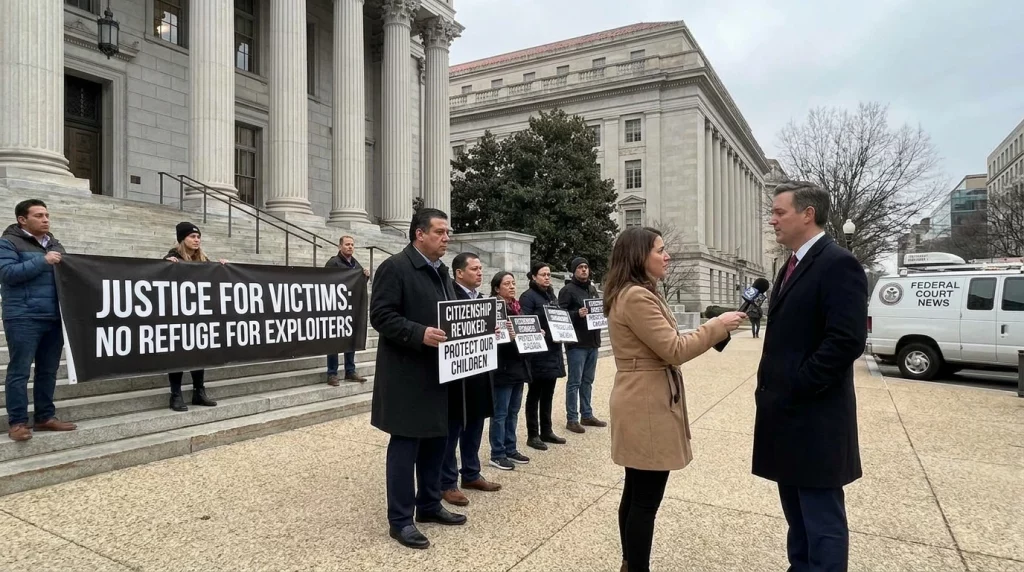

A US citizenship revoke case has drawn attention after authorities initiated legal proceedings to strip citizenship from a Pakistani-born doctor convicted in a child exploitation case. The move highlights the rare but serious process of denaturalization in the United States.
Officials say the case involves a naturalized citizen whose criminal conviction has triggered a review of how citizenship was originally obtained and whether it can legally be revoked.
Background of the Case
The case centers on a Pakistani-born doctor who had obtained US citizenship through naturalization. Following conviction in a child exploitation case, federal authorities began examining the individual’s immigration history.
Denaturalization proceedings are typically pursued when there is evidence that citizenship was obtained through fraud, misrepresentation, or concealment of material facts.
What Is Denaturalization
Denaturalization refers to the legal process of revoking citizenship from a naturalized individual. It does not apply to people born in the United States but can affect those who became citizens later in life.
In denaturalization cases, courts must determine whether the original citizenship application included false information or omitted critical details that would have affected eligibility.
Legal Grounds for Revoking Citizenship
US law sets strict conditions for revoking citizenship. Authorities must prove that citizenship was illegally obtained or that the applicant deliberately misled officials during the naturalization process.
The US citizenship revoke case underlines that criminal conviction alone is not always sufficient. Instead, it must be linked to fraud or misrepresentation at the time of applying for citizenship.
Role of Federal Authorities
The US Department of Justice typically handles denaturalization proceedings through civil court actions. Prosecutors present evidence to demonstrate that the individual should not have been granted citizenship in the first place.
If the court rules in favor of the government, the individual’s citizenship can be revoked, potentially leading to deportation proceedings.
Broader Implications
This US citizenship revoke case reflects increasing scrutiny of naturalization records in serious criminal cases. While denaturalization remains rare, it is often used in cases involving national security concerns or serious criminal conduct.
Legal experts note that such cases can set important precedents regarding how immigration laws are enforced and interpreted in the future.
Impact on Immigration Policy
The case may influence ongoing debates around immigration enforcement and citizenship laws. Questions about background checks, application accuracy, and post-naturalization accountability are central to the discussion.
It also highlights the balance between protecting legal rights and ensuring that citizenship is granted and maintained under lawful conditions.
Conclusion
The US citizenship revoke case involving a Pakistani-born doctor underscores the seriousness of denaturalization proceedings in the United States. As the case moves through the courts, it will likely draw continued attention for its legal and policy implications.
Authorities maintain that due process will determine the final outcome, while observers say the case reflects broader concerns about accountability within the naturalization system.
FAQs
Has any U.S. citizen ever had their citizenship revoked?
Yes, in rare cases, naturalized citizens have had their citizenship revoked through legal denaturalization proceedings when fraud or misrepresentation was proven.
What are the five ways of losing citizenship?
Citizenship can be lost through voluntary renunciation, serving in a foreign military under certain conditions, committing acts of treason, fraud during naturalization, or other legally defined actions.
Can I revoke my United States citizenship?
Yes, a person can voluntarily renounce US citizenship through a formal legal process, usually conducted at a US embassy or consulate.