
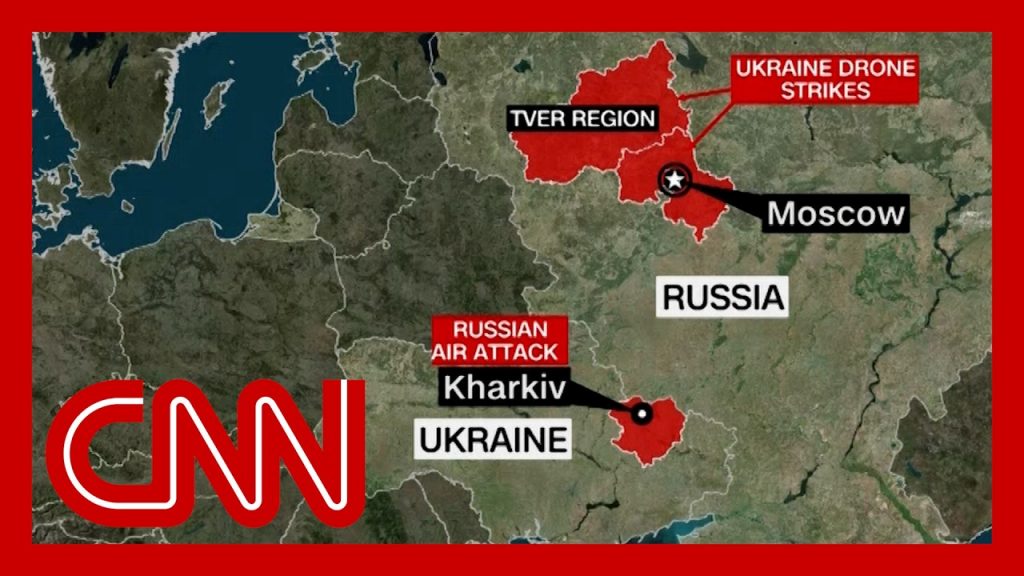
Ukraine’s drone war against Russia has reached an unprecedented scale in 2026. In January to March 2026, the pace of Ukrainian drone attacks on Russian territory effectively doubled to around four separate targets attacked every night, and the number of drones crossing into Russian airspace had on average more than doubled from 50–70 unmanned aircraft in late 2025 to 100–200 drones per raid in early 2026. The Ukraine war map is shifting in the skies even as the ground front remains largely frozen.
Background: How Ukraine’s Drone Campaign Began
Since Russia launched its full-scale invasion in February 2022, both sides have relied heavily on unmanned aerial vehicles. But Ukraine’s long-range drone strategy has evolved dramatically. Early strikes were reactive and limited in range. By 2025 and into 2026, Ukraine drones had become a strategic weapon hitting targets deep inside Russian territory, far from the front line.
Ukraine routinely launches deep strikes against military and industrial facilities in Russia, primarily relying on domestically developed drones. Kyiv continues to escalate its campaign against Russian oil and gas infrastructure, a key source of Moscow’s revenues helping to fuel its all-out invasion of UkraineThe strategy is clear: if you cannot win on the ground immediately, bleed the enemy’s war economy from the air.
Ukraine Drone Attack on Russia: Key Strikes in the Stavropol Region
Among the most significant recent targets has been Ukraine drones Russia Stavropol a region deep in southern Russia that hosts critical military and industrial infrastructure.
Ukrainian drones hit a radio and electronic warfare equipment plant in Russia’s Stavropol region. The SBU official said two facilities at the Signal plant in the city of Stavropol about 540 km from the Ukrainian border were damaged. The plant is one of Russia’s leading producers of electronic warfare equipment, including radar, radio navigation equipment, and remote control radio equipment.
In a separate and significant Ukraine drone attack on Russia, chemical production facilities were also targeted. Ukraine’s Unmanned Systems Forces struck the Nevinnomysskiy Azot facility in Stavropol region among the most important chemical enterprises serving the Russian defense sector, with annual output exceeding one million tons of ammonia and up to 1.4 million tons of ammonium nitrate. The plant provides essential raw materials used in the manufacture of explosives and ammunition.
These Ukraine war drone videos latest strikes were widely circulated on social media, showing large fires and columns of black smoke rising from industrial zones inside Russian territory footage that has become a hallmark of Ukraine’s deep-strike campaign.
Ukraine Drone Attack Reaches Russia’s Urals and Siberia
The reach of Ukraine drones has stunned military analysts. Russia’s Sverdlovsk and Chelyabinsk regions came under attack from Ukrainian drones marking the first time these regions, which are over 1,700 kilometers from Ukrainian-controlled territory, have been attacked.Footage on social media showed smoke rising from buildings in Yekaterinburg, Russia’s fourth most populous city.
One of the most audacious operations was Operation Spiderweb. The coordinated strikes targeted the Russian Air Force’s Long-Range Aviation assets at five air bases using drones concealed in and launched from trucks on Russian territory. It employed 117 drones and was the largest drone attack on Russian air bases up to that point in the war. According to two US officials speaking to Reuters, about twenty military aircraft were hit in the attack, ten of which were destroyed.
This was a turning point in Ukraine war drone videos latest, demonstrating that Ukraine drones could reach and destroy strategic assets anywhere inside Russian territory not just border regions.
Ukraine War Map 2026: Who Is Winning Right Now?
The question everyone is asking who is winning Russia or Ukraine right now 2026 — has no simple answer. The Ukraine war map shows a largely static ground front, but a highly active aerial war.
As of January 2026, Russia controls approximately 18% of Ukraine’s internationally recognized territory. This includes most of Luhansk oblast, parts of Donetsk, Zaporizhzhia, and Kherson oblasts, plus Crimea. The front line stretches approximately 1,000 kilometers. The line has been relatively static since late 2023, with fighting focused on small territorial gains and defensive operations.
On the ground, Russia has been trying to press forward. During the four-week period of February 3 to March 3, 2026, Russia had gained 46 square miles. During the following four weeks, Russian forces lost 12 square miles of Ukraine’s territory.Russia’s spring offensive has generated momentum in specific sectors, but it has not produced a decisive breakthrough.
Meanwhile, Russia has been hitting Ukraine’s energy system hard. Russia launched 15 large-scale strikes on Ukraine’s energy system between December 2025 and February 2026 over three times the average of the previous three winters. At least two-thirds of Ukraine’s energy production capacity has been destroyed, damaged, or occupied by Russia since the fall of 2024, according to Western military officials.
So is Ukraine winning the war? On the drone front yes, increasingly. On the ground and in terms of civilian infrastructure the situation remains deeply difficult.
Details: Ukraine’s Drone Superiority Grows
This is a remarkable turnaround. For years, Russia overwhelmed Ukraine with Shahed kamikaze drones. Now, the equation is approaching parity. Observers have pointed to a campaign by Ukraine’s drone forces to hunt down and destroy Russian air defense systems as a big factor in Kyiv’s ability to hit more targets with larger numbers of drones. Many takedowns of Russian surface-to-air missile systems combined air force aircraft, on-the-ground intelligence, Western satellite data, and waves of drones attacking from unexpected directions.
Can Ukraine win the war against Russia through drones alone? Analysts say no but it can significantly degrade Russia’s capacity to sustain the war. The accumulated economic pressure of the Ukrainian long-range strike campaign on refinery output, export capacity, and the domestic fuel supply is beginning to hurt Russia in ways that may shift Putin’s strategic calculus about the costs and benefits of the war.
Ukraine Defends Against Russian Drones Too
While Ukraine attacks Russia, Russia is simultaneously launching massive drone swarms at Ukrainian cities. On April 16, 2026, a wave of over 700 drones and ballistic missiles struck the city of Kyiv, killing four civilians, including a child, and injuring more than 60 others.
Ukraine’s defense against these attacks is world-class and improving. On April 3, Russia launched 579 missiles and drones. Ukraine’s air defense system brought down 541 of them.That is an interception rate of over 93% a figure that would have seemed impossible at the start of the war.
Ukraine now fields a layered defense combining Western-supplied Patriot systems, electronic warfare, and domestically built interceptor drones. One in three Russian aerial targets over Ukraine is now destroyed by interceptor drones.The country has approximately 450 companies producing drones a war economy built around this single, decisive technology.
Laser Weapons: Ukraine’s Next Frontier
The most futuristic development in Ukraine drones technology is the emergence of laser weapons. Ukraine has tested a new high-energy beam weapon dubbed Sunray. Small enough to fit in the trunk of a car, it can be mounted on a pickup truck. During a test, a drone began to burn as if struck by invisible lightning, then fell to the ground in a fiery arc.
Ukraine’s defense minister said in January that the development of an “anti-drone dome” is a matter of immediate necessity. The laser system is part of a broader domestic effort that includes interceptor drones and other cost-efficient technologies aimed at countering Russia’s war in Ukraine.
The technology could be a game-changer, giving Ukraine a cheap, unlimited-ammunition solution to Russia’s mass drone swarms.
Quotes: Experts Assess the War
Ukraine’s military commander Syrskyi described Ukraine’s 2026 military goal as “a strategic defensive operation to deplete Russian forces while simultaneously building Ukrainian reserves and creating conditions for future large-scale offensive operations.”
Dmytro Kavun, co-founder of Dignitas Ukraine, warned: “The core challenge in modern air defense is not just capability it’s cost and volume. Even tens of thousands of low-cost interceptors can dramatically reduce the pressure on high-end systems like Patriot by taking on the bulk of drone threats.”
On can Ukraine win the war, analysts remain cautious. Russia still holds significant territory and continues its spring offensive. But Ukraine’s drone campaign is making the war increasingly expensive for Moscow both militarily and economically.
Impact: Ukraine’s Drone Technology Goes Global
Ukraine’s battle-tested drone expertise is now a global export. Eleven countries want Ukraine’s drone defense technology, with three Gulf states already signing 10-year deals. The initiative is designed as a long-term, multi-year cooperation program aimed at protecting critical and civilian infrastructure from large-scale attacks.
Since the war, Ukraine has found itself in an unexpected position. In addition to receiving military aid, it is also a provider exporting its anti-drone technology to the Middle East.This shift from aid recipient to arms exporter marks a stunning transformation in Ukraine’s global standing.
Conclusion: Can Ukraine Win the War Against Russia?
The honest answer to is Ukraine winning the war in April 2026 is: it depends on the front. In the air and in the drone war, Ukraine is performing above expectations striking deeper, hitting harder, and defending better than at any point in the conflict. On the Ukraine war map, the ground front is largely static, with Russia making slow, costly advances.
Can Ukraine win the war against Russia ultimately? That will depend on continued Western support, Ukraine’s ability to sustain its drone production, and whether Russia’s economy can absorb the damage from the Ukraine drone attack on Russia campaign. What is clear is that Ukraine drones have fundamentally changed this conflict and possibly the future of warfare itself.
FAQs
Which country is No. 1 in drone technology?
The United States leads globally in advanced drone technology, with cutting-edge military UAVs and AI-guided systems. However, Ukraine has rapidly emerged as a battlefield innovator. Ukraine currently has approximately 450 companies producing drones, and its combat-tested systems are now being exported worldwide. China is also a leading producer of commercial drone technology through companies like DJI.
How does Ukraine defend against drones?
Ukraine uses a layered defense system. Ukraine has learned to field cheaper interceptor drones at scale, applying rapid wartime adaptation to more advanced systems. One in three Russian aerial targets over Ukraine is now destroyed by interceptor drones, complemented by high-end Western systems like Patriot missiles and electronic warfare capabilities.The combination of speed, scale, and innovation has made Ukraine’s drone defense one of the most effective in the world.
Can lasers shoot down drones?
Yes and Ukraine is already testing this capability. Ukraine’s Sunray laser weapon burned through a small drone midair within seconds during a test, causing it to fall. The system took roughly two years and a couple of million dollars to develop and is expected to retail for a few hundred thousand dollars per unit. Experts say lasers are becoming viable now because the technology has matured and the rise of drones increases the need for weapons that can shoot them down cheaply and efficiently since when attacked by thousands of inexpensive drones, you cannot afford to defend with expensive anti-air weapons such as missiles.