

Lahore was once the Hollywood of South Asia. Now Punjab’s government wants to bring that era back with a 50-acre film city in Lahore that promises to rebuild Pakistan’s film industry from the ground up.
Chief Minister Maryam Nawaz made the announcement on April 26, 2026, describing the Punjab Film City as the country’s first fully integrated, end-to-end media production hub. Conceived nearly two years ago and shaped through continuous consultations with filmmakers, producers, and actors, the project aims to create a complete sovereign pipeline for content creation in Pakistan.
What the Punjab Film City Will Include
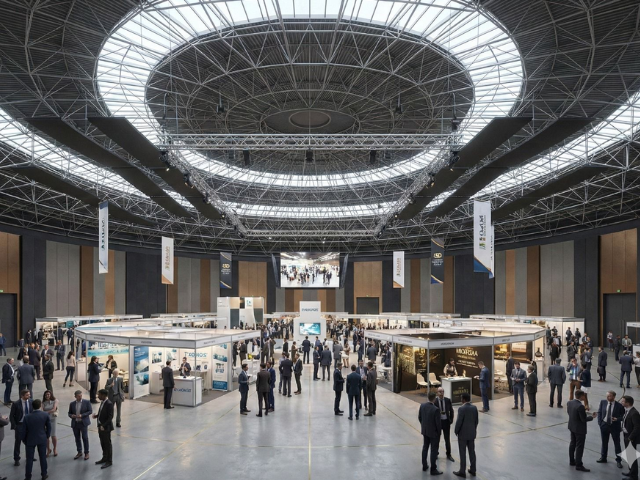
The film city in Lahore will include world-class studios and sound stages, advanced VFX and post-production laboratories, diverse backlots featuring a central lake, and a purpose-built convention hall for hosting international award shows and events. The facility will bring film, television, animation and digital media production under a single ecosystem, enabling local producers to complete projects domestically rather than relying on foreign facilities. Film schools and music education institutions will also be part of the complex, making it a comprehensive creative hub from production to training.
Where Will It Be Built
The film city in Lahore will be developed within the 853-acre Nawaz Sharif IT City near the Pakistan Kidney and Liver Institute a multi-sector technology and urban development project that also includes an IT and Tech District, Education City, and commercial and residential zones. The broader IT City project carries a total estimated cost of Rs100 billion and is projected to create around one million jobs across its multiple zones. The project has already received Rs10 billion in seed funding, with phased development underway. Master planning is being led by Nespak in collaboration with an international consultant, and land transfer to CBD Punjab is expected this month to enable construction to begin.
Rs2 Billion Fund to Revive Pakistan’s Film Industry
The film city near me question for Lahore’s filmmakers is becoming a reality with direct financial backing. The Punjab government has allocated a dedicated Rs2 billion fund for the revival of the film industry, with 32 filmmakers already selected through a rigorous screening process. Each filmmaker will receive Rs30 million per film Rs15 million released at the script submission stage and the remaining amount upon project completion within one year. The government has also approved a 25% bonus on box office earnings for all selected filmmakers. Cinemas across Punjab will additionally be converted to solar energy systems to reduce operational costs and support cinema owners long-term.
A New Law to Govern It All
Alongside infrastructure development, the Punjab government has introduced the Punjab Film City Authority Act 2026 in the provincial assembly, currently referred to a committee for review. The proposed authority will oversee film, television and documentary projects while introducing a comprehensive policy framework, licensing system and one-window operation to streamline approvals and cut bureaucratic delays. It will also provide funding support, grants and incentives to encourage new productions and attract both local and foreign investment into the sector. Officials say the authority will serve a dual role promoting the industry while addressing operational challenges faced by filmmakers and production companies.
Lahore’s Film History A Golden Era Waiting to Return
The ambition behind the film city in Lahore makes far more sense when you understand what Lahore once was. The history of cinema in Pakistan began in 1929, when Abdur Rashid Kardar established the United Players Corporation studio on Ravi Road the foundation stone for what would become one of South Asia’s most vibrant film industries. The 1950s to the early 1970s are widely regarded as the golden era of Lollywood, with the industry producing films across romance, drama, comedy, musical and social realism. Lahore was, at its peak in the early 1970s, among the top four film-producing cities in the entire world.
The Long Decline And Why It Happened
The collapse of films in Lahore cinema today from that golden peak did not happen overnight. Pakistani cinema faced its toughest period during the rule of Muhammad Zia-ul-Haq from 1978 to 1988, when new laws, higher entertainment taxes, and stricter censorship drove audiences away from cinemas across the country. The rise of VCRs and rampant film piracy further devastated box office revenue, and by the year 2000 filmmaking in Lahore had almost completely stopped. Competition from Bollywood and a broader collapse of production quality compounded the damage, hollowing out what was once a thriving creative economy built over decades.
A Modest Revival And Now a Big Bet
The development of the film city in Lahore follows a cautious revival of Pakistani cinema that began around 2010. New multiplex cinemas have opened in major cities, a fresh generation of filmmakers has emerged with stronger production values, and several locally produced films have achieved genuine commercial success in recent years. The Punjab Film City is designed to take that tentative revival and transform it into something permanent giving Pakistani filmmakers the infrastructure, funding, and institutional support needed to compete on a global stage. For anyone searching film city near me in Lahore, that future may now be closer than ever.
Frequently Asked Questions
Which is the film city of Pakistan?
Pakistan currently has no operational film city of international scale. The newly announced film city in Lahore Punjab Film City is set to become the country’s first fully integrated media production hub, spanning 50 acres inside the Nawaz Sharif IT City. It is designed to house studios, VFX labs, sound stages, film schools, and post-production facilities all under one roof. Construction is expected to proceed in phases over the next three years.
Which was the first cinema in Lahore?
The first theatre in Lahore was the Aziz Theatre at Texali Gate, which was later converted into a cinema called Pakistan Talkies. Lahore’s film industry itself dates to 1929, when Abdur Rashid Kardar established the United Players Corporation studio on Ravi Road producing the first silent film made in the city. Pakistan’s first official post-independence feature film, Teri Yaad, premiered in Lahore in 1948 and launched what would become the golden era of Lollywood.
Does Pakistan have any film industry?
Yes. Pakistan has an active film industry known as Lollywood, centered historically in Lahore. Over 14,000 Urdu feature films and more than 10,000 Punjabi films have been produced since 1948. After decades of decline, the industry has seen a modest revival since the early 2010s, with new multiplex cinemas opening in major cities and a new generation of filmmakers producing commercially successful work. The Punjab Film City announcement is the most significant government investment in films in Lahore cinema today and the broader industry in decades.