
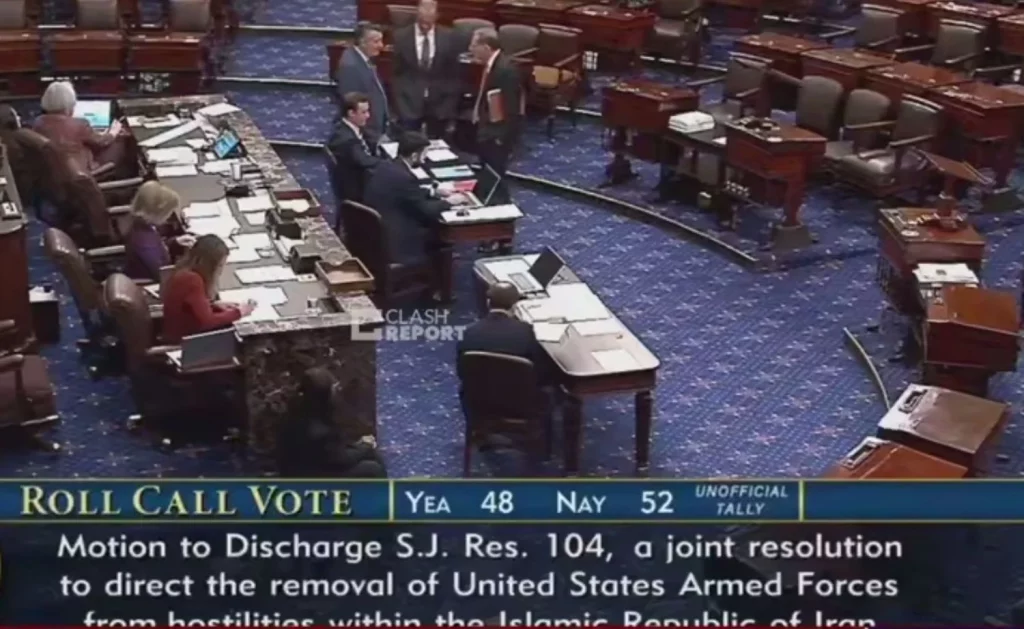
The United States Senate has blocked a resolution that would have prevented President Donald Trump from ordering military action against Cuba without congressional approval. The Republican-led Senate voted 51 to 47, almost entirely along party lines, on a procedural measure that blocked a Democratic-led war powers resolution.For students of international relations, this moment is a textbook example of how power, sovereignty, and diplomacy collide in the real world.
Background: Why Cuba Is at the Center of Global Attention
The US-Cuba relationship has been one of the most studied cases in any international relations course, international relations book, or international relations pdf for decades. From the Cold War standoff to modern sanctions, the two nations have never fully normalized ties.
Trump has escalated pressure on Cuba this year with a de facto maritime blockade while openly floating the possibility of military action. The US has used Coast Guard and naval assets to intercept or deter fuel shipments bound for Cuba, sharply restricting supplies.This is precisely the kind of coercive statecraft that international relations in political science examines as a tool of great power competition.
For anyone pursuing an international relations degree, or reading international relations notes on coercive diplomacy, this crisis is a live classroom. It illustrates how economic pressure, military signaling, and diplomatic breakdown interact on the world stage.
Details: What Happened in the Senate Vote
The Republican-led US Senate blocked a Democratic-led resolution that would have barred President Donald Trump from military action against Cuba without congressional approval. The Senate voted 51 to 47, almost entirely along party lines, on a procedural measure that blocked a war powers resolution, as members of Trump’s party argued that there are no active US hostilities against Cuba.
The resolution was sponsored by Senators Ruben Gallego, Tim Kaine, and Adam Schiff. It would have blocked Trump from using military force to topple Cuba’s regime something that Democrats fear is a growing likelihood after Trump ordered a naval blockade of the island nation.
Republicans Susan Collins of Maine and Rand Paul of Kentucky voted in favor of advancing the measure. Pennsylvania’s John Fetterman was the only Democrat in opposition.The bipartisan outliers on both sides show just how complex international relations decision-making is, even within a single government.
The 51-47 vote to kill the measure followed a series of failed efforts to halt the war against Iran and came amid concerns from Democrats that Trump will engage troops in another military operation without input from Congress after attacking Tehran, carrying out a raid in Venezuela, and striking vessels in the Caribbean.
International Relations in Political Science: The Constitutional Debate
A core topic in any international relations university curriculum is the question of who holds the power to declare war. The US-Cuba standoff puts that question directly under the spotlight.
Although the US Constitution says Congress not the president can declare war, that restriction does not apply to short-term operations or to counter an immediate threat. The White House says Trump’s actions are within his rights, and obligation, as commander-in-chief to protect the US.
This constitutional tension is a classic subject in international relations in political science, where scholars debate the balance between executive war-making powers and legislative oversight. Students who download any international relations pdf on American foreign policy will recognize this debate immediately it has roots going back to the Vietnam War era.
Senate Republicans have voted six times to defeat Democratic-sponsored resolutions under the War Powers Act to halt military operations against Iran without congressional authorization.This pattern is studied in international relations notes on the erosion of multilateral checks on executive power.
Quotes: What Senators Said
The floor speeches before the vote offered some of the most striking language in recent US foreign policy debates material that belongs in any international relations book on American power.
Senator Tim Kaine argued: “If anyone were doing to the United States what we are doing to Cuba, we would definitely regard it as an act of war. My argument is that under the terms of the resolution, we are already engaged in hostilities with Cuba because we are using American force, primarily the Coast Guard, but other assets as well, to engage in a very devastating economic blockade.”
Senator Rick Scott countered that “the measure we’re talking about is completely out of touch with the facts in Cuba, nor is it relevant to anything actually happening in Cuba right now.”Kaine further warned: “This would be a war for one thing regime change. That’s not a reason for the United States to go to war, certainly without a congressional debate.”These contrasting positions reflect the broader ideological divide in US international relations policy today.
International Relations Degree, Jobs, and Salary: Why This Moment Matters for Students
For anyone enrolled at an international relations university or studying for an international relations degree, the Cuba crisis is not abstract theory it is happening right now. Here is why this matters for your career.
International relations jobs are in high demand across government, international organizations, NGOs, think tanks, and the private sector. Those who understand events like this Senate vote have a direct advantage in careers such as diplomatic officer, foreign policy analyst, intelligence officer, international development specialist, and UN or embassy staff. A strong grasp of international relations in political science opens doors across all of these fields.
International relations salary varies widely. Entry-level analysts at government agencies or NGOs can expect between $45,000 and $65,000 annually. Senior diplomats, foreign service officers, and policy directors can earn between $90,000 and over $150,000 depending on the country and institution. Professionals who specialize in conflict zones or geopolitical hotspots like US-Cuba international relations command higher compensation due to the specialized knowledge required.
For students looking to deepen their knowledge, there is no shortage of resources. A well-curated international relations pdf or an authoritative international relations book such as works by Hans Morgenthau, Joseph Nye, or John Mearsheimer will give you the theoretical tools to analyze events like this one. Your international relations notes from class will suddenly come alive when you see these theories playing out in real Senate votes and naval blockades.
The best international relations university programs in the world including those at Georgetown, Oxford, Sciences Po Paris, and Lahore University of Management Sciences (LUMS) in Pakistan teach students to analyze precisely these kinds of geopolitical flashpoints. Graduates go on to fill international relations jobs across the spectrum of global governance and policy.
Impact: What This Means for Global Order
The Senate vote sends a powerful signal beyond Washington. It tells the world that the US executive branch retains broad authority to project military force with minimal legislative constraint. For scholars of international relations, this raises urgent questions about the future of the international rules-based order.
The Constitution grants Congress the power to declare war, but it has not done so since World War II, as presidents have increasingly taken unilateral military action or sought formal authorizations for the use of military force from Congress.This long-term shift is a foundational topic in international relations in political science studied in virtually every international relations degree program globally.
Cuba itself faces severe consequences. For months, Democrats said the US has effectively engaged in hostilities with Cuba by imposing an oil blockade that has created a worsening humanitarian crisis, including the cancellation of medical procedures, blackouts, and the shutting down of municipal water supplies.The human cost of geopolitical maneuvering is a reality that international relations professionals must confront daily in their work.
Latin American nations, the European Union, and China are all watching closely. A US military move against Cuba would reshape regional alliances, test the limits of the Monroe Doctrine in the 21st century, and generate immediate repercussions across the international relations landscape from trade agreements to UN Security Council debates.
Conclusion: What Comes Next
Trump has said “Cuba is next.” He did not specify what he plans to do with the island nation, but has frequently said he believes its government is on the verge of collapse.The path ahead remains deeply uncertain.
Democrats will likely continue pushing war powers resolutions, though the Republican Senate majority makes success unlikely in the near term. Diplomatic back-channels, international pressure, and the humanitarian situation inside Cuba will all shape how this crisis evolves. For students, professionals, and researchers in international relations, this is a story to follow closely it touches every pillar of the discipline, from security studies to human rights law to economic statecraft.
Whether you are reading an international relations pdf, attending an international relations university lecture, studying international relations notes for an exam, or applying for international relations jobs the US-Cuba standoff is your case study. It is international relations in political science made visible, urgent, and deeply consequential.
FAQs
What jobs can international relations get you?
An international relations degree prepares you for a wide range of careers. Common international relations jobs include diplomat, foreign service officer, intelligence analyst, international development consultant, policy researcher, human rights officer, journalist covering global affairs, and roles within international organizations like the United Nations, World Bank, or NATO. The international relations salary for these roles ranges from entry-level positions around $45,000–$65,000 to senior roles earning well above $100,000.
Is IR a useful degree?
Yes, an international relations degree is highly useful and versatile. It equips graduates with critical thinking, geopolitical analysis, cross-cultural communication, and policy writing skills. With events like the US-Cuba standoff dominating global headlines, employers in government, NGOs, think tanks, and the private sector actively seek candidates with strong international relations in political science backgrounds. It pairs well with law, economics, or a second language to maximize career outcomes.
What jobs can I do with IR?
With an international relations degree, you can pursue international relations jobs in diplomacy, security analysis, international law, humanitarian aid, global journalism, corporate geopolitical risk consulting, academia, and multilateral institutions. Studying international relations notes and recommended international relations books throughout your degree will strengthen your ability to compete for these roles. Many top international relations university programs also offer internship placements that open doors directly into government ministries or international organizations.