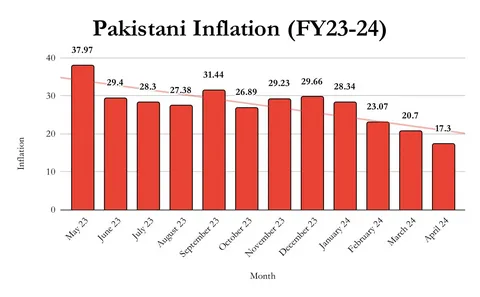

The Pakistan inflation rate has entered double digits again after nearly two years, signaling renewed economic pressure on households and businesses. Rising costs of essential goods, fuel adjustments, and currency fluctuations have all contributed to this increase. For many consumers, the return of higher inflation means reduced purchasing power and growing financial strain.
This shift highlights ongoing challenges in stabilizing prices despite earlier signs of improvement. Economists are now closely watching whether inflation will continue to rise or stabilize in the coming months.
What Is Driving the Pakistan Inflation Rate
The recent rise in the Pakistan inflation rate is linked to multiple factors affecting the economy. Increased energy prices, higher import costs, and supply chain disruptions have all pushed prices upward. Additionally, currency depreciation has made imported goods more expensive, adding further pressure on inflation levels.
The state bank of pakistan inflation rate policies aim to control these pressures, but global economic trends also play a significant role. External factors such as international oil prices and global demand continue to influence local inflation trends.
Comparison With Previous Years
Looking at the pakistan inflation rate last 10 years, the country has experienced cycles of high and moderate inflation. Periods of economic instability often lead to sharp increases, while reforms and policy adjustments help bring rates down temporarily.
In pakistan inflation rate 2023, inflation reached significant highs before gradually easing. The current return to double digits suggests that underlying economic challenges have not been fully resolved.
Impact on Daily Life
A rising Pakistan inflation rate directly affects everyday living. Food prices, transportation costs, and utility bills tend to increase, making it harder for households to manage expenses. Lower-income groups are especially vulnerable, as a larger portion of their income is spent on basic necessities.
Businesses also face higher operating costs, which may lead to increased prices for goods and services. This creates a cycle where inflation continues to impact both consumers and the broader economy.
Role of Monetary Policy
The State Bank of Pakistan plays a crucial role in managing the Pakistan inflation rate through monetary policy. Interest rate adjustments are often used to control inflation by reducing excessive spending and stabilizing the currency.
However, balancing inflation control with economic growth remains a challenge. Higher interest rates can slow down business activity, while lower rates may increase inflationary pressure.
Future Outlook
The future of the Pakistan inflation rate depends on both domestic policies and global economic conditions. Government measures to control prices, improve supply chains, and stabilize the currency will be key factors in determining whether inflation decreases or remains elevated.
Analysts suggest that sustained economic reforms and careful financial management are essential to maintaining long-term stability.
Conclusion
The return of the Pakistan inflation rate to double digits marks an important moment for the country’s economy. While inflation is influenced by multiple factors, effective policy decisions and economic stability will play a critical role in controlling future trends.
For consumers and businesses alike, adapting to changing economic conditions will be essential as the country works toward stabilizing prices and supporting growth.
FAQs
What is the inflation rate in Pakistan?
The Pakistan inflation rate has recently crossed into double digits, reflecting rising prices across key sectors of the economy.
What is 1000 PKR in 1990 worth today?
Due to inflation over time, 1000 PKR in 1990 would have significantly higher purchasing power compared to today, meaning prices have increased considerably.
What country has the highest inflation?
Countries experiencing economic crises or instability often record the highest inflation rates, though rankings change frequently based on global conditions.