
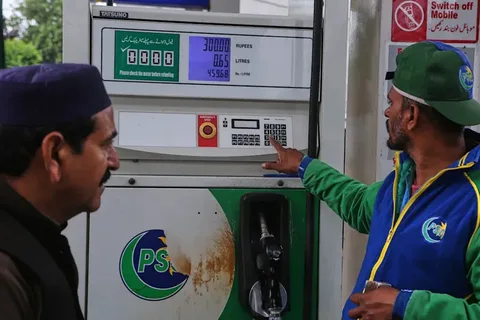
Pakistan is facing its worst petrol crisis in decades. The government of Pakistan revised petroleum prices with effect from May 1, 2026, raising the petrol price by Rs. 6.51 per litre — from Rs. 393.35 to Rs. 399.86 per litre while High-Speed Diesel surged by Rs. 19.39 per litre to reach Rs. 399.58 per litre. This fuel price shock is pushing millions of Pakistanis deeper into economic hardship, with no immediate relief in sight.
Background: How Did the Pakistan Oil Crisis Begin?
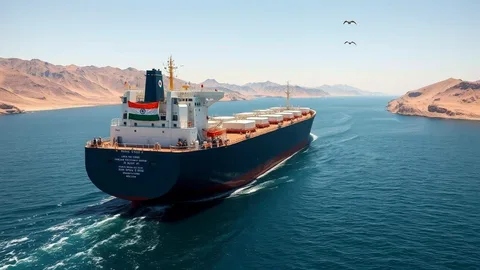
The roots of the current Pakistan oil crisis lie in a global geopolitical storm. The most dramatic chapter in Pakistan’s fuel price history opened on February 28, 2026, when the United States and Israel launched military strikes on Iran. Iran responded by closing the Strait of Hormuz the narrow waterway through which roughly 20% of the world’s oil supply transits. Brent crude surged from approximately $75 per barrel to over $130 within weeks.
Pakistan was left dangerously exposed. The government absorbed the first wave of cost increases through emergency spending — reportedly over Rs. 129 billion in total subsidy — to prevent an immediate shock at the pump. On March 7, 2026, petrol was raised by Rs. 55 to Rs. 321.17 per litre, and the pricing cycle was shifted from fortnightly to weekly.
Since then, prices have climbed steadily, making this one of the gravest fuel crises in Pakistan’s modern history.
Pakistan Petrol Price Today: The Hard Numbers
The current petrol price in Pakistan is PKR 399.86 per litre, and High-Speed Diesel stands at Rs. 399.58 per litre, effective from May 1, 2026. Both fuel types are now dangerously close to the Rs. 400 per litre psychological barrier.
The highest petrol price ever recorded in Pakistan was Rs. 458.40 per litre on April 3, 2026. That remains a historic peak, and while prices have eased slightly since then, they remain at levels that are crushing household budgets and business operations across the country.
Pakistan has gone from paying Rs. 55 per litre at the pump in 2006 to Rs. 366.58 per litre in April 2026 a rise of over 560% in two decades. The speed and scale of recent increases have few parallels in the nation’s economic history.
Pakistan Oil Crisis: Structural Weaknesses Exposed
The petrol crisis in Pakistan today is not purely a result of global events. Experts say the country’s energy policy failures have made it far more vulnerable than it needed to be.
Pakistan has been experiencing a poor energy system for a long time, with high dependence on imports, low refinery capacity, and poor long-term planning among the main issues. The country has simply not invested enough in modernizing its energy infrastructure or diversifying its sources of fuel.
In Pakistan, where most crude oil and petroleum products are imported, even slight fluctuations in international markets can be translated into immediate national price hikes. According to economic surveys by the Ministry of Finance, petroleum imports cost the country billions of dollars annually, and petroleum ranks among the highest items in its import bill.
The oil crisis in India, by contrast, has been partially cushioned by the fact that India holds 60–70 days of strategic oil reserves that it can release immediately in times of supply disruption a buffer Pakistan simply does not have.
Pakistan Oil Reserves: A Shocking Admission
One of the most alarming revelations of this crisis has been the state of Pakistan’s oil reserves. Pakistan’s Petroleum Minister Ali Pervaiz Malik acknowledged that the country lacks strategic oil reserves and is operating on minimal stock levels. This admission sent shockwaves through the public and financial markets alike.
The council stated that Pakistan currently has sufficient fuel reserves, including 28 days of petrol and 34 days of diesel stock, ensuring an uninterrupted supply to consumers. However, analysts warn that 28 days of reserves is dangerously thin for a country this heavily import-dependent.
Most countries have emergency oil reserves that can be discharged in the event of any supply disruption. Such reserves should be expanded to cushion the economy against unexpected price spikes in world prices. Pakistan’s failure to build such reserves over decades is now proving to be a costly oversight.
What Is a Fuel Crisis? Meaning and Context
A fuel crisis refers to a situation where the supply of petroleum products is severely disrupted, or prices rise so steeply that ordinary people and businesses can no longer afford them. Fuel prices feed directly into inflation diesel powers trucks, buses, tractors, generators, and parts of the food supply chain, while petrol affects commuting and consumer transport.
In practical terms, a fuel crisis in a country like Pakistan means higher food prices, more expensive transportation, reduced industrial output, and increased poverty. It is not just a problem at the petrol pump it ripples through every part of daily life.
Quotes: What Officials and Experts Are Saying
Prime Minister Shehbaz Sharif said Pakistan’s oil import bill had surged from $300 million before the conflict to $800 million now, which he said erased all the economic progress the country had made over the past two years.
Economist Kamran Butt, speaking to Dawn newspaper, offered a stark warning: “Conventional economics tells us that oil price hikes trigger a chain reaction across the economy.”
The Oil and Gas Regulatory Authority (OGRA) issued a statement rejecting rumours of petrol pump closures, confirming that no petroleum association has announced any strike and that fuel supply remains stable and uninterrupted nationwide.
Pakistan Economic Crisis: The Wider Impact
The Pakistan economic crisis is being directly worsened by the fuel price spiral. The knock-on effects are increasingly severe, impacting everything from agriculture and transport to the price of food and basic goods, worsening the plight of families already facing a cost-of-living crisis.
The surge in fuel prices is triggering a chain reaction across Pakistan’s economy —transportation costs are rising sharply, and food and essential commodity prices are increasing. For a country already battling high inflation and weak foreign exchange reserves, this is a compounding disaster.
Pakistan is heavily dependent on imported energy, and higher costs worsen its already precarious balance-of-payments position. The country is also highly reliant on remittances from workers overseas, mostly labourers working in Gulf states, and the war could devastate this income.
The government is caught between two bad options pass on global oil prices to consumers and face public anger, or subsidise fuel and blow a hole in the budget. Neither path is painless, and both carry serious political consequences.
Regional Comparison: Pakistan vs India on Oil Crisis
The contrast between Pakistan and its neighbour is stark. While the oil crisis in India has also caused concern, India’s position is far stronger due to its substantial strategic petroleum reserves, diversified import sources, and a larger economy that can absorb shocks more effectively. Pakistan’s lack of reserves and narrow foreign exchange buffer make its oil crisis considerably more acute and harder to manage in the short term.
What Needs to Happen: Expert Recommendations
Policy experts have outlined a clear roadmap for managing the Pakistan petrol crisis going forward.
First, there should be an increase in transparency in the management of fuel prices and supply by the government. Second, Pakistan should increase its petroleum strategic reserves so that in the event of any supply disruption, the economy has a cushion. Third, the government should enhance monitoring of fuel supply to limit panic buying and hoarding.
In the medium term, Pakistan needs to invest in the domestic refinery sector. The old refinery infrastructure has made the country rely on the importation of refined petroleum products instead of refining crude oil locally.
Increased infrastructure for public transportation in major cities should also be provided. The most sustainable solution for Pakistan remains the diversification of its energy mix.
Conclusion: What Comes Next?
The 2026 price surge was primarily driven by external shocks, including rising global oil prices linked to the Iran-US war, increased freight and insurance costs, closure of the Strait of Hormuz, and currency devaluation. Until geopolitical tensions ease and global crude prices stabilize, Pakistan’s fuel costs are unlikely to drop significantly.
As global oil markets remain volatile and reserves run thin, Pakistan’s fuel crisis is fast evolving into a broader economic challenge one that could test the country’s stability in the days ahead.
The government must act swiftly both to cushion citizens from immediate pain and to build the long-term energy infrastructure that prevents future crises of this scale.
Frequently Asked Questions (FAQs)
Is Pakistan in crisis now?
Yes. Pakistan is currently experiencing a serious petrol crisis and broader economic stress. Fuel prices have surged to near-record levels, the oil import bill has more than doubled, and the country’s foreign exchange reserves remain under pressure. The government is managing a difficult balance between public relief and fiscal responsibility.
What is the national drink of Pakistan?
Pakistan’s national drink is sugarcane juice, known locally as ganna ka ras. It is widely consumed across the country, especially in summers, and is deeply embedded in Pakistani food culture. Some also consider lassi (a yoghurt-based drink) and chai (tea) as cultural staples, though sugarcane juice holds the unofficial national title.
What is the current situation of the Pakistan economy?
Pakistan’s economy is under significant strain in 2026. The fuel price crisis has dramatically increased the country’s import bill, worsened inflation, and added pressure to its foreign exchange reserves. The government had made some economic progress over the prior two years, but PM Shehbaz Sharif himself acknowledged that the oil shock has erased much of those gains. Pakistan continues to work with the IMF and is seeking ways to stabilize prices while protecting vulnerable citizens.