The Strait of Hormuz confrontation has become the defining crisis of 2026. What began as a US-Israeli military operation against Iran has evolved into a full-scale blockade of the world’s most important energy corridor. With diplomacy stalled, oil prices soaring, and thousands of ships stranded, the world is watching one narrow waterway determine the fate of the global economy.
Background: How the Strait of Hormuz Confrontation Began
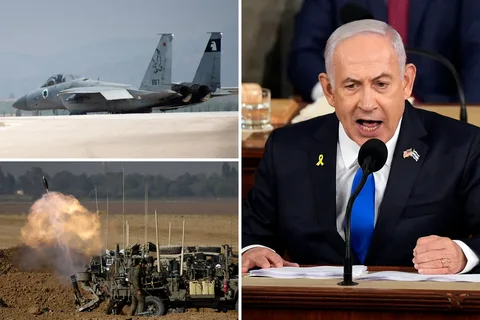
To understand today’s Strait of Hormuz confrontation, one must go back to February 28, 2026. On that date, the United States and Israel launched coordinated airstrikes on Iran under an operation targeting military facilities, nuclear sites, and Iranian leadership. Supreme Leader Ali Khamenei was killed in the strikes, sending shockwaves across the entire Middle East.
Iran’s response was immediate and sweeping. Missile barrages were launched against Israeli cities and US bases in the Gulf, including facilities in the UAE, Qatar, and Bahrain. The conflict expanded quickly, drawing in Lebanon’s Hezbollah and further destabilising an already fragile region.
But Iran’s most consequential counter-move was not a missile strike — it was a shipping blockade. On March 4, 2026, Iran officially declared the Strait of Hormuz closed to foreign vessels. The Strait of Hormuz confrontation had begun in its most dangerous modern form.
What Is the Strait of Hormuz and Why Does It Matter?
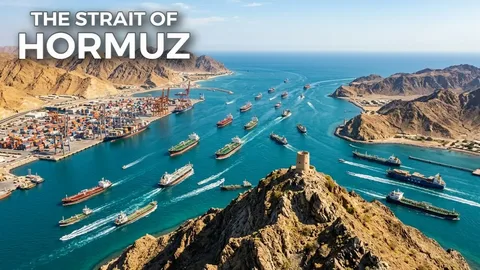
The Strait of Hormuz is a narrow passage of water between Iran to the north and Oman to the south. At its narrowest point, it is only about 34 kilometres wide. Yet this small strip of water carries an enormous share of the world’s energy supply.
Before the current crisis, approximately 20 percent of global seaborne oil trade and 20 percent of the world’s liquefied natural gas passed through the strait every single day. Around 20 million barrels of oil transited it daily. No other single maritime passage comes close to its strategic weight for global energy markets.
When Iran closed the Strait of Hormuz in early March 2026, the impact on global trade was immediate and severe. Oil prices surpassed 100 US dollars per barrel on March 8, the fastest rise during any conflict in recent memory. Shipping firms suspended operations. Tanker traffic dropped by approximately 70 percent within days and fell close to zero shortly after.
Details: The Strait of Hormuz Confrontation Unfolds
The Strait of Hormuz news in the weeks following the closure was relentless. Iran’s Islamic Revolutionary Guard Corps issued warnings forbidding passage, boarded and attacked merchant vessels, and laid sea mines across the waterway.
By April 21, the International Maritime Organization reported that approximately 20,000 mariners and 2,000 ships were stranded in the Persian Gulf due to the closure. The Strait of Hormuz map live trackers showed near-zero vessel movement where thousands of ships had once sailed every month.
The situation became even more complex on April 13, when the United States launched its own counter-blockade, targeting all ships seeking to reach Iranian ports. The conflict in the Strait of Hormuz now had two overlapping blockades Iran blocking outbound energy trade and the US blocking Iran’s port access — creating a maritime standoff with no clear end.
The US also launched what it called Operation Project Freedom, an attempt to escort stranded vessels out of the Gulf. The operation was paused on May 6, with Washington citing what it described as “great progress” in Pakistan-mediated diplomatic talks with Tehran.
Despite the pause, attacks have continued. A container ship was struck by an Iranian attack as recently as May 7, and both US and Iranian forces exchanged fire in the strait in what analysts described as a controlled escalation while talks continued in the background.
Pakistan’s Role: Mediator in the Strait of Hormuz News
One of the most significant and under-reported elements of the Strait of Hormuz confrontation is Pakistan’s emergence as the key diplomatic conduit between Tehran and Washington.
Pakistan’s Interior Minister Mohsin Naqvi held urgent meetings in Tehran over the weekend of May 16–17. Prime Minister Shehbaz Sharif has been in contact with Qatar and Egypt, attempting to position Islamabad at the centre of regional diplomacy at a time when few reliable communication channels exist between the two sides.
Iran has been submitting its revised peace proposals through Pakistan. President Trump dismissed one such counter-proposal, calling it “totally unacceptable.” Yet the very fact that messages are still moving between Washington and Tehran through Islamabad is itself seen as a sign that both sides have not entirely abandoned the diplomatic track.
For Pakistan, this mediating role carries both opportunity and risk. It offers Islamabad significant diplomatic relevance at a time when the country is seeking to rebuild its international standing. But the longer the Strait of Hormuz confrontation drags on, the harder it becomes for Pakistan to balance its relationships with Tehran, Washington, and the Gulf states simultaneously.
Quotes: What Leaders and Experts Are Saying
US President Donald Trump, responding to Iranian counter-proposals, said that the United States had laid out a “very clear red line” and that Iran “cannot hold the world’s economies hostage.”
US Ambassador to the United Nations Mike Waltz stated: “President Trump has been clear they will never have a nuclear weapon and they cannot hold the world’s economies hostage.”
Iranian President Masoud Pezeshkian took a defiant tone even as negotiations progressed, stating: “We will never bow our heads before the enemy, and if talk of dialogue or negotiation arises, it does not mean surrender or retreat.”
Political scientist Chris Featherstone of the University of York told Al Jazeera: “This eruption in violence could be seen as an escalation. However, it also demonstrates the volatility of this conflict. Each side could be seeking to use these strikes to increase engagement with the peace negotiations.”
Former US diplomat Donald Jensen characterised the naval clashes in the Strait of Hormuz as a “controlled escalation” rather than mere skirmishes, arguing that both nations are “trying to show their resolve” while attempting to settle on a diplomatic framework.
Iran’s Ruet-i-Hilal Committee confirmed Eid ul Adha on May 27, though the broader context of the Strait of Hormuz news has overshadowed even major domestic events across the region.
The Nuclear Dispute at the Heart of the Confrontation
The Strait of Hormuz confrontation is not only about shipping. At its core lies a deeply unresolved dispute over Iran’s nuclear programme.
Iranian media reports suggest Washington’s latest proposal demands sweeping nuclear concessions while offering limited relief in return. Tehran is reportedly being asked to scale back much of its nuclear infrastructure, transfer enriched uranium abroad, and begin talks before broader hostilities formally end.
Iran, meanwhile, is demanding sanctions relief, access to frozen assets, reparations for wartime damage, and binding guarantees against future attacks. These are enormously wide gaps that have resisted bridging despite weeks of back-channel diplomacy.
Yet beneath the public posturing, there are faint signs of movement. Reports indicate Iran may be willing to suspend parts of its nuclear programme, transfer some enriched uranium abroad, and gradually reopen the Strait of Hormuz but only if sanctions are eased and credible security guarantees materialise. Neither side, however, wishes to appear politically weakened by showing flexibility first.
Global Impact: What the Strait of Hormuz Closure Means for the World
The Strait of Hormuz news has rippled far beyond the Persian Gulf. The impact on the global economy has been severe and wide-reaching.
Flights in and out of the Middle East came to a near-complete stop in the early weeks of the conflict, stranding residents, expatriates, and tourists across the region. Dubai International Airport, one of the world’s busiest, was damaged by drone strikes and temporarily closed.
Shipping lines rerouted to avoid both the Strait of Hormuz and the Red Sea, sending vessels on far longer and more expensive journeys around the tip of South Africa. War risk insurance premiums reportedly rose to four or five times their previous levels.
Gulf Arab governments, heavily dependent on open maritime trade, fear the economic consequences of prolonged closure. Several Arab states were forced to cut or suspend oil production due to Iranian attacks on regional infrastructure.
At the United Nations Security Council, China and Russia vetoed a resolution on April 7 calling for freedom of navigation in the Strait of Hormuz. NATO allies including the UK, Germany, and Japan declined US requests to join a military escort operation, deepening divisions among Western and allied powers over how to respond.
Conclusion: A Fragile Ceasefire and an Uncertain Future
A conditional ceasefire between the US and Iran has been in place since April 7–8. But the Strait of Hormuz confrontation continues. The ceasefire has not reopened the strait. Attacks have continued. Negotiations are stalled on fundamental issues.
As Dawn’s editorial of May 20 put it, the Strait of Hormuz has become the real centre of the confrontation. Earlier phases of the crisis revolved around nuclear restrictions. Today, the dispute concerns who shapes the Gulf’s security order and who controls one of the world’s most vital energy corridors.
Gulf governments fear the economic consequences of another escalation. Iran appears convinced that surviving months of military and economic pressure has strengthened its negotiating hand. Washington still seems to believe that sustained pressure can force Tehran into larger concessions. None of these positions are easily reconcilable.
Unless negotiations soon produce progress rather than competing ultimatums, the Middle East may be heading not towards peace but towards a prolonged era of recurring crises with the Strait of Hormuz live situation serving as the barometer for every surge and retreat in that tension.
FAQs
What’s happening with the Strait of Hormuz?
The Strait of Hormuz confrontation is ongoing as of May 2026. Iran declared the strait closed on March 4, 2026, following US and Israeli airstrikes on Iran that killed Supreme Leader Ali Khamenei. Since then, Iran has attacked merchant vessels, laid sea mines, and blocked the passage of ships from the US, Israel, and their allies. The US launched a counter-blockade on Iranian ports in April. A fragile ceasefire has been in place since April 7–8, but the strait remains effectively closed. Pakistan is serving as the key diplomatic mediator between Tehran and Washington. Shipping traffic has fallen to around 5 percent of its pre-conflict levels, causing massive disruption to global oil and gas trade.
What is the conflict in the Strait of Hormuz?
The conflict in the Strait of Hormuz is part of the broader 2026 Iran war. The United States and Israel launched coordinated airstrikes on Iran on February 28, 2026, targeting nuclear sites, military facilities, and Iranian leadership. Iran responded with missile attacks on Gulf states and the closure of the strait to foreign shipping. The Islamic Revolutionary Guard Corps attacked merchant vessels, laid mines, and warned all ships against passage. The US countered with a blockade of Iranian ports and an escort operation called Project Freedom. The conflict now centres on two overlapping questions Iran’s nuclear programme and who controls the security architecture of the Gulf with the Strait of Hormuz as the physical battleground for both disputes.
Which country controls the Strait of Hormuz?
No single country formally controls the Strait of Hormuz, as it is an international waterway governed by the United Nations Convention on the Law of the Sea. However, Iran has the longest coastline along the Persian Gulf and its military forces both the regular Iranian Navy and the Islamic Revolutionary Guard Corps Navy have long been positioned to project power throughout the region and over the strait. Iran has used this geographic advantage to declare the strait closed in 2026, attack passing vessels, and lay sea mines. Oman lies on the southern side of the strait and has historically served as a neutral diplomatic back-channel. The United States maintains a significant naval presence in the Persian Gulf and has sought to challenge Iran’s effective closure through its own military operations and diplomatic pressure.