

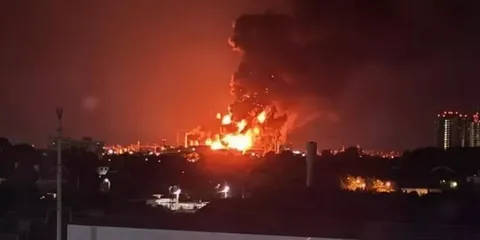
The Ryazan oil refinery attack has drawn renewed attention to Ukraine’s expanding drone campaign against strategic targets inside Russia. Ukrainian drone strikes reportedly hit multiple locations, including energy infrastructure, as Kyiv seeks to weaken Moscow’s military and economic capabilities far from the battlefield.
The latest developments have once again placed the Russia-Ukraine war latest news today at the center of global attention. Security analysts say attacks on oil facilities could have broader implications for Russia’s fuel supplies, military logistics, and economic stability as the conflict enters another intense phase.
Background
The Russia-Ukraine war has evolved significantly since the conflict escalated into a full-scale war in 2022. While the fighting initially focused on front-line battles, both sides have increasingly relied on long-range drones, missiles, and precision strikes to target strategic infrastructure.
Ukraine has steadily expanded its drone capabilities over the past two years. These systems now allow Ukrainian forces to reach deep into Russian territory, including regions hundreds of kilometers away from the border. As a result, Ukrainian drone strikes Russia oil facilities have become a recurring feature of the conflict.
Energy infrastructure has emerged as a particularly important target. Oil refineries, fuel depots, and energy transportation networks play a critical role in supporting military operations and generating revenue for the Russian economy.
What Happened in the Ryazan Oil Refinery Attack?
According to reports, Ukrainian drone strikes targeted multiple locations inside Russia, including facilities associated with the Ryazan oil refinery. The refinery is considered one of Russia’s important energy processing sites and has been mentioned in previous security assessments due to its strategic value.
Russian authorities reported air defense activity in response to incoming drones. While officials claimed many drones were intercepted, reports indicated that some targets experienced disruptions and damage.
The Ryazan oil refinery attack quickly became one of the most discussed developments in Ukraine war news because of the facility’s significance within Russia’s energy sector. Images and reports circulating online showed emergency responses near affected areas, although independent verification of the full extent of the damage remained limited.
Why the Ryazan Refinery Matters
The Ryazan refinery occupies an important place in Russia’s fuel production network. Facilities like this process crude oil into gasoline, diesel, jet fuel, and other petroleum products essential for both civilian and military use.
Military analysts note that attacks against oil infrastructure are designed to create pressure beyond the battlefield. By targeting fuel production and distribution, Ukraine hopes to complicate Russian logistics and increase the cost of sustaining military operations.
The latest Ryazan oil refinery map assessments shared by observers highlight the refinery’s location within a broader network of energy assets that support regional economic activity. Any prolonged disruption could potentially affect supply chains and industrial operations.
Ukraine’s Expanding Drone Strategy
Ukraine has increasingly relied on domestically produced long-range drones to strike military and economic targets inside Russia. These systems have evolved rapidly, allowing Ukrainian forces to conduct operations far from the front lines.
Recent months have seen a noticeable increase in attacks on refineries, military airfields, weapons storage facilities, and transportation hubs. Experts believe these operations are intended to weaken Russia’s ability to sustain military campaigns while demonstrating Ukraine’s growing technological capabilities.
The success of such missions depends on several factors, including drone range, navigation systems, intelligence gathering, and the ability to evade Russian air defenses.
Ukraine Drone Strikes Moscow and Other Regions
The Ryazan incident is not an isolated event. Ukraine drone strikes Moscow and surrounding regions have become increasingly common throughout the conflict.
Russian officials frequently report drone interceptions near the capital, while Ukrainian authorities rarely comment on specific operations. Nevertheless, attacks near Moscow carry symbolic importance because they demonstrate that strategic locations deep inside Russia are not beyond reach.
These operations also force Russian authorities to dedicate additional resources to air defense systems around major cities, military facilities, and critical infrastructure.
Russian Response to the Attacks
Russia has responded to the growing drone threat by strengthening air defense coverage across key regions. Additional radar systems, anti-aircraft missile batteries, and electronic warfare equipment have been deployed to protect sensitive sites.
Officials continue to argue that most incoming drones are successfully intercepted. However, repeated attacks on refineries and infrastructure suggest that some drones continue to penetrate defensive networks.
Russian military planners now face the challenge of balancing battlefield requirements with the need to protect economic and industrial assets spread across a vast territory.
Impact on Global Energy Markets
Although individual refinery attacks may not immediately disrupt global oil supplies, repeated strikes can create uncertainty in energy markets. Traders closely monitor developments involving major oil-producing countries because disruptions can influence prices and investor sentiment.
The Ryazan oil refinery attack has renewed concerns about the vulnerability of energy infrastructure during wartime. Market analysts warn that sustained attacks on production facilities could contribute to volatility in oil markets, particularly if multiple sites experience operational disruptions simultaneously.
Countries dependent on imported energy are especially sensitive to developments affecting major oil exporters.
What the Ukraine War Map Shows
The latest Ukraine war map illustrates how the conflict has expanded beyond traditional front-line engagements. Areas deep inside Russia are increasingly becoming part of the operational landscape as drone technology advances.
Military experts note that modern warfare is no longer limited to direct battlefield clashes. Strategic infrastructure, communication systems, transportation networks, and energy facilities are now critical components of broader military campaigns.
The geographic reach of recent operations demonstrates how both sides are adapting to evolving battlefield realities.
International Reaction
Western governments continue to support Ukraine while emphasizing the importance of international law and regional stability. At the same time, concerns remain about the risk of escalation as attacks reach deeper into Russian territory.
Diplomatic efforts aimed at ending the conflict have produced limited progress. As both sides continue military operations, the likelihood of further drone attacks and countermeasures remains high.
International observers are closely watching whether infrastructure strikes become even more frequent in the coming months.
Future Developments
The Ryazan oil refinery attack may represent another step in the growing importance of drone warfare. Military analysts expect both Ukraine and Russia to invest further in unmanned systems, electronic warfare technologies, and air defense capabilities.
Future operations could focus increasingly on strategic targets rather than solely front-line positions. This trend suggests that infrastructure protection will remain a major challenge for governments involved in the conflict.
As the war continues, Ukrainian drone strikes Russia oil facilities are likely to remain a significant aspect of the broader military strategy employed by Kyiv.
Conclusion
The Ryazan oil refinery attack underscores the changing nature of the Russia-Ukraine war. Long-range drones are reshaping military operations, allowing strikes far beyond traditional battlefields and increasing pressure on strategic infrastructure.
While the full impact of the latest attack is still being assessed, the incident highlights the growing role of energy facilities in modern conflict. As Ukraine expands its drone campaign and Russia strengthens its defenses, the battle over critical infrastructure is expected to remain a central feature of the war.
FAQs
How much of Russia’s army is left?
Russia continues to maintain one of the world’s largest military forces despite significant losses during the Ukraine conflict. Exact numbers vary because both wartime reporting and intelligence estimates differ. Russia has also conducted mobilization efforts, recruited contract soldiers, and increased defense production to replenish personnel and equipment losses. As a result, while the military has faced substantial attrition, it remains a major fighting force with significant capabilities.
Which country is No. 1 in oil?
The United States is generally considered the world’s largest oil producer based on recent production figures. Other major producers include Saudi Arabia and Russia. Together, these countries account for a substantial share of global oil output and play a critical role in international energy markets. Production rankings can vary slightly depending on the measurement period and reporting source.
How does India pay for Russian oil?
India purchases Russian oil through a variety of payment mechanisms that comply with applicable regulations and financial arrangements. Transactions are typically settled through banking channels using agreed currencies and payment systems. Since the start of the Russia-Ukraine conflict, India has expanded energy trade with Russia, taking advantage of discounted crude oil supplies while maintaining its broader international economic relationships.