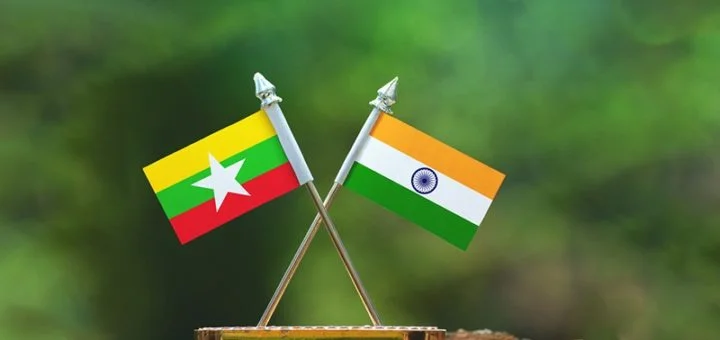
Myanmar India relations remain a key focus in South Asia as both countries work together on security, trade, connectivity, and regional stability. Recent developments have highlighted the importance of cooperation between New Delhi and Naypyidaw at a time when geopolitical competition in the region continues to grow.
The relationship between the two neighboring countries affects millions of people living along the shared border and plays a major role in regional economic and strategic planning. Experts believe that Myanmar India relations will remain crucial for South Asia’s future security and development.
Background
India and Myanmar share a border of more than 1,600 kilometers, connecting India’s northeastern states with Southeast Asia. The relationship between the two nations has evolved significantly over the decades through diplomatic engagement, economic partnerships, and security cooperation.
Many researchers studying Myanmar India relations Wikipedia resources and academic publications note that the relationship is built upon historical, cultural, and geographical connections. Both countries have maintained diplomatic ties while addressing complex regional challenges.
Myanmar serves as India’s gateway to Southeast Asia under New Delhi’s Act East Policy. At the same time, India remains an important partner for Myanmar in areas such as infrastructure, healthcare, education, and trade development.
Strategic Importance of Myanmar for India
Myanmar occupies a critical position between South Asia and Southeast Asia. This location makes the country strategically important for India’s regional ambitions and connectivity projects.
The India and Myanmar map clearly demonstrates the geographical significance of the relationship. Myanmar provides India with access to ASEAN markets and supports efforts to strengthen economic integration across the region.
Security cooperation remains another important pillar. Both countries have worked together to address cross-border challenges, including insurgency, illegal trafficking, and border management concerns.
Analysts preparing Myanmar India relations UPSC notes frequently highlight Myanmar’s role in India’s broader Indo-Pacific strategy. The country’s location gives it considerable influence over regional trade routes and strategic calculations.
Economic Cooperation Continues to Expand
India-Myanmar economic relations have shown steady growth despite regional uncertainties. Trade between the two countries includes agricultural products, pharmaceuticals, machinery, and various manufactured goods.
Indian investments have contributed to infrastructure development projects in Myanmar, while Myanmar exports important commodities to India. Economic experts suggest that improving transportation links could further increase bilateral trade in the coming years.
Several connectivity initiatives have been designed to improve movement between the two countries. These projects aim to facilitate trade, tourism, and business opportunities while strengthening regional integration.
Many policy researchers reference Myanmar India relations PDF reports to analyze the economic potential of bilateral cooperation. These studies often emphasize the importance of modern infrastructure and streamlined border procedures.
Security Cooperation Remains a Priority
Security concerns continue to shape Myanmar India relations. Both governments recognize the need for cooperation in maintaining stability along their shared border.
Joint efforts have focused on information sharing, border management, and combating criminal activities. Officials from both countries have repeatedly stressed the importance of maintaining peaceful and secure border regions.
The topic of India-Myanmar war occasionally appears in online discussions and historical analyses. However, modern relations between the two countries are centered on cooperation rather than conflict. Both governments continue to pursue diplomatic engagement and practical collaboration on security matters.
Experts believe that sustained dialogue remains essential for addressing challenges that affect border communities and regional stability.
Geopolitical Competition and Regional Influence
One of the most frequently asked questions in international affairs is: Does Myanmar support India or China?
The answer is more complex than choosing one side. Myanmar maintains diplomatic and economic relations with both India and China. Like many countries, Myanmar seeks to balance its relationships with major regional powers while protecting its own national interests.
China remains a significant economic partner for Myanmar through investment and infrastructure projects. At the same time, India continues to strengthen its engagement through development assistance, connectivity initiatives, and diplomatic cooperation.
Foreign policy analysts often note that Myanmar prefers maintaining constructive relations with multiple partners rather than aligning exclusively with any single country.
This balanced approach reflects Myanmar’s strategic position and the importance of maintaining flexibility in a rapidly changing geopolitical environment.
Expert Views on Future Cooperation
Regional experts believe that Myanmar India relations will continue to evolve in response to changing economic and security conditions. The future of the partnership is likely to depend on several key factors.
Improved connectivity projects could enhance trade and people-to-people exchanges. Greater economic integration may also create new opportunities for businesses operating in both countries.
Security cooperation is expected to remain a priority as governments seek to address cross-border concerns and support regional stability. Diplomatic engagement will also play a critical role in managing challenges and strengthening trust.
Academic institutions and policy centers continue to publish Myanmar India relations notes examining these developments and their implications for South Asia.
Impact on South Asia and Southeast Asia
The importance of Myanmar India relations extends beyond the two countries themselves. Strong bilateral ties can contribute to broader regional stability and economic growth.
Improved transportation networks could support trade across South Asia and Southeast Asia. Enhanced cooperation may also encourage greater investment and development opportunities throughout the region.
For India, successful engagement with Myanmar supports connectivity objectives and strengthens links with ASEAN economies. For Myanmar, cooperation with India provides access to markets, technology, and development partnerships.
Regional observers believe that continued collaboration can generate benefits for neighboring countries while promoting economic integration across Asia.
Conclusion
Myanmar India relations remain one of the most significant bilateral partnerships in South Asia. Security cooperation, economic engagement, and strategic connectivity projects continue to shape the relationship between the two neighboring nations.
While geopolitical competition and regional challenges persist, both countries have demonstrated a commitment to maintaining dialogue and expanding cooperation. As regional dynamics continue to evolve, Myanmar India relations are expected to remain an important factor influencing the future of South Asia and Southeast Asia.
FAQs
What is the issue between India and Myanmar?
The main issues between India and Myanmar involve border management, security concerns, migration challenges, and regional stability. Both countries share a long border that requires cooperation to address illegal activities and maintain peace. Despite occasional challenges, the two nations generally maintain positive diplomatic relations and continue working together on economic and security matters.
Why didn’t Burma join India?
Burma, now known as Myanmar, was administered separately from British India in 1937 during the colonial period. When India gained independence in 1947, Burma followed a separate political path and became an independent nation in 1948. Historical, administrative, and political considerations influenced this decision, leading to the creation of two distinct sovereign states.
What is India doing for Myanmar?
India supports Myanmar through development assistance, infrastructure projects, healthcare programs, educational cooperation, and connectivity initiatives. India has invested in transportation networks, border development projects, and economic partnerships designed to improve regional integration. Security cooperation and diplomatic engagement also remain important aspects of India’s relationship with Myanmar.