SOUTH ASIAN CHRONICLE
Reporting by Nasreen Khan | Friday, May 29, 2026 | Special Report: 2026 FIFA World Cup & Human Rights
World Cup 2026: America’s Biggest Sporting Moment Collides With Its Most Contentious Immigration Crisis
As millions of fans prepare to descend on 11 American cities, a national media briefing hosted by American Community Media reveals a country torn between the spectacle of global football and a federal immigration enforcement apparatus that has already separated families, threatened workers, deterred international visitors, and silenced communities whose joy is shadowed by fear
| AT A GLANCE: KEY FACTS
• 11 U.S. cities hosting World Cup matches: Los Angeles, San Francisco Bay Area, Seattle, Kansas City, Dallas, Houston, Atlanta, Miami, Philadelphia, New York/New Jersey, Boston • Tournament co-hosted by the U.S., Mexico, and Canada — the first 48-team World Cup in history • Over 120 civil society organizations have issued unprecedented travel advisories warning World Cup visitors about human rights risks • Human Rights Watch documented 167,000+ immigration arrests in World Cup host cities • A Haitian father was arrested by ICE at a FIFA Club World Cup event; his children remain separated from him • A Haitian national team player’s U.S. entry was delayed just days before the May 29, 2026 briefing • Union workers at SoFi Stadium in Los Angeles filed a complaint against FIFA over wages and working conditions • FIFA was accused by journalists of failing to assist community and ethnic media with press accreditation • Simultaneous interpretation in Korean, Mandarin, and Spanish provided at the ACOM briefing — reflecting the breadth of affected communities • Briefing organized by American Community Media (ACOM) on May 29, 2026, featuring experts from Human Rights Watch, NAACP, and the Migration Policy Institute |
| OPENING
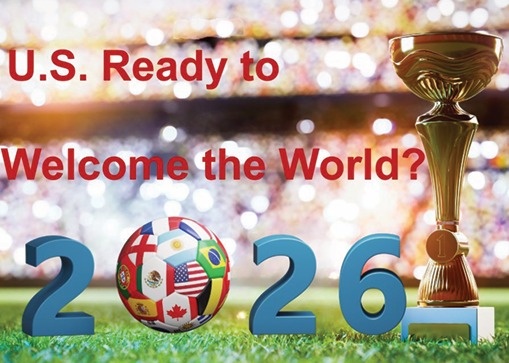
In a matter of days, the 2026 FIFA World Cup will kick off across the United States. The tournament — the largest in the history of the sport — arrives at a moment of profound tension between the nation’s self-image as a welcoming country and the immigration enforcement reality that hundreds of thousands of people in host cities experience every day. On Friday, May 29, 2026, American Community Media convened a national virtual news briefing — “Is the U.S. Ready to Welcome the World? The 2026 FIFA World Cup and America’s Big Test” — to examine that tension in granular, human, and policy-specific detail. What emerged was a comprehensive assessment of what is at stake: for fans, for workers, for immigrant families, for civil liberties, and for the image of the United States on the world stage. |
THE PANELISTS
Minky Worden — Director of Global Initiatives, Human Rights Watch Katherine La Puente — Children’s Rights Senior Coordinator, Human Rights Watch Jamal R. Watkins — Senior VP of Strategy and Advancement, NAACP Ariel G. Ruiz Soto — Senior Policy Analyst, Migration Policy Institute
Moderated by American Community Media with journalists from across the U.S. ethnic and community press. |
Setting the Scene: A Tournament Unlike Any Other, at a Moment Unlike Any Other
The 2026 FIFA World Cup is not simply the next edition of the world’s most-watched sporting event. It is the first World Cup in history to feature 48 national teams, expanded from the previous standard of 32. It is spread across three countries — the United States, Mexico, and Canada — and across 16 host cities. Eleven of those cities are in the United States, ranging from the Pacific to the Atlantic, from the Deep South to the Pacific Northwest, encompassing some of the most ethnically diverse and immigrant-dense urban centers on earth.
Los Angeles alone has a foreign-born population of nearly 40 percent. The New York/New Jersey metropolitan area is home to millions of immigrants from dozens of countries that will have teams in this tournament. Houston, Miami, Atlanta — each of these cities has communities with a direct, personal connection to the nations playing for the World Cup. The tournament, in other words, is not coming to places that are unfamiliar with international diversity. It is coming to places that are living it — and in many cases, struggling under an enforcement environment that has turned that diversity into a source of fear rather than celebration.
The 2026 World Cup arrives against a backdrop that no previous U.S.-hosted edition of the tournament — the United States last co-hosted in 1994 — faced in the same way. The Trump administration has made aggressive immigration enforcement a central pillar of its domestic policy, and the consequences are being felt in precisely the communities that a World Cup is supposed to celebrate.
The Unprecedented Travel Advisory: 120+ Organizations Warn the World
Perhaps the single most extraordinary fact to emerge from the May 29 briefing was the confirmation that more than 120 civil society organizations have issued a formal, coordinated travel advisory warning international visitors to the 2026 FIFA World Cup about potential human rights risks linked to U.S. immigration enforcement. This coalition includes the NAACP, the American Civil Liberties Union, Amnesty International, and over 120 other organizations under the banner of the Dignity2026 campaign.
To understand why this is unprecedented, consider what a travel advisory normally means: it is a warning issued by one government to its citizens about the dangers of traveling to another country. The United States routinely issues such advisories about foreign countries with human rights concerns. What has happened now is the inversion of that dynamic: civil society organizations within the United States are warning the world that coming to America carries human rights risks.
This is not a fringe position. These are among the most respected and well-resourced advocacy organizations in the United States, with deep legal expertise, extensive research capacity, and decades of credibility. Their decision to issue this advisory was not taken lightly, and it reflects a genuine and evidence-based assessment that the current enforcement environment creates real dangers for international visitors, particularly those from communities of color and countries subject to travel restrictions.
“This is totally unprecedented. These advisories represent a broad, multiracial coalition saying out loud what many communities already know: the current enforcement climate is dangerous and unwelcoming.”
— Jamal R. Watkins, Senior VP of Strategy and Advancement, NAACP
Journalist Nestor Fantini raised the economic stakes of this advisory directly, asking whether it could discourage tourism and negatively affect jobs in the hospitality, service, and entertainment sectors — echoing concerns raised by the U.S. Travel Association. The economic argument is real: millions of jobs in host cities depend on the success of the tournament. But panelists were clear that the responsibility for creating the conditions that require such warnings lies with the administration, not with the organizations sounding the alarm.
167,000 Arrests: The Data Behind the Fear
Human Rights Watch’s research provides the quantitative foundation for understanding why the travel advisory exists. Minky Worden shared during the briefing that HRW has documented and analyzed over 167,000 immigration arrests across the 11 World Cup host cities — a downloadable chart is available in their published report. This is not a national figure; it is specific to the cities that will host the world’s fans over the coming weeks.
These arrests represent more than statistics. Each number is a person: a parent taken from their children, a worker removed from their job, a community member who was building a life in the city that is now preparing to celebrate global unity. The fact that 167,000 arrests have occurred in the very cities where the World Cup will be held is not coincidental context. It is the defining context. It explains why immigrant communities are afraid, why advocacy organizations have felt compelled to issue travel warnings, and why the question of whether the United States is ready to welcome the world is not rhetorical.
The ICE Truce: What It Is, Why It Matters, and Why It Has Not Happened
The concept of an ICE Truce has become one of the central demands of the civil society response to the 2026 World Cup. Articulated by Minky Worden in a March 2026 op-ed in The Progressive titled ‘The World Cup Needs an ICE Truce,’ the proposal calls for a formal, publicly announced suspension of aggressive ICE enforcement operations for the duration of the tournament.
The logic is straightforward. When the United States committed to hosting the World Cup, it made an implicit promise to the world: come here, be safe, celebrate together. That promise is currently contradicted by the enforcement reality on the ground. An ICE Truce would be a concrete, time-limited step to make that promise meaningful. It would signal to international visitors, to immigrant communities in host cities, and to the world that the United States is capable of choosing welcome over enforcement, at least for the duration of the world’s most beloved sporting event.
Journalist Renee Barbee of La Nueva Voz asked the practically crucial question: ‘Does an ICE Truce require Congress approval?’ This matters because the answer determines the political pathway. If the executive branch has the authority to implement a truce unilaterally, then the obstacle is purely political will, not legal process. Panelists addressed the reality that the Trump administration has shown no inclination to implement any such pause, regardless of the legal mechanism required.
Journalist Tariq Khan asked directly about the timeline: ‘When will these immigration bans lift after Trump, or anytime soon?’ The honest answer, implicit in the panelists’ responses, is that no reliable timeline exists. The bans are a product of executive policy decisions and could theoretically be reversed quickly, but there is no indication that the current administration intends to do so, and future administrations have not yet made the commitments necessary to guarantee change.
A Father Arrested at a FIFA Event: The Case That Defines the Danger
The most humanly powerful moment of the briefing came when Katherine La Puente described the case of a Haitian father who was arrested by ICE while attending a FIFA Club World Cup event — an incident that HRW has been documenting and that serves as an ominous preview of what could unfold during the 2026 World Cup itself.
The details are devastating in their specificity. The father attended a FIFA event — not a protest, not a demonstration, but a sporting event. He was arrested by ICE. His children, who remained in the United States, were separated from their father and from the family’s primary breadwinner. As of the May 29 briefing, the family remains separated, still seeking asylum, with no resolution in sight.
Journalist Henrietta J. Burroughs asked: ‘What happened to the two children whose father was arrested?’ Minky Worden confirmed in the chat: ‘The family and children are still seeking asylum, separated from their father — and main breadwinner.’ This is the human consequence of enforcement without exceptions, enforcement without mercy, enforcement conducted in the shadow of a celebration that the world was invited to attend.
This case is not an anomaly. It is an illustration of a pattern. And it is the reason why human rights organizations are not simply asking for procedural improvements to the visa system — they are demanding a fundamental reassessment of whether the enforcement apparatus should be operating at all in the vicinity of these events.
Sex Trafficking: The Shadow Economy That Major Events Enable
Journalist Sunita Sohrabji raised a concern that is well-documented in the literature on major sporting events but often underreported in mainstream coverage: ‘Is there also the danger of increased sex trafficking during the games?’ The answer, unfortunately, is yes — and the evidence base for this concern is substantial.
Major international sporting events consistently attract an expansion of the sex trade in host cities, driven by the influx of large numbers of visitors, the expansion of informal economic activity, and the temporary disruption of normal community oversight structures. Research from previous World Cups in Europe and elsewhere has documented increases in trafficking activity during tournament periods. Katherine La Puente, whose research at Human Rights Watch includes sexual and digital violence against children, is among those monitoring this dimension of the 2026 tournament.
The enforcement environment adds a particularly troubling dimension to this concern. An ICE-heavy enforcement climate does not protect vulnerable people from trafficking — in many cases, it pushes them further underground, away from official support systems, and into the hands of exploiters who use the fear of deportation as a tool of control. Effective anti-trafficking work requires vulnerable people to be able to come forward without fear of arrest, which is precisely what the current enforcement environment makes difficult.
Workers Behind the World Cup: Exploitation, Union Complaints, and the Fight for Fair Pay
Carlos Roa of Te lo Cuento News asked one of the most important labor questions of the briefing: ‘What are the concerns about labor exploitation involving migrant workers in the event?’ The answer connects the glamour of the World Cup to the unglamorous reality of how events of this scale are actually built and staffed.
Workers in construction, stadium operations, hospitality, cleaning, transportation, and the informal economies surrounding major events are often migrants, often undocumented or in vulnerable legal situations, and often without the union protections or legal standing to push back against exploitation. The World Cup is no exception.
Minky Worden shared reporting from The Athletic documenting a union complaint filed against FIFA by workers at SoFi Stadium in Los Angeles — one of the World Cup’s showcase venues — over FIFA’s failure to ensure decent pay and working conditions. This complaint represents the organized labor movement taking concrete legal action to hold FIFA accountable for the conditions in which workers are employed at its events.
The broader issue extends beyond union-organized workers. For the thousands of workers in informal or semi-formal employment arrangements, the combination of exploitative conditions and the threat of immigration enforcement creates a near-perfect environment for abuse. Workers who complain about wage theft, unsafe conditions, or harassment risk not just losing their jobs but losing their freedom to remain in the country. This is the hidden cost of hosting a tournament in a high-enforcement environment.
Housing Spikes, Displacement, and What ‘Cleaning Up’ a City Really Means
Journalist Aitana Vargas asked about the financial impact of the World Cup on vulnerable local communities: ‘Host cities will see prices spike during the World Cup. Are there any reports on the negative financial impact this event will have on the most vulnerable local communities struggling to make ends meet, afford food, rent, or healthcare?’
This is a question with a well-documented answer from previous mega-events, and the 2026 World Cup is expected to follow the same pattern. In cities like Los Angeles and New York/New Jersey — already facing some of the most severe housing affordability crises in the country — the arrival of millions of well-funded international visitors creates enormous upward pressure on short-term rental prices, hotel rates, and consumer goods. The people least able to absorb these spikes are low-income residents, disproportionately immigrants and people of color.
Human Rights Watch documented the aggressive ‘sanitation sweeps’ that Los Angeles authorities have conducted as part of World Cup preparation — operations that use sanitation law as cover for removing unhoused people from visibility in advance of the tournament. Worden shared HRW’s video documentation of these sweeps, describing them as a pattern in which the city ‘criminalizes’ homelessness rather than addressing it, forcing thousands of unhoused people — many of whom are families, many of whom are immigrants — out of established encampments and into more precarious situations, without providing meaningful alternatives.
“Ethnic media must cover what mainstream outlets will not: the family separated at the gate, the exploited worker, the evicted neighbor. These are the World Cup stories that define what America truly is.”
— Panelist discussion, American Community Media Briefing, May 29, 2026
Visa Delays, Travel Bans, and the Barriers Facing Lawful Travelers
Ariel G. Ruiz Soto of the Migration Policy Institute addressed the complex policy landscape around visas, travel bans, and legal barriers to attendance. His expertise in migration policy across the region from Panama to Canada makes him uniquely positioned to analyze how the current enforcement environment intersects with the legitimate travel aspirations of millions of fans.
Journalist Nora Estrada of Kiosko News asked for specific data: ‘Is there any way to know how many visas have been requested by foreign fans so far? And from which country have the most visas been requested? Does the number of requests meet expectations?’ These questions point to a significant transparency gap in the World Cup planning process — information that should be publicly available and regularly communicated as a measure of whether the tournament is on track to deliver on its promise of international welcome.
Journalist Ling Huang posed a forward-looking policy question: ‘What specific policy changes or administrative improvements are still needed to ensure that visa delays and border enforcement do not discourage lawful travelers from attending?’ This is not a question about undocumented immigrants. It is a question about legal visitors who have applied through proper channels and who are still encountering delays, uncertainty, and fear because of an enforcement environment that does not distinguish between authorized and unauthorized presence in its day-to-day operations.
Journalist Araceli Martinez of Excelsior California raised the intriguing question of whether a new USCIS rule requiring residency applicants to leave the country for consular processing might be connected to concerns within the administration about World Cup tourist visa overstays. Pilar Marrero of ACOM noted this was best directed to Ariel Soto. The question reflects the complex, multi-dimensional way in which immigration policy changes ripple through communities in ways that are not always visible in their stated justifications.
The Player Who Almost Could Not Play: Travel Bans and National Teams
Journalist Henrietta J. Burroughs asked whether FIFA bans would affect players from affected countries — and the answer came in real time. Just days before the May 29 briefing, a Haitian national team player’s entry into the United States was reportedly delayed, as confirmed by reporting in the Haitian Times that Minky Worden shared with briefing participants.
This incident illustrates the absurdity of a World Cup enforcement environment in which athletes representing their nations — who have been cleared to play by FIFA, whose presence is central to the tournament’s legitimacy — can be held up at the border because of U.S. immigration restrictions. The delay of a single player from a travel ban country may seem like a minor logistical issue. But it is emblematic of a policy framework that was not designed with the World Cup in mind and that has not been adjusted to accommodate it.
Burroughs also raised the economic angle: are airlines and other travel industry stakeholders protesting the financial losses associated with travel bans that reduce international fan attendance? The question highlights the gap between the economic interests that are supposed to make the World Cup a triumph for American cities and the enforcement policies that are undermining those same economic interests.
Who Gets to Cover the World Cup? Press Freedom and FIFA Accreditation
Journalist Orhan Akkurt raised a press freedom issue that deserves more attention than it typically receives: ‘FIFA doesn’t help media members to get accreditation for games.’ For journalists representing ethnic, community, and international media — precisely the reporters who would tell the stories that mainstream outlets miss — the accreditation process is a gatekeeping mechanism that determines whose voices are heard from inside the tournament.
If FIFA makes it difficult for community media journalists to obtain credentials, it is effectively privileging the perspective of large national networks and international broadcasters over the voices of reporters who know, live in, and serve the communities most affected by the tournament. Minky Worden’s response was pointed: ‘They will, if pressured to! Press freedom is a human right!’ — affirming that advocacy pressure on FIFA regarding accreditation is both legitimate and potentially effective.
The Trump Administration and the Politics of Welcome
Several journalists pressed the panelists on the explicitly political dimensions of the World Cup. Journalist Cesar Nucum asked whether the tournament might be serving as a diversionary tactic for the Trump administration, noting that Trump was reportedly awarded the FIFA Peace Prize in December 2025. Journalist Rebecca Bartus asked whether the Trump administration would view the World Cup as an opportunity to improve America’s global image as a welcoming nation, or whether abusive immigration practices would continue.
These questions reflect a genuine concern that runs through the entire briefing: the possibility that the World Cup is being used as a reputational asset by a government whose policies are creating the very conditions that make a welcoming World Cup impossible. The FIFA Peace Prize controversy — in which an international sports body awarded its highest honor to a head of government currently overseeing mass immigration enforcement — is part of a broader pattern in which FIFA’s independence from political influence is compromised by its relationships with powerful figures.
Journalist Sandra Martinez of Peninsula 360 Press framed the question in its most human terms: ‘Will the World Cup events benefit immigrants, regardless of their immigration status? Will they be able to enjoy a moment of peace amid the violent actions of ICE? In other words, is it safe to enjoy this time?’ The honest, careful answer that panelists provided is that the current environment does not guarantee safety for all — but that advocacy organizations are working to create as much protection as possible, and that community awareness of rights and resources is an essential part of that effort.
Community Awareness and Advocacy: What Organizations Are Doing
Journalist Pamela Anchang asked: ‘Are you aware of any sensitization among immigrant advocacy groups about the risks?’ The answer is yes — and this is where the work of ethnic and community media becomes directly connected to the safety of vulnerable populations. Organizations across the country are conducting Know Your Rights trainings, distributing multilingual resources about how to respond to ICE encounters, and maintaining hotlines for people who experience enforcement actions near World Cup events.
The briefing itself was a form of sensitization: by bringing together journalists from across the ethnic media landscape and equipping them with data, legal analysis, and human stories, American Community Media was directly contributing to the ability of community media outlets to inform their audiences about the risks and resources available to them.
The Role of Ethnic and Community Media: An Irreplaceable Function
The briefing assembled journalists from an extraordinarily diverse range of outlets: La Nueva Voz, China TV/HTTV, La Cronista, The Mississippi Link, Phoenix TV, AMTV, Kiosko News, Excelsior California, Indian Voices/IndigenousNetwork, Showbiz India TV, Te lo Cuento News, Myanmar Gazette, Impulso Newspaper, Rodriguez Media Productions, Peninsula 360 Press, and many others. Each represents a community with a distinct and deeply personal relationship to the issues being discussed.
Carlos Roa of Te lo Cuento News posed the question that all of them implicitly embody: ‘What role should ethnic and community media play that mainstream national outlets may overlook?’ Minky Worden’s answer in the chat was direct: the World Cup sweeps of homeless people; the exploitation of migrant workers staffing venues; the family separated at the gate of a FIFA event; the player delayed at the border — these are the stories that mainstream outlets will not prioritize, and that community media is uniquely positioned to tell.
These are not peripheral stories. They are the stories that define whether the 2026 FIFA World Cup will be remembered as a moment of genuine welcome or as a celebration that papered over profound injustice. The ethnic and community media journalists present at this briefing, and the thousands more who will cover the tournament from the ground up, carry a responsibility that is commensurate with the scale of the event.
Key Resources for Journalists
HRW: World Cup in a Climate of Fear (Reporters Guide): https://www.hrw.org/news/2026/04/27/2026-world-cup-tournament-will-kick-off-in-climate-of-fear
HRW: ICE Arrest at FIFA Club World Cup Event: https://www.hrw.org/news/2025/12/03/us-ice-arrest-at-fifa-event-spotlights-dangers-for-world-cup
HRW: World Cup 2 Months Out — FIFA and Host Cities Sideline Rights (downloadable city-by-city arrest chart): https://www.hrw.org/news/2026/04/10/world-cup-2-months-out-fifa-and-host-cities-sideline-rights
Op-Ed: The World Cup Needs an ICE Truce (Minky Worden, The Progressive): https://progressive.org/op-eds/the-world-cup-needs-an-ice-truce-worden-20260326/
NAACP/ACLU/Dignity2026 Coalition Travel Advisory (120+ organizations): https://naacp.org/articles/naacp-joins-growing-coalition-over-120-organizations-issue-travel-advisory-2026-fifa-world
HRW: Deportation of Third-Country Nationals in Abusive Conditions: https://www.hrw.org/report/2026/05/27/casting-us-aside-to-die/cuban-and-other-third-country-nationals-deported-from-the
HRW Video: LA Sanitation Sweeps Criminalizing Homelessness Ahead of World Cup: https://www.hrw.org/video-photos/video/2024/08/14/swept-how-authorities-los-angeles-use-sanitation-sweeps-criminalize
The Athletic: SoFi Stadium Union Workers Complaint Against FIFA: https://www.nytimes.com/athletic/7261918/2026/05/08/sofi-union-workers-union-complaint-fifa/
Haitian Times: Haitian Player Entry Delayed: https://haitiantimes.com/2026/05/28/haitian-player-entry-delayed/
What Must Happen Before the First Whistle
The panelists at this briefing did not leave audiences without concrete demands. Across the session, a clear agenda emerged for what must happen — and must be demanded — before the tournament begins and as it unfolds. An ICE Truce must be declared and respected. FIFA must ensure that journalists from all media — including ethnic and community media — have equitable access to accreditation. Worker protections must be enforced at World Cup venues, with FIFA held accountable for conditions across its supply chain. Anti-trafficking resources must be mobilized in host cities. Visa processing must be expedited for lawful travelers from countries whose nationals are currently experiencing delays.
And perhaps most importantly: the families and individuals who have already been separated by enforcement actions near FIFA events — including the Haitian father whose children are still without him — must be reunited. No sporting event is worth the cost of a child separated from their parent. And no World Cup can be called a success if it is remembered, in communities around the world, as the tournament where people came to celebrate and were instead arrested.
SPEAKER BIOGRAPHIES
The following distinguished experts spoke at the May 29, 2026 national briefing organized by American Community Media. Their expertise spans human rights investigation, children’s rights, immigration policy, civil rights strategy, and labor advocacy.
| Minky Worden
Director of Global Initiatives, Human Rights Watch
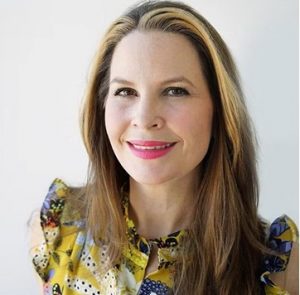
Minky Worden develops and implements international outreach and advocacy campaigns at Human Rights Watch. She previously served as HRW’s Media Director, working with journalists across more than 90 countries to cover crises, wars, human rights abuses, and political developments. Worden has taught as an Adjunct Associate Professor at Columbia University’s School of International and Public Affairs (SIPA) since 2013. Before joining HRW in 1998, she lived and worked in Hong Kong as an adviser to Democratic Party chairman Martin Lee, and worked at the U.S. Department of Justice as a speechwriter for the Attorney General and in the Executive Office for U.S. Attorneys. A member of the Council on Foreign Relations, Worden speaks Cantonese and German. She is the editor of The Unfinished Revolution (Seven Stories Press, 2012) and China’s Great Leap (Seven Stories Press, 2008), and the co-editor of Torture (New Press, 2005). She is an elected member of the Overseas Press Club’s Board of Governors. |
 |
| Katherine La Puente
Children’s Rights Senior Coordinator, Human Rights Watch
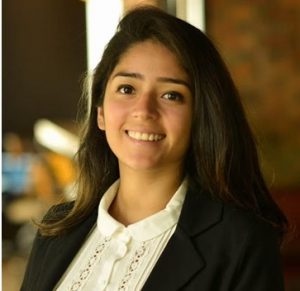
Katherine La Puente is a senior children’s rights coordinator at Human Rights Watch who has researched and written on sexual and digital violence against children, human rights in mega-sporting events including the World Cup, and immigration in the United States. Before joining HRW, she coordinated a health and human rights program providing forensic medical and psychological evaluations for people in U.S. immigration proceedings, including families and children. She has conducted programmatic work and research in Ghana, the United Arab Emirates, and Mexico on issues related to migration, access to health care, and sexual and reproductive health. She received her master’s degree in global health from New York University. She speaks English and Spanish, and is proficient in French. |
 |
| Jamal R. Watkins
Senior Vice President of Strategy and Advancement, NAACP
Jamal R. Watkins serves as Senior VP of Strategy and Advancement at the NAACP, where he previously led civic engagement as VP of Civic Engagement. He served as National Outreach Director for the AFL-CIO, strengthening strategic partnerships across the labor movement. Prior roles include Deputy National Political Director at SEIU; Chief of Staff at the Center for Social Inclusion; Managing Director for Campaigns at Amnesty International; and Deputy Director and Interim Executive Director of City Year Los Angeles. He has worked across politics, campaigns, communications, education, human resources, and fundraising, including as Florida State Director of the Young Voter Alliance during the 2004 Presidential Election. He earned his B.A. in Philosophy (minor: Political Science) from Stanford University and completed graduate-level work at NYU for Speech and Interpersonal Communication. A proud member of Alpha Phi Alpha Fraternity, Inc., his motto is “onward and upward.” |
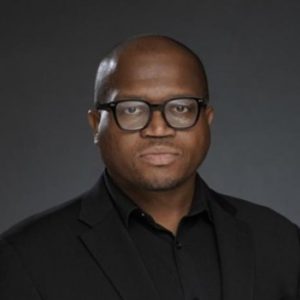 |
| Ariel G. Ruiz Soto
Senior Policy Analyst, Migration Policy Institute
Ariel G. Ruiz Soto is a Senior Policy Analyst at the Migration Policy Institute (MPI), working with the U.S. Immigration Policy Program and the Latin America and Caribbean Initiative. His research examines the interaction of migration policies in the region from Panama to Canada, their intended and unintended consequences for both foreign- and native-born populations, demographic trends across the region, and methodological approaches to estimating the unauthorized immigrant population in the United States. He holds a master’s degree from the University of Chicago’s School of Social Service Administration with an emphasis on immigration policy and service provision, and a bachelor’s degree in sociology from Whitman College. |
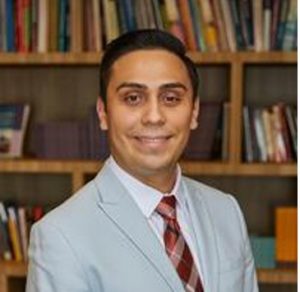 |
Briefing organized by American Community Media (ACOM). Contacts: Sandy Close —