
AMERICAN COMMUNITY MEDIA
National News Briefing — Internal Report
Beyond Left and Right:
Why Colombia’s Election Matters for Democracy Across the Americas
Briefing Context
On June 21, 2026, Colombians return to the polls for a presidential runoff election widely viewed as one of the most consequential in the country’s recent history. The contest pits Iván Cepeda of Pacto Histórico against Abelardo de la Espriella of Salvación Nacional, a race that has intensified debate over the future of Colombian democracy, the implementation of the 2016 peace agreements, land rights, migration, and Colombia’s role in the broader hemisphere.
ACoM convened this national news briefing to give ethnic and community media journalists across the U.S. direct access to scholars and analysts who could contextualize the election for their audiences — particularly its implications for democratic governance, human rights, migration patterns, and regional stability throughout the Americas.
Speakers
The briefing featured three speakers. Beatriz Magaloni is the Graham Stuart Professor of International Relations in Stanford University’s Department of Political Science, Senior Fellow at the Freeman Spogli Institute, Director of the Poverty, Violence, and Governance Lab (Povgov), and Co-Director of the Democracy Action Lab. Alex Sierra is an anthropologist with Centro de Estudios Sociojurídicos Latinoamericanos (CESJUL), with more than 20 years researching social conflict and violence in Colombia and Central America, and a former UNDP consultant and Bogotá Ombudsman’s Office human rights advisor. Manuel Ortiz is a sociologist, documentary photographer, and journalist serving as Audiovisual Consultant for Stanford’s Democracy Action Lab and as co-founder of Peninsula 360 Press.
Dr. Magaloni is a 2023 Stockholm Prize in Criminology laureate and 2024 Boris Mintz Award recipient, recognized internationally for her research on electoral autocracies and democratic backsliding driven by civilian leaders elected to power — rather than by military coups — a framing she applied directly to the Colombian case.
Speaker Bios
 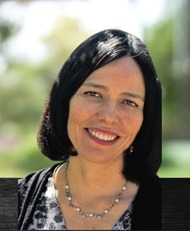 |
Beatriz Magaloni
Beatriz Magaloni is the Graham Stuart Professor of International Relations at Stanford University and Director of the Poverty, Violence, and Governance Lab (Povgov). A leading authority on authoritarian politics and democratic backsliding, she won the 2023 Stockholm Prize in Criminology — the field’s top global honor — for her research on crime, policing, and human rights in Latin America, and the 2024 Boris Mintz Award for her work on the global rise of electoral autocracies. |
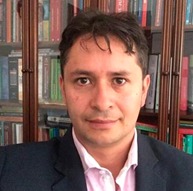 |
Alex Sierra
Alex Sierra is a Colombian anthropologist and Project Director at the Latin American Center for Socio-Legal Studies (CESJUL), with more than 20 years researching armed conflict and violence in Colombia and Central America. He has advised the United Nations Development Programme and the Bogotá Ombudsman’s Office, and currently leads a violence-reduction initiative in Cali’s Agua Blanca district. |
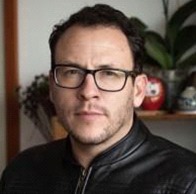 |
Manuel Ortiz
Manuel Ortiz Escamez is a national award-winning (U.S.) digital journalist and co-founder of Peninsula 360 Press. A specialist in visual sociology, he founded the Multimedia Laboratory for Social Research at Mexico’s National Autonomous University (UNAM) and is the author of Sociología Visual (UNAM, 2018). |
Key Discussion Themes
- The Stakes of the June 21 Runoff
Speakers framed the Cepeda-de la Espriella runoff as a test of Colombian democratic institutions amid deep political polarization, with implications extending well beyond Colombia’s borders for democratic governance and regional stability across Latin America.
- Peace Process, Land Rights, and Armed Conflict
Alex Sierra and Beatriz Magaloni addressed the expansion of armed criminal groups in Colombia and ongoing land restitution efforts tied to the peace process. Discussion noted that the current government has pursued efforts to return land to communities displaced by paramilitary groups, but that this process — central to the 2016 peace accords — continues to face serious challenges, including questions about whether acquired land is being transferred to outside interests.
- U.S. Role and Hemispheric Politics
Questions raised the role of the United States in shaping the election’s outcome and dynamics, including how a more resource-focused U.S. posture toward Latin America could affect territorial rights and violence under a right-leaning Colombian government. Panelists were also asked whether a de la Espriella endorsement from former President Trump could reshape U.S.–Latin America diplomatic relations depending on the result.
- Migration and the Colombian Diaspora
Several questions focused on the more than one million Colombians living in the United States: their level of engagement with the election, the issues that matter most to them, the scale of displaced Colombians living abroad, and the weight of the diaspora vote. Panelists were also asked how the election’s outcome could affect immigration to the United States and how current U.S. immigration policy is affecting immigrants from the region.
- Polarization in Comparative Perspective
Journalists drew parallels between Colombian polarization and similar dynamics in the United States and parts of Europe, asking panelists to explain the broader global rise in political polarization and its common underlying causes. A comparison was also raised to communal conflict dynamics in India.
- Electoral Integrity and Legal Questions
A question raised in Spanish asked how Colombia’s national civil registry (registraduría) could certify a candidate some viewers believe does not meet the constitutional requirements to run, and whether the registry could face legal challenge over that decision — underscoring concerns about the legitimacy and transparency of the electoral process itself.
Participating Journalists & Outlets
The briefing drew journalists and contacts from a broad range of ethnic and community media outlets, including:
- Nora Estrada — Kiosko News
- Araceli Martinez Ortega — La Opinión
- Mireya Olivera — Impulso Newspaper
- Nestor Fantini — HispanicLA.com
- Mei Mei Huff — Huff Strategies
- Christopher Young — The Mississippi Link (Jackson, MS)
- Charles Dong — AMTV (全美電視臺)
- Celina Rodriguez — Rodriguez Media Productions, Inc.
- Ronnie Chung — GDTV
- Elena Kuznetsova — SlavicSac
- Carlos Roa — Te Lo Cuento News
- Pilar Marrero — ACoM (moderator)
- Henrietta J. Burroughs
- Rebecca Bartus
- Peter Schurmann
- Sunita Sohrabji
- Sandra Martinez
- Julieth Gualtero
- Pamela Anchang
Takeaways
- Strong, geographically and linguistically diverse turnout (Spanish-, Mandarin-, and English-language outlets represented), confirming demand for ACoM briefings on hemispheric political events with direct U.S. community impact.
- Audience questions skewed heavily toward migration and diaspora impact — suggesting strong follow-on coverage potential among ethnic media on U.S. immigration policy tied to the Colombia outcome.
- Comparative polarization questions (India, Europe, U.S.) indicate appetite for a broader ACoM briefing on global democratic backsliding and polarization, building on Dr. Magaloni’s research.
- Consider a follow-up briefing after the June 21 runoff result to address outcome-specific questions raised live (U.S. diplomatic posture, contested-result risk, electoral registry legitimacy) that speakers did not have time to fully answer.