
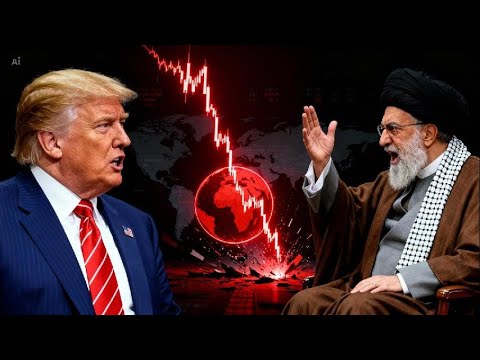
The Iran war has emerged as one of the defining international crises of the current period, drawing sustained attention from governments, military analysts, and diplomatic observers across the globe. At its core, the conflict raises fundamental questions about power, security, and whether diplomacy can still succeed where it has repeatedly struggled before.
The US-Iran conflict has generated uncertainty far beyond the two countries directly involved touching energy markets, regional politics, and the foreign policy calculations of nations with no direct stake in the fighting. Two questions dominate expert discussions: who holds the advantage, and how does this end?
Background
The roots of the current crisis run deep. Decades of disagreement over nuclear ambitions, regional influence, military posture, and the fundamental question of what kind of order should govern the Middle East have steadily eroded whatever trust once existed between Tehran and Washington.
The latest phase has brought those tensions into sharp relief. Governments and international organizations have called loudly for diplomatic off-ramps, and most serious analysts share the concern that miscalculation at this stage could produce consequences that spill far beyond either country’s borders.
The Middle East was already carrying the weight of years of instability before the current crisis intensified. What makes the US-Iran conflict particularly complex is that it is not purely a military confrontation it is simultaneously a political struggle, an economic pressure campaign, and a contest for regional influence, all running in parallel.
Full News Details
The Iran war has become a central preoccupation of international affairs, with analysts dissecting every development through military, diplomatic, and economic lenses.
The question that keeps surfacing in those conversations is: who is winning the Iran war? It is harder to answer than it might seem. Raw military strength matters, but it has never been the only variable. Political resilience, international support, economic endurance, and the ability to sustain public backing all shape the trajectory of a conflict. A militarily superior power can still find itself unable to achieve its political objectives history offers no shortage of examples.
In the debate over the US-Iran conflict, different observers emphasize different metrics. Those focused on military capability tend to highlight American technological dominance and alliance depth. Those focused on regional politics note Iran’s entrenched influence across multiple theaters and its demonstrated ability to absorb pressure without fundamentally changing course. Neither framing tells the complete story.
Iran war when will it end? That question is equally difficult. Conflicts of this nature tend to conclude through negotiated settlements, shifts in political leadership, or exhaustion on one or both sides. Without meaningful diplomatic movement, the conditions that sustain conflict can persist for a long time.
Military and Political Situation
The military dimension of the Iran war has commanded global attention, but experienced analysts are careful not to reduce the conflict to its kinetic elements alone.
Modern confrontations between states with significant resources and regional networks are rarely settled by battlefield outcomes in isolation. Cyber operations, economic sanctions, information warfare, and diplomatic maneuvering have all become instruments of statecraft in their own right and all are in play here.
The spillover effects on neighboring countries are real and serious. Governments across the region are weighing the implications for their own border security, energy infrastructure, and trade relationships. A significant escalation would not be absorbed cleanly its effects would radiate outward in ways that are difficult to predict and harder to contain.
Expert Views
The consistent message from international security analysts and diplomats is that this crisis demands political solutions, not just military ones.
Experts who have studied prolonged regional conflicts make a recurring point: addressing the underlying political grievances that drive a conflict is the only path to durable stability. Military pressure can change the immediate calculus, but it rarely eliminates the conditions that produced the confrontation in the first place.
Diplomats across multiple continents have issued warnings about the humanitarian and economic costs of a protracted conflict, and many have urged both sides to keep communication channels open even when the political environment makes that difficult.
Impact on the Region and the World
The consequences of the Iran war are being felt in places that have no soldiers in the fight Energy markets remain acutely sensitive to anything that threatens supply from the Gulf region. Price volatility, disrupted shipping lanes, and uncertainty over future output all have downstream effects on economies that depend on stable energy costs which is to say, most of them.
The diplomatic landscape has also shifted. Countries that maintain relationships with both Iran and Western nations are navigating a difficult balancing act, trying to protect their economic interests while managing security pressures from multiple directions.
The broader debate whether the Iran war is justified continues without resolution. Those who support a strong response to Iranian policy argue that security threats require credible deterrence. Critics counter that military action generates civilian suffering and tends to entrench rather than resolve the disputes that caused it. Both positions reflect genuine concerns rather than simple political posturing.
Lessons the Conflict Is Already Teaching
Even while the situation remains active, certain patterns have become clear enough to draw provisional conclusions.Military strength, whatever its scale, does not translate automatically into political success. The history of modern conflict is littered with cases where superior firepower failed to achieve the objectives that justified its use. The Iran war is generating its own version of that lesson in real time.
The value of diplomacy even imperfect, halting, partial diplomacy is another theme that keeps reasserting itself. Countries that maintain some form of communication with adversaries consistently manage crises better than those that let channels go dark entirely.
And the reach of regional conflicts has continued to exceed initial expectations. What begins as a localized confrontation draws in economic systems, refugee flows, alliance commitments, and political pressures that reshape the environment far from the original theater.
Is the Iran War Justified?
This question sits at the center of global debate, and it resists a clean answer partly because the answer depends heavily on which values and priorities the person asking brings to the question.
From a security standpoint, those who support military action argue that the threats posed by Iranian regional policy and its nuclear program require a firm response. From a humanitarian and strategic standpoint, critics argue that war inflicts suffering on civilian populations and frequently produces instability that outlasts any tactical gains.
A serious engagement with the question requires looking at motivations, at what alternatives were genuinely available and pursued, and at the full range of consequences intended and otherwise that the conflict has produced.
Conclusion
The Iran war continues to shape the international order in ways that will take years to fully understand. Its effects on regional stability, global energy, and the future of US-Iran relations are already substantial, and they are not finished accumulating.
Who is winning depends on how winning is defined and in a conflict this complex, that definition is itself contested. What seems clearer is that the long-term outcome will be determined less by military operations than by political decisions: whether diplomacy can find traction, whether regional actors can prevent further escalation, and whether the parties most directly involved can eventually identify terms they are willing to accept.The uncertainty is real. But so is the international investment in finding a path that does not require fighting this out to the end.
FAQs
How badly has Iran’s military been damaged?
Assessing the true extent of damage to Iran’s military is genuinely difficult, and any confident-sounding figure should be treated with caution. In modern conflicts, losses span equipment, personnel, infrastructure, command capacity, and operational readiness and not all of those are visible or verifiable from the outside.
What analysts consistently note is that a military can absorb significant damage and still retain meaningful influence, particularly through asymmetric strategies, proxy networks, and defensive depth. The picture is complex, and the available evidence is incomplete.
Is the conflict in Iran done?
Not by the assessments of most serious observers. The underlying political disputes that produced the conflict remain unresolved, and the diplomatic processes that might address them are still in early stages.Experience from comparable situations suggests that even when active fighting decreases, the work of rebuilding stability through negotiations, confidence-building measures, and political agreements takes considerably longer. The conflict may evolve in form before it ends in substance.
What has the Iran war accomplished?
Honest answers to this question depend on which side is answering and what objectives were declared at the outset.Some analysts argue that the conflict has altered regional security calculations and increased international pressure on Iranian policy. Others contend that it has deepened instability, increased humanitarian hardship, and strengthened hardline positions on all sides. The long-term judgment will hinge on what comes next whether the conflict leads toward a negotiated settlement or toward a more entrenched confrontation.