HOUSTON COMMUNITY MEDIA / AMERICAN COMMUNITY MEDIA
News Briefing — Internal Report
Who Cares About Our Youth?
With Representative Gene Wu — An Interview Series with our Texas Legislators
This briefing was held on Thursday, June 18, 2026, from 12:00 pm to 12:30 pm CT (it ran roughly 35 minutes, ending around 12:46 pm CT), as the first installment in a three-part virtual interview series with Texas legislators on the condition of youth in Houston and across Texas. Houston Community Media (HCoM) and American Community Media (ACoM) organized the briefing, with thanks extended to The Houston Endowment for its support. Staff contacts for the event were Sandy Close, Nguyen Lee, Nakia Cooper, and Yesenia Razo, all reachable via americancommunitymedia.org. Sandy Close moderated the session. The next two installments in the series feature Representative Jolanda Jones, followed by Representative Penny Morales Shaw in the first week of July.
Speaker
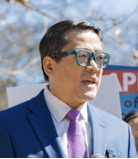 |
Representative Gene Wu
Gene Wu represents District 137 in the Texas House of Representatives and is now in his seventh term. Before his 2012 election, he worked as a prosecutor in the Harris County District Attorney’s Office; he is currently an attorney in private practice and serves as a Guardian Ad-Litem representing minors in criminal and CPS cases. He has authored numerous bills aimed at juvenile justice reform and CPS reform, serves as Vice Chair of the House Committee on Criminal Jurisprudence, and sits on the House Permanent Standing Subcommittee on Juvenile Justice, the Committee on Redistricting, and the Appropriations Committee. Wu led the 2025 Texas House Democrats’ quorum break over congressional redistricting, drawing a removal petition from Governor Abbott that the Texas Supreme Court rejected in May 2026 for lack of jurisdiction. He lives in Southwest Houston with his wife, Miya, and their two sons. |
Briefing Context
Sandy Close opened the briefing by noting that Wu had previously addressed ACoM’s 2025 Expo and had last joined a news briefing over Zoom from a van outside Chicago during the 2025 quorum break. She framed the series around a central question: to what extent are the challenges facing children and youth actually front-of-mind for Texas legislators, given that national coverage of Texas and youth tends to focus on school prayer, transgender rights, and cell-phone policy rather than funding and justice issues that young people themselves raise.
Wu credited community media and social media content creators for the public attention that made the 2025 quorum break succeed, contrasting it with a similar but unsuccessful walkout in 2021.
Why Gene Wu Got Involved in Juvenile Justice
Wu said he began working on juvenile justice and CPS issues as a Harris County prosecutor, drawn to a model where prosecutors, defense attorneys, and judges worked together to fix what was wrong with a child rather than simply seeking punishment. He noted that Texas law explicitly directs the juvenile justice system toward rehabilitation — the word “punishment” does not appear in the relevant code — and said his own experience raising two children reinforced his view that many problems blamed on delinquent youth are problems society created by failing to fund solutions like counseling, therapy, food security, and stable family support.
Education Funding and School Closures
Wu identified Texas’s education system as the central problem underlying juvenile justice issues. Texas ranks 43rd nationally in per-student funding, and the 2025 legislative session left a $16 billion hole in the education budget after lawmakers allocated only $8 billion to close it — with the remaining $8 billion redirected to a school voucher program instead. He said the funding shortfall has driven school closures across the Houston area: Houston ISD closed 11 buildings, Alief ISD closed 9, and Spring ISD closed roughly 7 to 8. Classroom sizes have grown well past the legal cap of 22 students, now reaching 33 to 35 in many schools.
Wu argued that a system focused on standardized testing rather than student learning pushes out struggling students — often through arrest rather than the office referrals he remembered from his own school days — because removing low-performing students protects a school’s funding and ratings.
The School Policing Problem
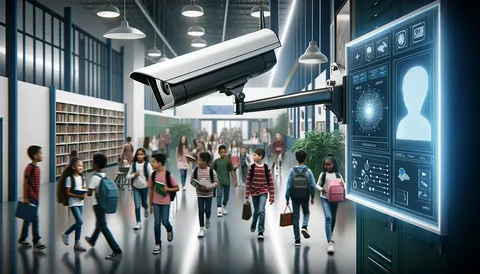
Wu said placing police officers in schools has not improved safety because officers lack the appropriate tools for ordinary behavioral and disciplinary issues; the same reasoning, he said, underlies the longstanding policy against using military forces for domestic policing. He argued that arming teachers and adding more officers does not stop mass shootings and instead increases the risk of serious harm to students already under stress from overcrowded, underfunded classrooms.
He pointed to a New York Times article, in which he is quoted, documenting cases where minor classroom incidents escalated into violent confrontations because no adult slowed the situation down to de-escalate. He also discussed his role investigating the Texas Juvenile Justice Department (TJJD), citing a 2024 Department of Justice report issued during the Biden administration that found continuing serious abuses within the agency, including child sexual assault and severe physical mistreatment. He warned that as schools, teachers, and families face greater stress, such incidents are likely to increase — but noted that Texas had been making progress on counselors and programs before recent political shifts, and said the state can return to that trajectory.
How to Fix It: Public Pressure on Elected Officials
Asked how to reverse current funding priorities, Wu said there is no shortcut: elected officials change course only when they fear losing reelection, and the public must demand accountability directly from their representatives, including asking what specific bills they plan to file. He said most people are not opposed to taxes in principle but resent feeling their money is wasted, citing the $13–$15 billion spent on border operations over the past decade as money that could instead have funded free college, healthcare, or new schools and hospitals. He called on local journalists in particular to cover these issues more consistently, since community and ethnic media reach readers that national outlets miss.
Q&A Highlights
- Jawahar (Jay) Malhotra asked how to reverse the broader political narrative supporting school budget cuts. Wu said there is no magic solution — citizens must demand accountability from their elected representatives directly.
- Nabeel Ishaq asked what the Legislature is doing to prepare youth for AI and the job market of the future, on top of existing concerns about student debt and college costs. Wu said the honest answer is that the state is not doing enough, describing the current approach as “high speed, low cost mass manufacturing of students” that prioritizes quantity over quality.
- Josue Vasquez, speaking as a Texas youth affected by these issues, asked the best way for young people to raise public and government awareness. Wu’s answer: Educate, Organize, Activate — educate everyone who will listen, organize those who are motivated to act by collecting contact information, then activate that base through protests, marches, or direct visits to elected officials.
- Lander Gonzalez asked whether other states or countries have adopted successful solutions, arguing that proven examples would make the case harder to deny. Wu said he could not cite examples offhand, but noted Texas is one of the last states that still treats 17-year-olds as adults in criminal court, and described ongoing efforts to stop housing minor disciplinary cases together with serious offenders in the juvenile system, which he said teaches lower-risk kids to commit real crimes rather than correcting minor misbehavior.
- Weiying Bao relayed a question from “Bo” asking how to distinguish proper rehabilitation from punishment, and a second question asking whether more detailed taxpayer surveys could let citizens weigh in on how their taxes are spent.
- Tariq Khan asked what percentage of school tax funds are spent on schools and how many schools have closed across Greater Houston and statewide.
- Shaneece Flax asked for specific statistics reporters could use, and separately raised the school-to-prison pipeline as a framing issue.
- Charlet Dudley commented that increased classroom technology use has hurt students’ comprehension, social skills, and overall development, agreeing with Wu’s concerns about over-reliance on tablets in place of direct teaching.
Sandy Close’s Closing Comments
In closing, Sandy Close proposed three story angles for reporters covering this issue: the shrinking ratio of students to counselors and therapists and what that means for kids with no one to talk to; growing class sizes and teacher stress; and the most compelling data points that illustrate the scale of the crisis. She noted Mississippi as a state making headway on related issues and offered to circulate the New York Times article Wu referenced, along with one or two additional supporting pieces, to briefing attendees. She closed by thanking Wu for helping reporters understand the issue more deeply and linked the discussion to the broader impact of immigration enforcement and federal social-program cutbacks (including Medicaid) on the same communities.
Participating Journalists & Attendees
The briefing drew journalists, community advocates, and ACoM/HCoM network contacts, including:
- Sandy Close — American Community Media / Houston Community Media (moderator)
- Nguyen Lee — American Community Media / Houston Community Media
- Jawahar (Jay) Malhotra
- Nabeel Ishaq
- Josue Vasquez
- Weiying Bao
- Shaneece Flax
- Tariq Khan
- Charlet Dudley
- Lander Gonzalez
- Lilian Ohaeri
- Madiha Masood
- Ishmael Abdullah
- Zeeshan Mirza
Takeaways for the Newsroom
- Concrete, repeatable statistics from this briefing for ongoing coverage: Texas ranks 43rd nationally in per-student funding; the 2025 session left a $16 billion education budget hole, half-filled, with the remaining $8 billion diverted to vouchers; HISD closed 11 school buildings, Alief ISD 9, and Spring ISD roughly 7–8; legal classroom caps of 22 students are now routinely exceeded, reaching 33–35.
- Suggested story angles directly from Sandy Close: student-to-counselor/therapist ratios; teacher stress tied to class size; and the most compelling indicators that this is a crisis rather than a series of isolated incidents.
- Follow-up resources promised to attendees: the New York Times article quoting Wu on school de-escalation failures, plus coverage of Mississippi’s progress on related youth and education issues.
- This is the first of three legislator interviews; Representative Jolanda Jones is next, followed by Representative Penny Morales Shaw in early July — a natural opportunity for comparative follow-up coverage.
- Wu’s open invitation to journalists: cover juvenile justice, education funding, and school policing more consistently, since these stories drive the public pressure that changes legislative behavior.