


Summary
The Pentagon has confirmed a US munitions shortfall tied directly to the war on Iran. A new inspector general report says munitions expended during the four-month campaign caused “strategic inventory shortfalls” and exposed weaknesses in the country’s weapons production chain. The findings contradict repeated claims from President Donald Trump and Defense Secretary Pete Hegseth that US ammunition stocks remain plentiful.
Background
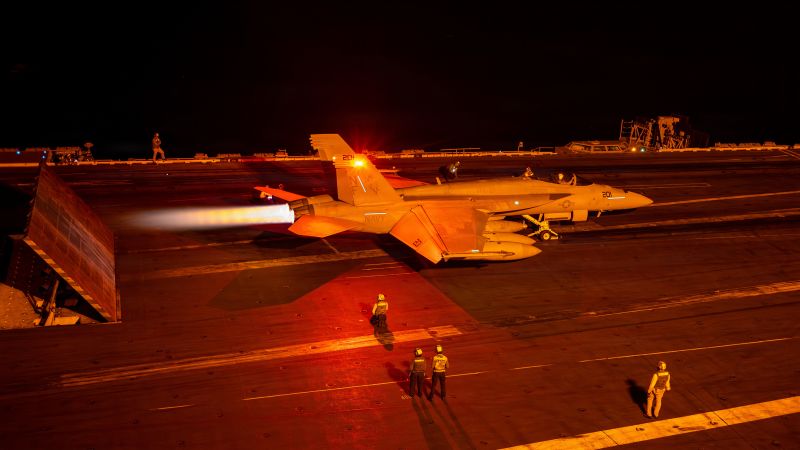
The war on Iran began on February 28, 2026, and stretched on for months before winding down. It was one of the most munitions-intensive campaigns the US military has run in years, with warships and aircraft firing large volumes of precision weapons at targets inside Iran.
Questions about the toll this took on American stockpiles started circulating almost immediately. Reports surfaced that the US had used “virtually all” of its long-range precision missiles during the fighting. The Pentagon had stayed quiet on the specifics until now.
This new report is the first congressionally mandated accounting of the war’s cost. It was compiled under the Lead Inspector General framework overseeing what the Pentagon calls Operation Epic Fury, and it covers the period from April 1 to June 30, 2026.
Details
The report is blunt about what the campaign cost the US military. It states that munitions expenditure “resulted in strategic inventory shortfalls and revealed industrial base bottlenecks for munitions resupply.” That line, sourced to the Office of the Under Secretary of War for Acquisition and Sustainment, is the clearest official admission yet that the Iran war strained American weapons stocks.
The financial toll is significant too. The war has cost the US roughly $33.4 billion so far. Of that, $22.3 billion went toward munitions alone, with another $3.7 billion lost in damaged equipment and $7.4 billion spent on other operational costs. Those numbers do not even include the price of repairing facilities or replacing aircraft, which the report says will add further costs down the line.
On the industrial side, the report points to a few specific choke points. Solid rocket motors are in short supply. High-grade explosives and propellants are hard to source quickly. And the defense sector is struggling to find enough skilled workers to ramp up production. The report notes that rebuilding these capabilities “requires significant lead time,” meaning the shortfall will not be solved overnight.
The war also took a toll beyond the battlefield. US forces ran close to 5,000 flights out of European bases to support the campaign, and Iran struck back at the US Navy’s main regional logistics hub in Bahrain with drones and ballistic missiles. The State Department reported over $208 million in losses across facilities in Iraq, Kuwait, Saudi Arabia, and the UAE.
Quotes
The Pentagon says it is already responding to the gap. According to the report, officials are “working to streamline procurement processes and production lead times, and to stockpile critical materials, components, and selected munitions to respond rapidly to a contingency.”
That admission sits awkwardly next to public statements from the administration. Trump posted online that the US has “virtually unlimited” ammunition and insisted supplies “are being delivered on a daily basis to our forces in the Middle East and beyond.” Hegseth has made similar claims in public appearances, even as he told Congress in July that without supplemental funding, the Pentagon “could face critical shortfalls” affecting pay, equipment, and global operations.
Impact
A confirmed US munitions shortfall carries weight well past this one conflict. Solid rocket motors and precision-guided munitions are not things a factory can churn out on short notice. If US stockpiles are genuinely thin, that limits how fast Washington could respond to a new crisis, whether that is renewed tension with Iran or a flashpoint somewhere else entirely.
Allies and rivals alike will be reading this report closely. A weapons shortage narrows the range of options available to US commanders and could shape decisions on everything from support for partners abroad to deterrence posture in the Middle East and the Pacific.
Inside the US, the report is likely to sharpen an already tense argument in Washington over defense spending, war authorization, and how honestly the administration has been talking about the state of the military’s stockpiles.
Conclusion
This is only the first in a series of mandated reports on the Iran war, and the Pentagon has signaled that rebuilding lost stockpiles will take time. Expect more scrutiny from Congress, more reporting from the inspector general’s office, and continued pushback from the White House on any suggestion that America’s arsenal is running thin. Whether production bottlenecks ease or worsen over the next few quarters will say a lot about how prepared the US actually is for what comes next.
FAQs
Is the US really running low on munitions?
According to the Pentagon’s own inspector general report, yes, at least in specific categories tied to the Iran war. The document says munitions used during the campaign caused “strategic inventory shortfalls” and that rebuilding those stocks will take time because of production bottlenecks in the defense industrial base. This is a more direct admission than anything the administration had previously acknowledged publicly, even though officials continue to downplay the severity of the situation in public statements.
Does the US military have a munitions shortfall?
Yes, based on the findings in this report. The shortfall is tied to specific munitions expended heavily during the four-month war on Iran, including precision-guided weapons. The report does not claim the entire US arsenal is depleted, but it does confirm that certain categories of munitions are harder to replace quickly, largely because of a lack of manufacturing capacity, skilled labor shortages, and limited supplies of components like solid rocket motors and high-grade propellants.
Is there a shortage of Patriot missiles?
The Pentagon report does not name Patriot missiles specifically in the sections made public so far, but earlier reporting throughout the Iran war raised concerns about interceptor stockpiles being stretched thin during sustained missile defense operations. Given that the report flags broader “strategic inventory shortfalls” across munitions categories, it is reasonable to expect that missile defense interceptors, including Patriot systems, were affected by the same resupply bottlenecks described in the findings.