
Measles Outbreaks Expand Amid Falling Vaccination Rates
Experts Warn That Misinformation and Vaccine Hesitancy Are Driving the Worst US Resurgence in 35 Years
As measles cases climb to their highest level in the United States in 35 years, public health experts convened by American Community Media (ACoM) on July 10, 2026, warned that vaccine hesitancy, targeted misinformation campaigns, and gaps in the use of Vitamin A therapy are compounding an outbreak that shows no signs of slowing.
According to the Centers for Disease Control and Prevention (CDC), 2,170 measles cases had been reported nationwide as of July 2, 2026 — the highest count in 35 years. In Utah, which has faced a year-long outbreak, fewer than 84 percent of children have received both doses of the measles, mumps, and rubella (MMR) vaccine. In Minnesota’s Somali community, which experienced its own outbreak in 2024, only one in four children had received a first MMR dose by age two. Adults are also increasingly affected: the CDC has identified 625 people over age 20 who have contracted measles this year, and 11 percent of those infected last year required hospitalization.
The national news briefing, moderated as a virtual panel with simultaneous interpretation in Korean, Mandarin, and Spanish, brought together four leading voices in infectious disease and public health: Patsy Stinchfield, a pediatric nurse practitioner and Executive Director of the Measles Collaborative; Dr. Benjamin Neuman, a virologist and Professor of Biology at Texas A&M University; Dr. Andrew Pavia, Professor and Chief of the Division of Pediatric Infectious Diseases at the University of Utah; and Dr. Jose Romero, a pediatric infectious diseases specialist who previously served as Arkansas’ Secretary of Health and later chaired the CDC’s Advisory Committee on Immunization Practices (ACIP).
Misinformation Campaigns Targeted Vulnerable Communities
Much of the discussion centered on how specific communities have been deliberately targeted by anti-vaccine messaging. Responding to a question about Minnesota’s 2017 and 2024 measles outbreaks in the Somali community, Stinchfield explained that Andrew Wakefield — author of the now-discredited 1998 paper linking MMR to autism — traveled to Minnesota twice to meet directly with local Imams. She said local anti-vaccine groups, along with Children’s Health Defense and individuals affiliated with the anti-vaccine organization once led by Robert F. Kennedy Jr., worked to convince the Somali community that MMR causes autism, believing the community’s data could “prove” the link. Stinchfield noted she could not confirm funding sources, but said the underlying motives mirror those seen across the broader anti-vaccine movement for years — commercial interests tied to supplements, books, and conferences.
Dr. Pavia addressed a related question about religious objections to vaccination in Utah, tracing much of the state’s historical vaccine resistance to Warren Jeffs, a former leader of the Fundamentalist Church of Jesus Christ of Latter-Day Saints (FLDS) who was jailed more than a decade ago. Pavia said there is no longer a theological objection to vaccines within the group, though the cultural impact of that earlier resistance lingers. He emphasized that reluctance to vaccinate among religious communities is rarely doctrinal — it is usually cultural, shaped by the broader spread of anti-vaccine sentiment rather than scripture.
Correcting Medical Misconceptions
Panelists also used the briefing to clear up common points of confusion. Asked why pregnant women are not given the MMR vaccine even though measles can pass to a fetus late in pregnancy, Pavia clarified that the concern is not the measles component of the vaccine — it is the live, weakened rubella virus in the “R” of MMR. Rubella infection during pregnancy can cause birth defects, and while the vaccine carries a far smaller risk than natural rubella infection, a small risk remains, which is why MMR is withheld during pregnancy.
On the question of whether measles behaves like chickenpox — which can reactivate later in life as shingles — Pavia said the measles virus does not persist in the body the way chickenpox or HIV can. However, he cautioned that measles infection causes lasting damage to the immune system that can last months to years even after the virus itself has cleared.
Stinchfield also addressed a rare but serious long-term complication: subacute sclerosing panencephalitis (SSPE), a fatal neurological deterioration that can emerge seven to ten years after a measles infection. She noted that SSPE occurs in roughly 1 of every 600 children infected with measles, underscoring that the risks of the disease extend well beyond the acute illness.
Vitamin A: A Management Tool, Not a Substitute for Vaccination
Stinchfield, who was lead author of the National Foundation for Infectious Diseases’ (NFID) 2020 report on Vitamin A for the Management of Measles in the US, brought particular expertise to a topic that has generated widespread public confusion: the role of Vitamin A in treating measles. The NFID’s Call to Action, developed from a November 2019 multidisciplinary summit, found that Vitamin A — recommended for decades by the American Academy of Pediatrics (AAP) and the World Health Organization (WHO) for hospitalized children with measles — is inconsistently used in US hospitals. A retrospective study of 52 US children’s hospitals found that only 39 percent of facilities used Vitamin A to manage measles admissions, and among those that did, most children received doses far below the recommended range of 50,000 to 200,000 IU.
Crucially, the report and panelists alike stressed that Vitamin A does not prevent measles and should never be used as a substitute for MMR vaccination. During the 2018–2019 New York outbreak, some members of vaccine-hesitant Orthodox Jewish communities relied on daily cod liver oil as an alternative to vaccination, based on unfounded word-of-mouth claims. Because Vitamin A is fat-soluble and can accumulate to toxic levels, the NFID guidance is explicit that high-dose Vitamin A should be administered only under medical supervision, after a confirmed measles diagnosis — not preventively.
Rebuilding Trust Before the Next Outbreak
Journalists pressed panelists on how to reach communities where distrust of vaccines runs deep and is sometimes reinforced by broader distrust of institutions, including, in some cases, immigration enforcement. Stinchfield said the path forward requires rebuilding trust, listening to parents’ concerns first, emphasizing the real dangers of the disease itself, and meeting parents on the platforms where they already are, including social media. She added that healthcare providers can be most persuasive by showing that they vaccinate their own children.
Pavia, drawing on lessons from Minnesota’s outbreaks, said the most important takeaway is that public health officials need to build relationships with communities before an outbreak occurs, not after, so that trust and communication channels are already in place when a crisis hits.
Pavia closed the briefing with a message aimed squarely at vaccine-hesitant audiences: vaccination, he said, protects not just the individual but the broader community — a point he distilled into a single line: “Vaccines are for WE, not just for ME.”
Speaker Bios
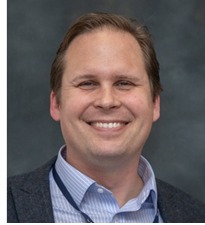 | Patsy Stinchfield Patricia (Patsy) A. Stinchfield, MS, PNP, is a Past President of the National Foundation for Infectious Diseases (NFID). Over a 45-year nursing career, she has focused on infectious disease prevention and is a frequent national speaker on vaccine hesitancy, vaccinology, and healthcare worker vaccination. She is a pediatric nurse practitioner specializing in vaccine-preventable diseases and, prior to her retirement in July 2021, served as senior director of infection prevention and control at Children’s Minnesota. She currently serves as Executive Director of the Measles Collaborative, which works to strengthen measles prevention, response, and education nationwide. She was the first nurse voting member of the CDC’s Advisory Committee on Immunization Practices (ACIP), served 20 years as a liaison member for the National Association of Pediatric Nurse Practitioners, and led Children’s Minnesota’s response to the 2009 H1N1 pandemic and the 2017 measles outbreak. She was lead author of NFID’s 2020 report on Vitamin A for the Management of Measles in the US. |
 | Dr. Benjamin Neuman Dr. Ben Neuman is Professor of Biology at Texas A&M University, where he joined the Department in 2021. He received his B.S. in Biology from the University of Toledo, his Ph.D. from the University of Reading (UK), and completed postdoctoral research in virology at the Scripps Research Institute. |
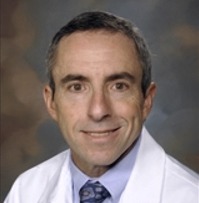 | Dr. Andrew Pavia Dr. Pavia received his bachelor’s and medical degrees from Brown University, trained in internal medicine and pediatrics at Dartmouth and the University of Utah, and served as an Epidemic Intelligence Service officer at the CDC. He joined the University of Utah faculty in 1991 and became the George and Esther Gross Presidential Professor and Chief of the Division of Pediatric Infectious Diseases in 2003, a role he still holds. He also directs Hospital Epidemiology at Primary Children’s Hospital. Dr. Pavia is a Fellow of the American Academy of Pediatrics and the Infectious Diseases Society of America (IDSA), and has served on the National Vaccine Advisory Committee, the National Biodefense Science Board, and multiple Institute of Medicine committees. He has published more than 250 peer-reviewed articles and is an associate editor of the Sanford Guide to Antimicrobial Therapy. |
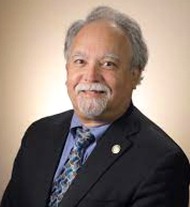 | Dr. Jose Romero José R. Romero, MD, is the former Arkansas Secretary of Health and Director of the Arkansas Department of Health. Board-certified in pediatrics and pediatric infectious diseases, he earned his medical degree from the Universidad Autónoma de Guadalajara and completed his pediatric residency and infectious disease fellowship in the US. Dr. Romero is currently Chair of the CDC’s Advisory Committee on Immunization Practices (ACIP) and Chairman of the US Polio National Certification Commission. He previously chaired the FDA’s Vaccines and Related Biological Products Advisory Committee and served as a policy adviser to the administration of former Mexican President Vicente Fox. |
About the Briefing
The virtual briefing was hosted by American Community Media and moderated for a national audience of ethnic and community media outlets. Reporters from outlets including Kiosko News, India Currents, La Opinión, El Informador del Valle, AMTV, Myanmar Gazette, Te Lo Cuento News, HispanicLA.com, Prensa Atlanta Global, and Peninsula 360 Press participated in the question-and-answer session. Media contacts for the briefing were Sandy Close and Sunita Sohrabji of American Community Media.