

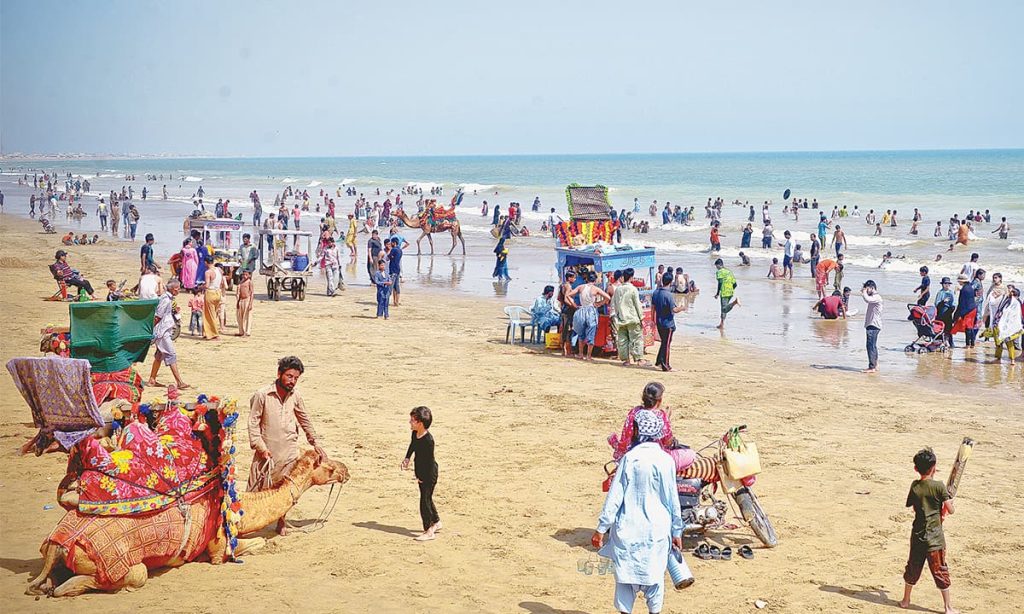

Karachi woke up once again to an unpleasant, fishy smell hanging over several neighbourhoods, with many residents, especially those living close to the coast, complaining about the stench on social media and in local community groups. The odour has left people asking the same question that comes up almost every year: what exactly is causing Karachi’s bad smell this time.
Background: A Recurring Problem for the Port City
This is not the first time Karachi has dealt with a mystery stink. The city has reported similar episodes of foul smell on multiple occasions over the past decade, particularly during the months following the monsoon season. Environmental experts have repeatedly linked the phenomenon to natural marine activity along the Arabian Sea coastline.
Karachi’s geography makes it especially prone to this problem. The city sits directly along the Northern Arabian Sea, where shifting monsoon currents and changing wind patterns regularly stir up marine life close to shore. When conditions change quickly, the effects are felt across the city within hours, not just along the beachfront.
Details: What Is Actually Causing the Smell
According to marine experts, the most common explanation for Karachi’s recurring stench is the decay of microscopic marine algae, technically known as phytoplankton. One species in particular, Noctiluca scintillans, commonly called “sea sparkle,” has been blamed for similar odour episodes in the city in the past.
These blooms of the organism tend to occur at least twice a year along the Pakistani coast. During the monsoon season, limited sunlight allows these organisms to multiply into large, balloon-like masses beneath the water’s surface. Once the monsoon winds die down and current patterns reverse, the bloom breaks apart and starts to rot, releasing a sharp, fishy odour that spreads with the sea breeze.
The problem does not stay confined to the coastline for long. Once wind direction shifts, the smell typically travels inland, reaching areas such as Clifton, DHA, Saddar, PECHS, Gulshan-e-Iqbal, North Nazimabad, Federal B Area, and Korangi. Past episodes have shown that the odour can linger for anywhere between a few hours and several days, depending on weather conditions.
It is worth noting that Karachi’s foul smell has not always come from the sea. Poor solid-waste management, choked sewage lines, and — most recently — delayed disposal of animal waste after Eidul Azha have also been blamed for similar odour complaints in different parts of the city this year. Residents and civic officials often struggle to tell the two causes apart until an official statement is issued.
Expert Reaction
Marine scientists have long studied this recurring pattern along Pakistan’s coast. Mohammad Moazzam Khan, a technical adviser at WWF-Pakistan, has previously explained that the odour is linked to changes in air direction tied to the monsoon reversal near the Northern Arabian Sea. He has noted that once the monsoon season ends, turbidity in coastal waters increases, creating the exact conditions under which phytoplankton blooms collapse and decay.
Other researchers have pointed to a broader concern. Academics at Karachi University’s environmental sciences department have said in the past that rising pollution levels and the open burning of solid waste can also contribute to unusual smells in the city’s air, and have called for more detailed scientific investigation rather than assuming a single cause every time the problem occurs.
Residents themselves describe the smell in different ways depending on the neighbourhood. Some compare it to rotten eggs, others say it resembles decomposing fish, and some have mistaken it for a gas leak or a dead animal nearby before realising the odour is citywide.
Impact on Residents and the City
The recurring stench is more than just an inconvenience for Karachi’s roughly twenty million residents. People with pre-existing respiratory conditions, including sinus issues and asthma, have reported worsened symptoms during past episodes. Even individuals with no history of breathing problems have described discomfort, headaches, and nausea when the smell is at its strongest.
Businesses along the coastline, including restaurants and outdoor cafes, often see reduced footfall during these episodes, since customers prefer to avoid sitting outdoors when the odour is heavy. Similarly, morning walkers and joggers at beachfront parks tend to cut their routines short until the smell clears.
Beyond the immediate discomfort, the recurring nature of the problem has renewed calls for better environmental monitoring in Karachi. Civil society groups argue that without proper air quality sensors placed across the city, it remains difficult to say with certainty each time whether a smell episode is natural, caused by pollution, or a mix of both.
Conclusion: What Happens Next
Based on past patterns, the current odour is expected to ease once wind direction shifts and sea breeze activity returns to normal, a process that has typically taken between two and four days in previous years. However, experts continue to stress that Karachi needs consistent, science-based air quality monitoring rather than reactive statements issued only after residents begin complaining online.
Until then, environmental officials are expected to continue coordination with WWF-Pakistan and the Pakistan Meteorological Department to confirm the exact cause of this latest episode. Any official test results or updated advisories are likely to be shared with local media in the coming days.
Frequently Asked Questions
What are the main problems of Karachi?
Karachi faces a mix of long-standing urban challenges that often overlap with one another. These include poor solid-waste management, an overburdened and outdated sewage system, frequent water shortages in several localities, heavy traffic congestion, and recurring power outages during peak summer months. Environmental issues such as air pollution, industrial waste disposal, and seasonal odour problems like the recent foul smell add to the list of concerns for residents. Weak enforcement of civic regulations and rapid, often unplanned urban expansion have made it harder for local authorities to keep pace with the needs of one of the world’s most populous cities.
Which is the safest area in Karachi?
Safety in Karachi varies significantly from one neighbourhood to another, and perceptions can shift depending on the time of day and current law-and-order conditions. That said, areas such as Clifton, Defence Housing Authority (DHA), and parts of Gulshan-e-Iqbal are generally considered among the more secure and well-patrolled parts of the city, largely due to better infrastructure, private security arrangements, and lower reported crime rates compared to some other districts. Residents are still advised to stay updated on local advisories, since conditions can change and no area is entirely free of risk.
What is happening in Karachi right now?
At present, the city is dealing with a fresh episode of foul, fishy-smelling air affecting multiple neighbourhoods, particularly those near the coastline. Environmental experts believe the smell is linked to a decaying bloom of microscopic marine algae, a phenomenon that has occurred in Karachi on several previous occasions following shifts in monsoon wind patterns. Authorities, including WWF-Pakistan and meteorological officials, are expected to confirm the exact cause in the coming days.