
The United States and Saudi Arabia have signed a landmark Joint Declaration on the Completion of Negotiations on Civil Nuclear Energy Cooperation, marking one of the most significant energy deals between the two countries in decades. The agreement, signed during Saudi Crown Prince Mohammed bin Salman’s visit to Washington in November 2025, lays the groundwork for a multi-billion-dollar civil nuclear energy partnership that could reshape the energy landscape of the Middle East. American companies are now set to play a leading role in building nuclear infrastructure inside the Kingdom, and the deal comes with nonproliferation commitments that have drawn both praise and scrutiny from arms control experts worldwide.
Background
Saudi Arabia has been trying to build a civil nuclear energy program for years. Back in 2017, the Kingdom formally approved a National Project for Atomic Energy, with plans for large-scale nuclear reactors to generate electricity and desalinate water two things Saudi Arabia needs urgently as its population grows and summer temperatures climb. The idea was never just about electricity. Saudi officials, including Crown Prince Mohammed bin Salman himself, made clear on more than one occasion that if Iran gets nuclear weapons, Saudi Arabia would want them too. That statement alone turned what might have been a routine energy deal into something far more complicated.
Negotiations for a formal US-Saudi nuclear cooperation agreement technically known as a “123 agreement” under Section 123 of the Atomic Energy Act of 1954 had been going on for years under both the Obama and first Trump administrations. They kept stalling, mostly over one issue: uranium enrichment. The United States has historically insisted that partners sign what is called a “gold standard” agreement, meaning they agree not to enrich uranium or reprocess spent nuclear fuel domestically. Saudi Arabia was reluctant. Talks collapsed more than once.
The Biden administration kept the conversation alive but never closed it. When Trump returned to office, his team moved faster.
Details
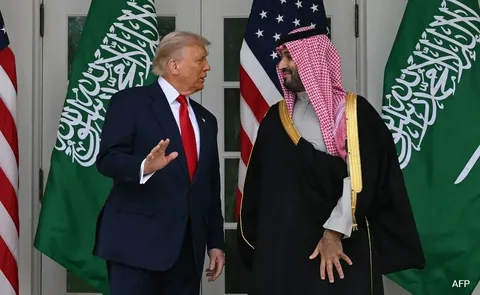
The Joint Declaration on Civil Nuclear Energy Cooperation was signed on November 18, 2025, at the White House during a face-to-face meeting between President Donald Trump and Crown Prince Mohammed bin Salman. The White House released a fact sheet describing the deal as one that “builds the legal foundation for a decades-long, multi-billion-dollar nuclear energy partnership” with Saudi Arabia.
Crucially, the declaration confirms that “the United States and American companies will be the Kingdom’s civil nuclear cooperation partners of choice.” That language matters. Russia and China had both been competing for this contract, offering Saudi Arabia their own nuclear technology on terms that were arguably more flexible. The fact that Riyadh chose American partners or at least agreed to declare it publicly is being read in Washington as a geopolitical win.
The agreement also states that all cooperation will be “conducted in a manner consistent with strong nonproliferation standards.” However, arms control analysts have pointed out that the declaration does not explicitly state whether Saudi Arabia agreed to give up the right to enrich uranium domestically. That detail arguably the most important one remains unclear in the public version of the document.
U.S. Secretary of Energy Chris Wright signed the declaration alongside Saudi Energy Minister Prince Abdulaziz bin Salman. In a statement released by the Department of Energy, Wright called it “a historic day for the United States and the Kingdom of Saudi Arabia,” and said the cooperation is built on “bilateral safeguard agreements” and “a firm commitment to nonproliferation.”
In a Fox News interview the following day, Wright said the deal covers “American technology, American companies to build a very large nuclear power plant in Saudi Arabia” and that there is “no enrichment” in the agreement. That statement was noted, though analysts at the Arms Control Association cautioned that it was unclear whether Wright was describing the joint declaration itself or the more comprehensive 123 agreement that will eventually need to go before Congress.
As of May 2026, the Trump administration confirmed it was reviewing a draft bilateral civil nuclear energy cooperation agreement. Once finalized and signed, that agreement will be presented to Congress before any nuclear materials or technology can actually be transferred.
Quotes
U.S. Secretary of Energy Chris Wright, in his official statement:
“Today is a historic day for the United States and the Kingdom of Saudi Arabia. We’ve come together on a deal for civil nuclear cooperation. Together, with bilateral safeguard agreements, we want to grow our partnership, bring American nuclear technology to Saudi Arabia and keep a firm commitment to nonproliferation. All of this is made possible because of President Trump’s vision of prosperity at home and peace abroad.”
The White House Fact Sheet described the declaration as one that:
“builds the legal foundation for a decades-long, multi-billion-dollar nuclear energy partnership with the Kingdom; confirms that the United States and American companies will be the Kingdom’s civil nuclear cooperation partners of choice; and ensures that all cooperation will be conducted in a manner consistent with strong nonproliferation standards.”
The Center for Strategic and International Studies (CSIS) noted in its analysis that the deal could lead to Saudi Arabia becoming “a critical supplier of enriched uranium to the U.S. nuclear industry,” which would also help reduce American dependence on Russian enriched uranium a separate and pressing concern for U.S. energy policy.
Impact
The US-Saudi civil nuclear energy cooperation deal has implications that go well beyond two countries building power plants together.
For the United States, this is partly about economics and partly about influence. American nuclear companies including names like Westinghouse and others competing for Gulf contracts stand to benefit from a Saudi nuclear buildout that could be worth tens of billions of dollars over the coming decades. The Climate Leadership Council pointed out that the declaration “paves the way for the U.S. and Saudi Arabia signing a 123 Agreement, allowing for the export of U.S. nuclear material, equipment, and technologies to Saudi Arabia a major potential market for nuclear exports.”
For Saudi Arabia, the deal signals serious intent to diversify its energy economy. The Kingdom currently burns oil and gas to generate electricity at home fuel it could otherwise export at high prices. Building nuclear capacity frees up those hydrocarbons for sale. It also fits Crown Prince Mohammed bin Salman’s Vision 2030 agenda, which aims to reduce Saudi Arabia’s economic dependence on oil.
Then there is the geopolitical dimension. The Joint Declaration on Civil Nuclear Energy Cooperation is widely seen as a move to push back against Russian and Chinese influence in the Gulf. Russia’s Rosatom and China’s nuclear sector had both been actively courting Riyadh. Washington locking in a partnership even a preliminary one complicates their position.
The nonproliferation community, though, is not entirely at ease. Saudi Arabia has never signed a “gold standard” 123 agreement. Until the full text of a final deal is made public and reviewed by Congress, questions about enrichment rights will keep circulating. The Arms Control Association noted that “key details about the terms of the final deal, including whether Saudi Arabia will be permitted to enrich uranium, remain unclear.” That ambiguity, in a region that includes Iran, Israel, and ongoing nuclear tensions, is not a small thing.
The US-Saudi nuclear agreement also comes in a broader context of deepening bilateral ties. Alongside the nuclear declaration, the two countries signed a Critical Minerals Framework to diversify supply chains, plus defense and technology cooperation agreements. The overall package represents what the White House called a comprehensive strengthening of the U.S.-Saudi strategic partnership.
Conclusion
The Joint Declaration on the Completion of Negotiations on Civil Nuclear Energy Cooperation between the United States and Saudi Arabia is a real and consequential step forward but it is not the finish line. The harder work comes next: finalizing the 123 agreement, getting congressional review done, resolving the enrichment question clearly, and ensuring that whatever gets built actually meets the nonproliferation standards both sides have committed to publicly.
American nuclear companies will be watching closely. So will Russia, China, and Iran. And so will nonproliferation experts who have been waiting years for this particular piece of the puzzle to come together in a way that is both commercially viable and strategically safe.
The deal is done, at least in its declaratory phase. What it means in practice depends entirely on what comes next.
FAQs
What is the agreement between the US and Saudi Arabia?
The agreement in question is called the Joint Declaration on the Completion of Negotiations on Civil Nuclear Energy Cooperation. It was signed at the White House on November 18, 2025, during a visit by Saudi Crown Prince Mohammed bin Salman. Under this declaration, the United States and Saudi Arabia agreed to establish the legal foundation for a long-term, multi-billion-dollar civil nuclear energy partnership. The deal confirms that American companies will serve as Saudi Arabia’s preferred partners for building and operating nuclear power infrastructure inside the Kingdom. The agreement is accompanied by commitments to uphold nonproliferation standards, though the specific details particularly on whether Saudi Arabia can enrich uranium domestically have not yet been made fully public.
Did Saudi Arabia give the US 1 trillion dollars?
This question often circulates in connection with the broader U.S.-Saudi deals announced in 2025. To be precise: Saudi Arabia announced commitments to invest heavily in the United States as part of a wider economic partnership package unveiled during the Trump administration. However, the $1 trillion figure that gets mentioned refers to a Saudi commitment to invest in and purchase from the United States over a period of time not a one-time payment and not specifically tied to the civil nuclear energy cooperation agreement. The nuclear deal itself is structured the other way: it is American companies that will bring technology, equipment, and expertise to Saudi Arabia in exchange for contracts worth potentially tens of billions of dollars.
Did Pakistan sell a nuke to Saudi Arabia?
No there is no credible, verified evidence that Pakistan sold a nuclear weapon to Saudi Arabia. This claim has circulated for years, largely because of Pakistan’s close historical and financial ties with the Kingdom, and because of statements made by Crown Prince Mohammed bin Salman about Saudi Arabia’s nuclear ambitions if Iran developed a weapon. Some analysts have discussed the theoretical possibility of a Saudi-Pakistan nuclear arrangement given that Saudi Arabia reportedly helped fund parts of Pakistan’s nuclear program decades ago. However, no government, credible international body, or verified intelligence report has confirmed any transfer of Pakistani nuclear weapons to Saudi Arabia. The current US-Saudi civil nuclear energy cooperation framework is explicitly built around civilian nuclear power electricity generation, not weapons and is designed to be governed by nonproliferation safeguards.