
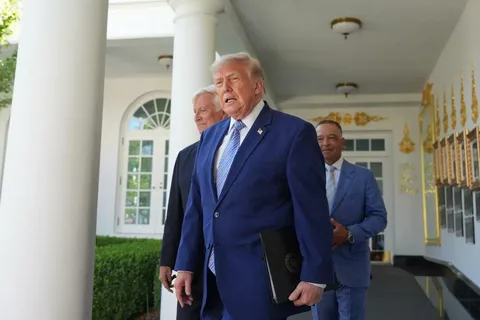
President Donald Trump has moved forward with a sweeping new round of tariffs targeting 60 countries with import taxes ranging from 10 to 12.5 percent. The Trump new tariffs on 60 countries take effect just as his earlier stopgap levies were expiring and they come with a new legal foundation that the administration believes will hold up in court.
The announcement was made on Thursday, July 23, 2026, by U.S. Trade Representative Jamieson Greer. These Trump tariffs cover roughly 99 percent of all U.S. imports, making them one of the broadest trade actions in recent American history.
Background: How Did We Get Here?
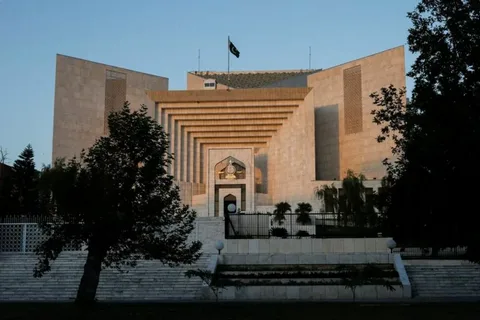
To understand why Trump is imposing double-digit tariffs on dozens of countries right now, you have to go back to early 2026. In February, the U.S. Supreme Court dealt a major blow to Trump’s trade agenda by ruling that his sweeping “Liberation Day” tariffs imposed under the International Emergency Economic Powers Act (IEEPA) were unconstitutional.
Trump had invoked the 1977 International Emergency Economic Powers Act, arguing that America’s longstanding trade deficit amounted to a national emergency. But the Supreme Court ruled that IEEPA did not authorize tariffs. The decision not only struck down the policy but also required the administration to pay refunds to importers who had already absorbed those costs.
In response, Trump imposed a global Section 122 tariff of 10 percent, which was mandated to expire Friday at 12:01 a.m. Section 122 tariffs are a temporary tool they can only last 150 days and cannot exceed 15 percent. With that deadline now here, the administration needed a more permanent solution, and fast.
What Are the New Trump Tariffs? Full Details
The tariffs are being imposed under Section 301 of the Trade Act of 1974, which governs unfair foreign practices affecting U.S. commerce. Greer said his office conducted 60 investigations into potential violations of a prohibition against the importation of goods produced with forced labor and found all 60 economies that he investigated had violated the law, empowering him to impose punitive tariffs.
The Trump tariffs list covers two different rates based on what each country has done about forced labor:
Countries that have not enacted forced labor laws will be subject to a 12.5 percent rate, while countries deemed insufficiently enforcing forced labor laws already on the books will be subject to a 10 percent rate.
So a country like India, which had initially been pegged at 12.5 percent, was moved down to 10 percent after tightening its enforcement. Other nations that took no action remain at the higher rate.
Importantly, senior Trump administration officials told reporters that the new Section 301 rates will not stack with the president’s existing tariffs. In other words, steel and aluminum imports will still be tariffed at 50 percent, not 60 or 62.5 percent.Some categories are also exempt. Products including oil and gas and fertilizer are exempt from the new tariffs. Also being spared are products that qualify for duty-free status under the U.S.-Mexico-Canada Agreement, the North American trade pact Trump negotiated in his first term.
The Full Trump Tariffs List: Which 60 Countries Are Affected?
The list of 60 countries includes some major U.S. trade partners and allies such as Australia, Canada, the European Union, Britain, Israel, India, Qatar and Saudi Arabia. China and Russia are also on the list.
According to official USTR documentation, the full Trump tariffs list includes:Algeria, Angola, Argentina, Australia, Bahamas, Bahrain, Bangladesh, Brazil, Cambodia, Canada, Chile, China, Colombia, Costa Rica, Dominican Republic, Ecuador, Egypt, El Salvador, European Union, Guatemala, Guyana, Honduras, Hong Kong, India, Indonesia, Iraq, Israel, Japan, Jordan, Kazakhstan, Kuwait, Libya, Malaysia, Mexico, Morocco, New Zealand, Nicaragua, Nigeria, Norway, Oman, Pakistan, Peru, Philippines, Qatar, Russia, Saudi Arabia, Singapore, South Africa, South Korea, Sri Lanka, Switzerland, Taiwan, Thailand, Trinidad and Tobago, Turkey, United Arab Emirates, United Kingdom, Uruguay, Venezuela, and Vietnam.
This is one of the most extensive Trump tariffs lists ever assembled, touching virtually every major economy in the world.
Trump Tariffs Announcement Date and Timeline
The Trump tariffs announcement date was Thursday, July 23, 2026, when U.S. Trade Representative Jamieson Greer made the official public announcement. The tariffs went live just after midnight at 12:01 a.m. on Friday, July 24, 2026 precisely as the previous Section 122 tariffs expired.
The groundwork for this action had been laid months earlier. The Office of the United States Trade Representative on March 12, 2026, issued a release announcing the initiation of Section 301 investigations into the acts, policies, and practices of 60 economies related to the failure to impose and effectively enforce a prohibition on the importation of goods produced with forced labor. Public comments and hearings followed before the final tariffs were announced.
Trump Tariffs and the Supreme Court: A Key Legal Battle
The Trump tariffs Supreme Court saga is central to understanding why these new tariffs are structured the way they are. After the court struck down the IEEPA-based tariffs in February 2026, the Trump administration was forced to find legal alternatives.
Section 301 of the Trade Act of 1974 is considered a far more legally durable tool. Unlike the emergency powers used for Liberation Day tariffs, Section 301 has a long history of being upheld in courts. The administration is betting that this foundation will survive any future legal challenges including those already being anticipated from trading partners and domestic importers.
The shift from Section 122 tariffs to Section 301 tariffs is not just a legal technicality. It reflects a deliberate strategic repositioning by the White House to make Trump’s trade agenda stick for the long term, regardless of how the courts or Congress respond.
What Officials Said: Key Quotes
“The United States has had a forced labor import ban for nearly a century, and rigorously enforces it; it’s well past time for our trading partners to do the same,” said U.S. Trade Representative Jamieson Greer.
Greer added that the investigations confirmed that every single one of the 60 economies reviewed had fallen short of adequate forced labor enforcement leaving the administration no choice but to act under the law.
Officials also noted that negotiations with trading partners remain open. The United States is involved in negotiations with its trading partners, including the nations subject to the new Section 301 tariffs, about creating carve-outs via bilateral trade deals for products deemed to be critical to the U.S. economy.
Global and Regional Impact
The economic consequences of Trump imposing double-digit tariffs on dozens of countries are expected to be significant. Tariffs are paid by companies in the United States that import foreign products. The importers usually try to pass along the cost by charging consumers higher prices. Americans are already frustrated by the high cost of living.
For global trading partners, the tariffs add another layer of uncertainty to supply chains that are already under stress. Countries like China, the EU, Japan, and the UK all of which appear on the Trump tariffs list face new costs on goods they sell into the U.S. market.
The political dimension is also sharp. Americans are already frustrated by the high cost of living, so the administration is taking a risk in rolling out new tariffs ahead of the November 3 midterm elections. Critics argue that the forced labor justification, while legally creative, is a pretext for what is ultimately a protectionist agenda.
For developing countries like Bangladesh, Vietnam, Cambodia, and Pakistan all of which are major exporters of textiles and consumer goods to the U.S. a 10 to 12.5 percent tariff hike could seriously disrupt their export industries and impact millions of jobs.
What’s Next: Future Developments to Watch
Several developments are expected in the coming days and weeks. Trading partners are likely to file formal complaints with the World Trade Organization and challenge the Section 301 tariffs in U.S. courts. Legal experts say that while Section 301 is more defensible than IEEPA, it is not entirely immune to challenge.
Bilateral trade negotiations are already underway. Countries that agree to strengthen their domestic forced labor bans could qualify for lower tariff rates or full exemptions through future trade agreements. The administration has signaled that it sees these tariffs as leverage, not permanent walls.
Meanwhile, attention will turn to how U.S. consumers and businesses respond. If prices rise sharply in the coming weeks, political pressure on the White House could intensify ahead of the midterms. For Trump, these tariffs are both an economic tool and a political statement and the results will shape both his trade legacy and his party’s electoral outlook.
Frequently Asked Questions (FAQs)
What is the Donald Trump tariff?
The Donald Trump tariff refers to a series of import taxes imposed by President Trump on goods coming into the United States from foreign countries. Trump’s tariff policy has been one of the defining features of his economic agenda across both his first and second presidential terms. His stated goals include protecting American manufacturing, reducing the U.S. trade deficit, and pressuring trading partners to adopt fairer trade practices. His tariffs have ranged from targeted duties on specific products like steel and aluminum to broad sweeping tariffs on goods from dozens of countries at once. The latest round of Trump tariffs, announced on July 23, 2026, imposes 10 to 12.5 percent taxes on imports from 60 countries under Section 301 of the Trade Act of 1974, using forced labor enforcement failures as the legal justification.
Are the Trump tariffs still in effect?
Yes, Trump tariffs are very much still in effect and as of July 24, 2026, a new and broader round has just gone into force. The earlier Section 122 tariffs of 10 percent, which were temporary stopgaps put in place after the Supreme Court struck down the IEEPA-based tariffs in February 2026, expired at midnight on July 24. They have now been replaced by new Section 301 tariffs ranging from 10 to 12.5 percent on goods from 60 countries. Additionally, Trump’s existing tariffs on steel and aluminum remain at 50 percent, and those are not affected by the new Section 301 rates. So while the legal mechanism has changed moving from IEEPA to Section 301 the overall tariff regime is not only still in effect but has just been renewed and expanded in scope.
What are the new tariffs on Canada?
Canada is included in the new Trump tariffs list announced on July 23, 2026, and is subject to the Section 301 forced labor tariffs. However, the situation for Canada is more nuanced than for many other countries. Goods that qualify for duty-free status under the U.S.-Mexico-Canada Agreement (USMCA) the trade pact Trump himself negotiated during his first term are exempt from these new tariffs. This means a significant portion of Canadian exports to the United States, particularly oil and gas as well as USMCA-compliant manufactured goods, will not face the new 10 to 12.5 percent levy. Canada had already been engaged with the Trump administration on forced labor enforcement issues, and Canadian officials have expressed willingness to work within a North American framework to address supply chain concerns.