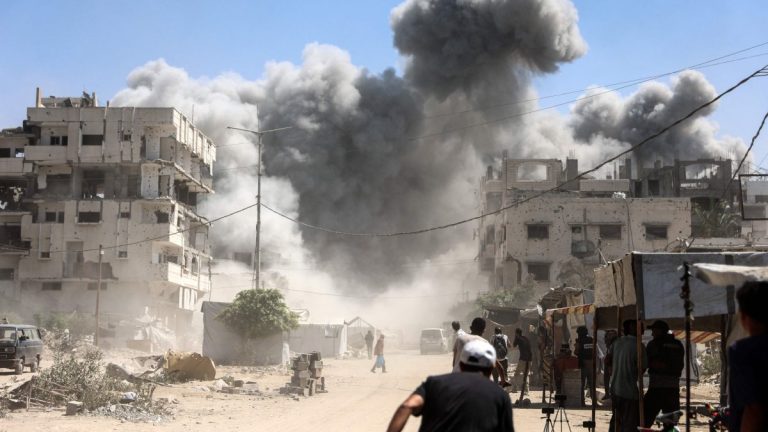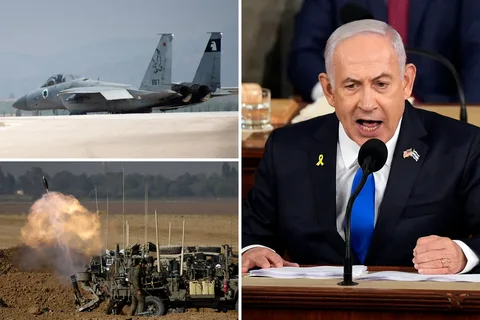

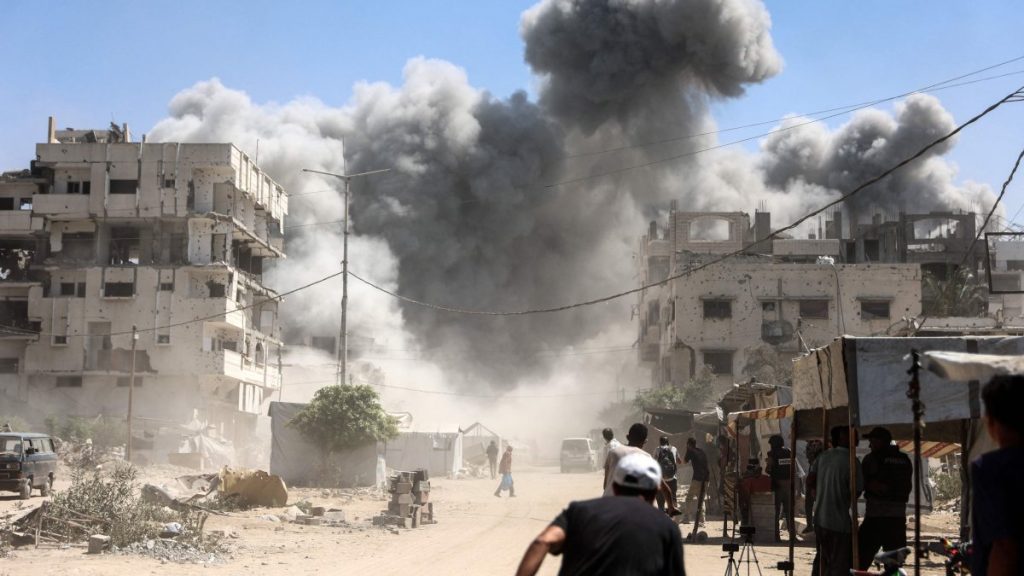
Israeli forces bombed parts of Gaza on Thursday after issuing displacement orders for several neighborhoods, killing at least two Palestinians, according to medical sources cited by Al Jazeera. The strikes are the latest episode in the Israel-Palestine conflict today, occurring despite a US-brokered ceasefire that took effect in October 2025.
Background
Understanding the Israel-Palestine conflict history requires looking back well over a century, to competing national movements that emerged in the same territory. Jewish national identity traces religious and historical ties to the land going back thousands of years, while Palestinian Arab communities trace continuous presence in the same territory across many centuries under Ottoman and later British rule.
The modern political dispute took shape after the 1917 Balfour Declaration, in which Britain expressed support for a Jewish homeland in Palestine, and intensified as Jewish immigration to the region increased in subsequent decades, particularly following the Holocaust. Tensions between Jewish and Arab communities grew steadily under British Mandate rule between the two World Wars.
The Israel-Palestine conflict start date is often marked as 1948, when Israel declared independence following a UN partition plan that divided the British Mandate territory into separate Jewish and Arab states, a plan Arab leaders at the time rejected. War followed immediately, resulting in Israeli statehood alongside the displacement of hundreds of thousands of Palestinians, an event Palestinians refer to as the Nakba, or “catastrophe.”
Details
Since 1948, the Israel-Palestine conflict timeline has included several major wars and uprisings, including the 1967 Six-Day War, after which Israel took control of the West Bank, Gaza, and East Jerusalem, and the First and Second Intifadas in the late 1980s and early 2000s. Multiple rounds of peace talks, including the 1993 Oslo Accords, have failed to produce a lasting resolution.
The current chapter traces to October 2023, when Hamas launched a surprise attack on southern Israel, killing roughly 1,200 people and taking hostages, according to Israeli authorities. Israel responded with a sustained military campaign in Gaza that has continued, with pauses, for nearly two years. A ceasefire and hostage exchange agreement, mediated by the United States, took effect in October 2025.
Despite that ceasefire, violence has persisted. Gaza’s health ministry says the overall death toll from the war has passed 73,000 Palestinians, including more than 1,100 people killed since the ceasefire officially began. On Thursday, Israeli forces issued evacuation warnings for four areas of Gaza before striking them, destroying homes in the Bureij and Jabalia refugee camps and in Gaza City’s Zeitoun and Tal al-Hawa neighborhoods.
A UN Commission report issued in September 2025 concluded that Israel had committed four of the five acts defined as genocide under the Genocide Convention, a finding Israel has strongly rejected. Israel maintains its operations target Hamas fighters and infrastructure, and has repeatedly said it takes steps to avoid civilian casualties, though it has provided limited evidence in specific strikes covered by international media.
Separately, Israel’s parliament dissolved itself on July 17 and set an election date of October 27, adding a domestic political dimension to how the government approaches the ongoing conflict in the weeks ahead.
Quotes
Al Jazeera correspondent Ibrahim al-Khalili, reporting from Gaza City, said what has been particularly alarming is that Israeli evacuation warnings have repeatedly been followed by strikes on the very areas residents were told to flee toward.
Egypt’s Minister of Foreign Affairs, Badr Abdelatty, urged US Secretary of State Marco Rubio to accelerate deployment of the International Stabilization Force in Gaza, according to a statement from Egypt’s foreign ministry, stressing the need to launch the committee tasked with administering the territory.
A UN human rights office statement said Israeli attacks killed at least 57 Palestinians between July 13 and 20 alone, including six children and eight women, warning the pattern raised concerns about continuing violations of international humanitarian law.
Impact
The continued strikes carry significant humanitarian consequences. UN agencies report that 63 percent of households in Gaza now access less than six liters of drinking water a day, while 60 percent live within 10 meters of exposed sewage, conditions aid groups describe as a public health crisis layered on top of ongoing military operations.
Regionally, the unresolved conflict keeps straining relationships across the Middle East. Egypt, Jordan, and Gulf states have pushed for faster implementation of the US-backed stabilization plan, while events like the recent storming of Al-Aqsa Mosque have drawn condemnation from Arab and Muslim-majority countries.
Globally, the Israel-Palestine conflict remains one of the most closely watched and debated foreign policy issues, generating extensive discussion across platforms like Israel-Palestine conflict Reddit threads, where users from different backgrounds frequently clash over competing historical narratives and current events.
International reaction remains split along familiar lines. Some governments and human rights organizations have called for stronger accountability measures against Israel, while others, including the United States government, continue to emphasize Israel’s right to self-defense following the October 2023 Hamas attack.
Conclusion
With Israel’s parliamentary elections set for October and the US-backed stabilization plan still stalled, the coming months will test whether the ceasefire framework can be salvaged or whether the Israel-Palestine conflict enters a new, more volatile phase. Diplomatic efforts led by Egypt, the United States, and other regional players continue, though on-the-ground violence in Gaza has yet to meaningfully subside.
For now, Palestinians in Gaza continue to face displacement, strikes, and severe shortages of basic necessities, while the broader political question of a lasting resolution to the decades-old dispute remains unresolved.
Frequently Asked Questions
What is going on in Gaza?
Gaza remains in a state of ongoing crisis despite an October 2025 ceasefire agreement between Israel and Hamas that was meant to end major hostilities. Israeli strikes have continued intermittently since then, killing more than 1,100 Palestinians according to Gaza’s health ministry, alongside displacement orders that have forced residents to repeatedly relocate within the territory. Humanitarian conditions remain severe, with most households lacking adequate access to clean water and sanitation, while a planned international stabilization force has yet to be fully deployed to help stabilize the territory and support reconstruction efforts.
Who was first, Israel or Palestine?
This question does not have a single agreed-upon answer, and it remains one of the most politically charged aspects of the conflict. Jewish historical and religious tradition traces ties to the land of Israel back roughly 3,000 years, including ancient kingdoms referenced in religious texts, while Palestinian Arab communities point to continuous inhabitation of the same territory for well over a thousand years under various empires, including Roman, Byzantine, and Ottoman rule. Modern Israel was established as a state in 1948, while Palestinians describe their own national identity as tied to the land through generations of continuous presence predating that date; both narratives are deeply held, and historians generally treat the “who was first” framing as a simplification of a much more layered history involving many peoples and empires over thousands of years.
Who supports Palestine?
Support for the Palestinian cause varies widely and includes a mix of governments, international organizations, and public movements. Most Arab League and Organisation of Islamic Cooperation member states have historically expressed political and diplomatic support for Palestinian statehood, and a growing number of countries, including several in Latin America, Europe, and Asia, have formally recognized the State of Palestine in recent years. Beyond governments, numerous international human rights organizations, United Nations bodies, and grassroots solidarity movements around the world have also voiced support for Palestinian rights, particularly around calls for humanitarian access, ceasefires, and accountability for civilian casualties in Gaza.