
The world is watching one of the most alarming disease crises in recent history unfold in real time. The Ebola outbreak 2026 has grown into the third-largest Ebola crisis ever recorded, spreading rapidly across the Democratic Republic of Congo, spilling into Uganda, and reaching European soil for the first time in this outbreak. With over 2,000 confirmed cases, 754 deaths, and no approved vaccine or treatment for this specific strain, the current Ebola outbreak has been declared a global public health emergency by the World Health Organization.
This is a fast-moving situation. Every number in this article represents a real human being a miner, a nurse, a mother, a child. Understanding what is happening, where it is spreading, and what it means for travelers and governments is no longer optional. It is urgent.
What Is Ebola and Why Is the 2026 Strain So Dangerous?
Ebola is a severe and often fatal hemorrhagic fever caused by viruses in the Filoviridae family. It spreads through direct contact with the bodily fluids of an infected person blood, sweat, saliva, or vomit and kills by triggering massive internal inflammation, organ failure, and, in many cases, severe bleeding.
The current Ebola outbreak 2026 is caused by the Bundibugyo virus (BDBV), one of several species that cause Ebola disease. What makes this strain particularly frightening is that there is no approved vaccine and no licensed treatment for it. Every previous large Ebola outbreak including the catastrophic 2014–2016 West Africa crisis involved the Zaire strain, for which effective vaccines and treatments have since been developed. The Bundibugyo virus is different, and the medical world is scrambling to catch up.
The fatality rate for Bundibugyo virus disease ranges from 30 to 50 percent, according to WHO data. That means between three and five out of every ten people who become infected are dying. Early supportive care fluids, nutrition, managing symptoms can improve survival chances, but without targeted treatment, the odds remain brutal.
Ebola Outbreak 2026 Map: Where Is It Spreading?
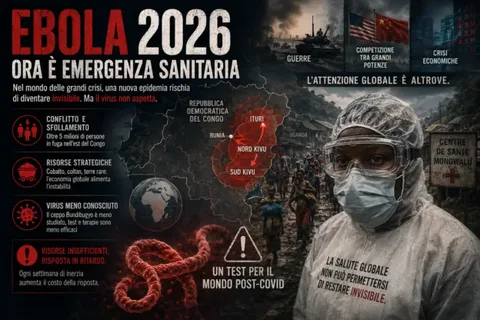
The Ebola outbreak 2026 map tells a story of rapid, multi-directional spread. What started in a remote mining town in northeastern DRC has, within two months, reached the capital cities of two countries and crossed into Europe.
The outbreak was first identified in Mongbwalu, a gold-mining town in Ituri Province, northeastern DRC, with early infections believed to have occurred as far back as January or February 2026. By the time the DRC Ministry of Health officially confirmed the outbreak on May 15, 2026, the virus had already reached three health zones: Bunia, Mongbwalu, and Rwampara.
Since then, the Ebola outbreak map has expanded significantly. Confirmed or suspected cases have been reported in:
- Ituri Province — the epicenter, accounting for the vast majority of cases
- North Kivu Province — eastern DRC, near the Ugandan border
- South Kivu Province — southeastern DRC
- Tshopo Province — central-north DRC
- Haut-Uele Province — northern DRC
- Kinshasa — the DRC capital, more than 2,000 kilometres from the epicenter
- Kampala, Uganda — the Ugandan capital, where imported cases were confirmed
- France — where a French medical doctor returning from DRC tested positive on June 24, 2026
The speed and geographic range of this spread is what has alarmed global health authorities most. According to Doctors Without Borders (MSF), just two months into the outbreak, this has already become the third-largest and fastest-growing Ebola outbreak ever recorded.
Ebola Outbreak 2026 Cases: The Numbers Right Now
As of July 2026, the confirmed Ebola outbreak 2026 cases stand at over 2,011 confirmed cases in the DRC alone, with 754 confirmed deaths. Uganda has reported 20 confirmed cases and two deaths, with its last confirmed patient discharged on July 16, 2026, beginning a 42-day countdown to declaring the end of its outbreak. France reported one confirmed case an imported infection in a humanitarian doctor with no secondary transmission confirmed.
To understand how alarming these numbers are, consider this: during the 2018 DRC outbreak, it took more than 10 months for cases to reach 2,000. In 2026, that same threshold was crossed in under two months. WHO has also warned that the true scale of this outbreak may be two to four times larger than official figures suggest, due to missed cases in conflict zones, remote areas, and communities where trust in health authorities is low.
At least 112 healthcare workers have been infected and 35 have died as of mid-July, a devastating toll on the very people most critical to stopping the outbreak.
Health Workers in Crisis: The Human Cost Behind the Numbers
One of the most heartbreaking dimensions of the current Ebola outbreak is what is happening to the people fighting it on the frontlines. Health workers in Ituri Province have been putting their lives on the line since May 15, facing infection risk, shortages of personal protective equipment, and attacks from communities who do not believe the virus is real. But many of them have also not been paid a single salary since the outbreak began.
<cite index=”19″>”We’ve been treating Ebola patients without pay since May 15,” doctor Pascal Bahoya told AFP. “We continue to do so because that is our oath, but we are working in very difficult conditions.”</cite>
<cite index=”23″>Dozens of workers staged strikes outside Ebola treatment centres, including Bunia General Hospital in Ituri province, protesting unpaid wages as the death toll rose past 754.</cite> Workers demanded payment of salaries, risk allowances, and bonuses they had been promised but never received. Some also called for the removal of income tax deductions on what they argued were hazard bonuses, not regular income.
<cite index=”21″>In the health zones of Butembo, Beni, and Kisangani, doctors, nurses, laboratory technicians, and community health workers continued refusing to return to work, demanding payment before any suspension of the strike.</cite>
The strikes have directly threatened containment efforts. <cite index=”25″>WHO representative in Congo, Dr. Anne Ancia, said the virus continues to spread, fuelled by population movements and insecurity, while some treatment centres are at near-full capacity.</cite> When the people running those treatment centres walk off the job, the consequences can be measured in lives.
Ebola Outbreak 2026 Travel Restrictions: What You Need to Know
The Ebola outbreak 2026 travel restrictions are among the most significant public health travel measures imposed since the COVID-19 pandemic. Multiple countries and airlines have introduced restrictions, entry bans, and enhanced screening measures targeting travelers from DRC, Uganda, and South Sudan.
United States: <cite index=”15″>On May 18, 2026, the CDC, DHS, and other federal agencies announced public health entry screening, entry restrictions, and other public health measures to prevent Ebola from entering the United States. An order continuing the suspension of the right to introduce specified foreign nationals was issued on July 13, 2026, and will be in effect for 30 days.</cite> The CDC recommends avoiding all non-essential travel to Haut-Uele, Ituri, Nord-Kivu, and Tshopo provinces in DRC. Enhanced Ebola screening at U.S. airports is active at Washington Dulles, Hartsfield-Jackson Atlanta, and George Bush Intercontinental Houston.
European Union: <cite index=”3″>The European Centre for Disease Prevention and Control (ECDC) called on EU member states to continue investing in preparedness following the first imported Ebola case confirmed on European soil on June 24, 2026.</cite>
International: <cite index=”11″>As of June 26, 2026, many countries announced formal Ebola-related entry bans or immigration-document suspensions affecting travelers with recent presence in DRC, Uganda, or South Sudan. These measures are temporary and are changing quickly as the outbreak develops.</cite>
Travelers are strongly advised to check the latest guidance from the WHO, CDC, and their national health authority before making any travel plans involving affected regions.
Ebola Outbreak and Air France: What Happened?
The Air France Ebola situation became a major news story in May 2026. <cite index=”16″>A Detroit-bound Air France flight was diverted to Canada after a Congolese passenger boarded the aircraft despite entry restrictions put in place to reduce the risk of Ebola. “Due to entry restrictions put in place to reduce the risk of the Ebola virus, the passenger should not have boarded the plane,” a Customs and Border Protection spokesperson confirmed. In its statement, Air France acknowledged the new restrictions.</cite>
The incident highlighted the operational challenges airlines face in enforcing rapidly changing health-based travel restrictions and raised questions about passenger screening protocols at departure airports. The International Civil Aviation Organization (ICAO) has since urged all airlines to apply exit screening for departing passengers from affected regions and to use electronic health declarations.
<cite index=”14″>WHO Director-General Tedros Adhanom Ghebreyesus stated that international flights are currently safe, and urged countries not to close borders or impose restrictions on travel or trade, but to focus on exit screening for departing passengers rather than entry screening for arrivals. “We have stopped every previous Ebola outbreak, and we will stop this one, too,” he said.</cite>
Why Is This Ebola Outbreak Spreading So Fast?
The speed of the current Ebola outbreak 2026 is not an accident. It reflects a collision of compounding crises that have made eastern DRC one of the most difficult places on earth to mount a public health response.
Conflict and insecurity have destabilized the region for more than three decades. Armed groups control large swathes of territory, restrict movement of health workers, and have attacked treatment centres. In May 2026, parts of the Rwampara treatment centre were burned down.
Population displacement means hundreds of thousands of people are living in camps without adequate water or sanitation precisely the conditions that allow infectious diseases to spread rapidly.
Mining and cross-border movement are constant features of life in Ituri, which borders Uganda and South Sudan. Gold miners, traders, and truck drivers move continuously across borders, carrying the virus with them before symptoms even appear.
No vaccine or treatment means health workers can only isolate, trace, and support they cannot cure. <cite index=”6″>This outbreak is already the third-largest and fastest-growing Ebola disease outbreak on record, and unlike previous outbreaks, there are very few medical tools available to fight it.</cite>
Lack of community trust is another invisible barrier. Many communities in the affected regions have lived through repeated government failures, broken promises, and armed conflict. Convincing them to bring sick relatives to treatment centres rather than caring for them at home, which accelerates transmission is an enormous challenge that no amount of medical equipment can solve alone.
Global Response: WHO, MSF, and the Race for a Treatment
The global health community has mobilized on a scale not seen since the 2018–2020 DRC outbreak. WHO declared the outbreak a Public Health Emergency of International Concern on May 17, 2026 its highest alert designation. This triggered coordinated international funding, personnel deployment, and diplomatic pressure on affected governments.
<cite index=”6″>More than 1,400 Doctors Without Borders (MSF) staff are on the ground in DRC, treating patients, setting up Ebola treatment centres and isolation units, and delivering supplies to overwhelmed hospitals.</cite> MSF has called for an urgent scale-up of the medical response, warning that current efforts remain insufficient given the speed of transmission.
On the treatment front, there is cautious hope. <cite index=”2″>The first patients were enrolled in a record-breaking Ebola treatment trial in DRC in July 2026, and the UK started its first vaccine trial eight weeks into the Ebola emergency.</cite> These are landmark developments but clinical trials take time, and the outbreak is not waiting.
The international community held a High-Level Virtual Meeting of African Heads of State and Government on June 16, 2026, with WHO’s Director-General calling for greater political commitment and financial resources to support the response.
What Happens Next: The Outlook for the Ebola Outbreak 2026
The situation as of late July 2026 remains deeply serious. While Uganda has made significant progress discharging its last patient on July 16 and beginning its 42-day countdown the situation in DRC shows no signs of abating. Cases continue to spread into new provinces, treatment centres are near capacity, and the health worker strikes add a dangerous new variable to an already fragile response.
The next four to six weeks will be critical. If clinical trials yield a viable treatment option, if health worker pay disputes are resolved and strikes end, and if community engagement improves in the hardest-hit areas, containment becomes more achievable. If any of these conditions fail to materialize, the outbreak has the potential to grow into something far worse than any Ebola crisis the world has seen.
WHO, MSF, CDC, and dozens of international partners are working against the clock. But as Dr. Tedros has repeatedly warned, stopping this outbreak will depend not just on international resources, but on the trust and cooperation of the communities living at the epicenter of the crisis.
Frequently Asked Questions About Ebola Outbreak 2026
Where is the Ebola outbreak in 2026?
The 2026 Ebola outbreak began in Ituri Province in northeastern Democratic Republic of Congo (DRC) in May 2026. Since then, it has spread to five DRC provinces including North Kivu, South Kivu, Tshopo, and Haut-Uele, as well as to the DRC capital Kinshasa. Outside DRC, confirmed cases have been reported in Uganda, with 20 cases and two deaths, and one imported case was confirmed in France in June 2026. The outbreak is caused by the Bundibugyo strain of Ebola, for which there is currently no approved vaccine or treatment. WHO declared the outbreak a Public Health Emergency of International Concern on May 17, 2026, making it the most severe global health alert designation. As of July 2026, over 2,011 confirmed cases and 754 deaths have been recorded in DRC alone, making this the third-largest Ebola outbreak in history and the fastest-growing ever recorded.
How many times has DRC had Ebola?
The 2026 Ebola outbreak is the 17th Ebola outbreak the Democratic Republic of Congo has experienced since the virus was first discovered there in 1976, near the Ebola River in what was then Zaire which is how the virus got its name. No country in the world has faced Ebola more frequently than the DRC, and the reasons are complex: a vast, largely unconnected territory, chronic underfunding of public health infrastructure, decades of armed conflict in the east, and large wildlife populations that serve as natural reservoirs for the virus. Previous notable DRC outbreaks include the 2018–2020 North Kivu outbreak, which resulted in 2,287 deaths and was the second-largest Ebola crisis in history. The 2026 outbreak began just five months after the end of DRC’s 16th Ebola outbreak, an unusually short gap that alarmed health authorities from the very beginning.
Which country still has Ebola in 2026?
As of July 2026, the Democratic Republic of Congo remains the primary country still actively battling Ebola. The outbreak in DRC shows no signs of slowing, with cases continuing to spread into new provinces and confirmed case counts topping 2,000. Uganda, which reported 20 confirmed cases including two deaths, discharged its last patient on July 16, 2026, and has begun the mandatory 42-day countdown to formally declaring the end of its outbreak. France confirmed one imported case in June 2026 a humanitarian doctor returning from DRC but no secondary transmission occurred and the situation was contained. The United States and other countries have imposed travel restrictions and enhanced screening to prevent further spread, and the CDC continues to advise against non-essential travel to several DRC provinces. The WHO continues to monitor all affected and at-risk countries