Mukalla: Yemen is grappling with a worsening dengue fever outbreak as health officials intensify mosquito-control efforts in the country’s southern coastal regions. In the port city of Mukalla, health workers are conducting door-to-door inspections to eliminate mosquito breeding sites amid growing concerns over the spread of dengue and malaria.
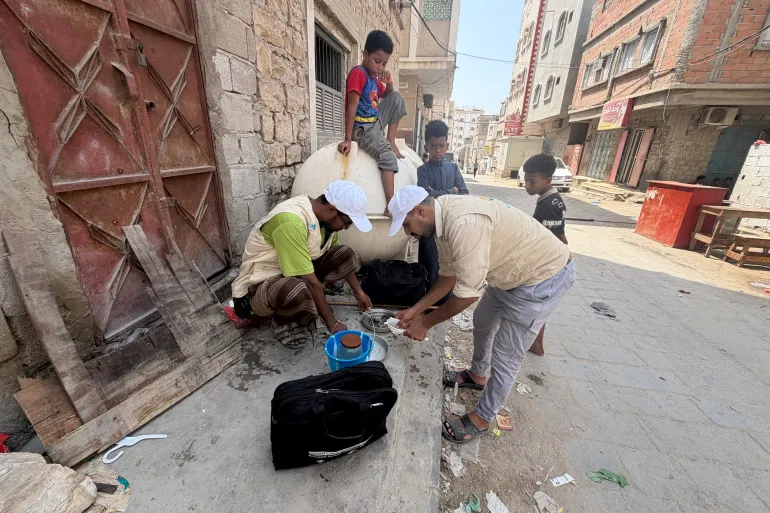
Under intense summer heat, surveillance teams led by insect control officer Salem bin Shabz are inspecting stagnant water pools in the densely populated Al-Koud neighborhood, one of the hardest-hit areas in Hadramout province. Equipped with sampling tools, they examine standing water in drains, containers, and household waste areas where mosquitoes breed.
During one inspection, the team discovered mosquito larvae in stagnant water collected from an air conditioner drainage outlet. Laboratory identification later confirmed the presence of both Aedes mosquitoes, which transmit dengue fever, and Anopheles mosquitoes, responsible for spreading malaria.
Mukalla Among Yemen’s Worst-Hit Areas
Mukalla has emerged as one of Yemen’s most affected cities for dengue infections. The mosquito-borne viral disease causes high fever, severe headaches, muscle and joint pain, nausea, and skin rashes. In severe cases, dengue can lead to internal bleeding, organ failure, and death if left untreated.
Health officials say repeated mosquito-control campaigns have struggled to keep pace with poor sanitation, standing water, and damaged infrastructure caused by years of conflict.
Conflict Fuels Public Health Crisis
Yemen’s prolonged humanitarian crisis has severely weakened its healthcare system, leaving millions vulnerable to preventable diseases. Limited access to clean water, poor waste management, and overcrowded living conditions have created ideal environments for mosquitoes to multiply.
Medical experts warn that climate conditions, including rising temperatures and seasonal rainfall, are accelerating mosquito breeding across several provinces.
Authorities Intensify Surveillance
The National Malaria Control Programme (NMCP) has increased surveillance operations by collecting mosquito larvae from suspected breeding sites, identifying mosquito species, and implementing targeted control measures.
Officials are also urging residents to eliminate stagnant water around homes, cover water storage containers, and cooperate with health teams to reduce mosquito populations.
Public awareness campaigns have been launched to educate communities about preventing mosquito bites through the use of insect repellents, mosquito nets, and protective clothing.
Health Experts Warn of Continued Risk
Experts caution that without sustained vector-control programs and improvements in sanitation, Yemen could face recurring outbreaks of dengue and malaria. International humanitarian organizations have repeatedly warned that the country’s fragile healthcare system remains under enormous strain, making disease prevention more critical than ever.
Health authorities continue monitoring the outbreak while calling for increased international support to strengthen disease surveillance, medical supplies, and public health infrastructure.