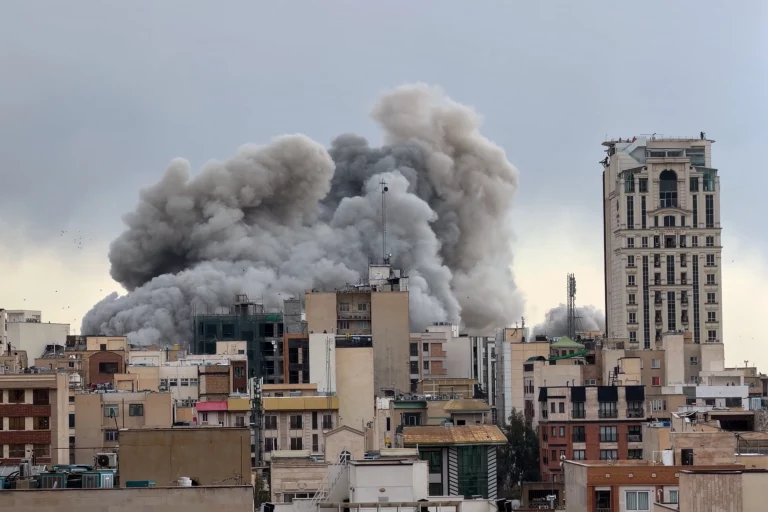

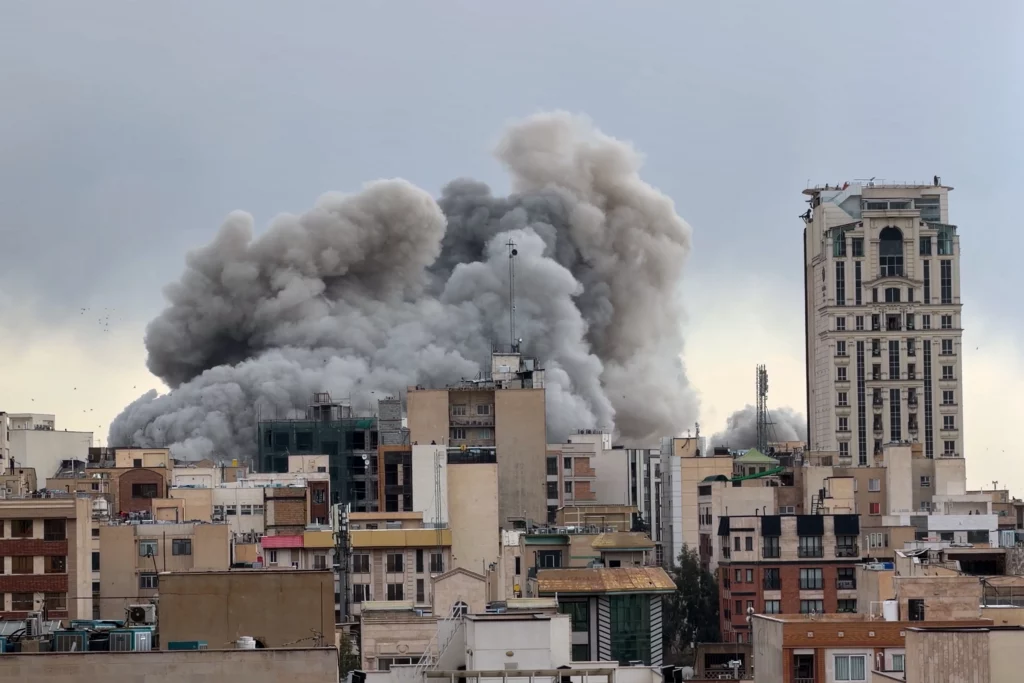
The Iran Israel war entered a tense new phase this week as Washington paused its strikes on Iranian targets while Tehran threatened retaliation against Ukraine following a deadly attack on an Iranian commercial vessel in the Caspian Sea. A senior US official confirmed that President Donald Trump is giving diplomatic talks “some space,” even as Iran’s military leadership warned that any fresh provocation from the United States or Israel would draw a swift response. The renewed diplomatic pause comes after nearly two weeks of continuous strikes between American and Iranian forces.
Background
The Iran Israel war began on February 28, 2026, when the United States and Israel launched a coordinated opening assault that killed Iran’s Supreme Leader Ali Khamenei and set off months of regional escalation. Iran responded with hundreds of missiles and thousands of drones fired across the Middle East, targeting American bases, Israeli cities, and Gulf Arab infrastructure. The conflict has since drawn in Lebanon, where Israeli strikes on Hezbollah positions reignited hostilities, and has repeatedly threatened to close the Strait of Hormuz, one of the world’s busiest oil shipping corridors.
Since that initial assault, the Iran US war has moved through several cycles of ceasefire and renewed fighting. Each pause has eventually broken down over disputes near the Strait of Hormuz, with both sides accusing the other of violating earlier understandings. The current lull follows thirteen consecutive days of American strikes on Iranian territory, according to Iran’s army spokesman, who said Tehran halted its own retaliatory operations only after Washington stopped its bombing campaign two nights earlier.
Details
United Nations envoy Mike Waltz said over the weekend that President Trump is allowing negotiators additional room to work, signalling that Washington is not currently planning new strikes on Iran. At the same time, Waltz acknowledged that American munitions stockpiles have been strained by the pace of the campaign, though he maintained that US forces still have everything required to continue operations if needed. Reports from earlier meetings indicate that senior defence officials, including the Chairman of the Joint Chiefs of Staff, had raised concerns internally about the sustainability of the current tempo of strikes.
Iran, for its part, has portrayed the pause as a strategic win. An unnamed Iranian official described the halt as evidence that Washington is experiencing what he called “strategic decision-making fatigue.” Iran’s Islamic Revolutionary Guard Corps has also accused Israel of trying to keep the United States entangled in the region by feeding Trump misleading intelligence, a claim that has not been independently verified.
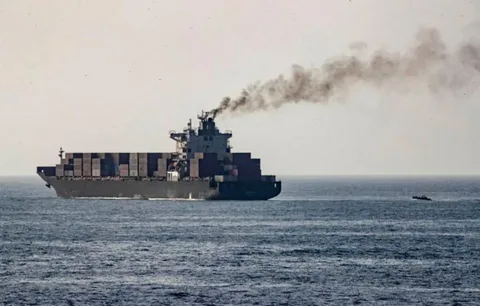
The war has also spread geographically. Houthi forces in Yemen, who are aligned with Iran, have declared a blockade of Saudi shipping near the Bab al-Mandeb strait, opening a new front in the broader Iran Israel war. Meanwhile, a separate and unexpected flashpoint emerged this weekend far from the Gulf. Ukraine carried out long-range strikes in the Caspian Sea, hitting vessels that Kyiv says were used to move military cargo linked to Iran, alongside a Russian warship. One of the targeted ships, described by Iran as a commercial vessel, exploded and killed a sailor while injuring several others.
Tehran’s Foreign Ministry summoned Ukraine’s chargé d’affaires to formally protest the strike, calling it a hostile and criminal act that violated the United Nations Charter. Iranian officials say the attack risks expanding the Iran Israel war into a wider confrontation involving Ukraine and, by extension, Russia, given Moscow’s close military ties with Tehran.
Quotes
Iran’s Foreign Minister Abbas Araghchi said the Ukrainian strike on the Iranian vessel “cannot go unanswered,” and accused Israel of provoking the attack in an attempt to draw Europe deeper into the conflict. He raised the matter directly in phone calls with EU foreign policy chief Kaja Kallas and Russian Foreign Minister Sergey Lavrov.
Ebrahim Azizi, who heads the Iranian parliament’s National Security and Foreign Policy Commission, warned that any attack on Iran carries consequences, adding that both the United States and Israel are well aware of this reality. Iran’s army spokesman, Mohammad Akraminia, confirmed that American strikes continued for thirteen straight days before both sides quietly stood down over the past two nights.
On the Ukrainian side, President Volodymyr Zelenskyy said his forces achieved strong results with the long-range strikes, describing the targets as vessels tied to military cargo shipments involving Iran rather than ordinary commercial traffic.
Impact
The overlapping crises are already reshaping regional and global dynamics. Continued instability around the Strait of Hormuz has disrupted international shipping and pushed several airlines to reroute flights away from Middle Eastern airspace. The Houthi blockade near Bab al-Mandeb adds further pressure on Saudi Arabia, which is simultaneously negotiating a civilian nuclear energy deal with Washington that officials say will only proceed once Riyadh normalizes relations with Israel.
The Caspian Sea incident introduces a new and unpredictable dimension to the Iran Israel war by pulling Ukraine into a conflict it had largely stayed out of until now. Analysts following the Iran US war closely note that any Iranian retaliation against Ukrainian assets could complicate Western support for Kyiv and further strain relations between Tehran and European governments, several of which have called for restraint on all sides.
Inside Iran and Lebanon, the human cost of the broader war remains severe, with thousands killed since February and millions displaced across the region. Gulf Arab states have also reported casualties from missile and drone exchanges, underscoring how a conflict that began as a bilateral confrontation between Iran, Israel, and the United States has evolved into a multi-front regional crisis.
Conclusion
With Washington signalling room for renewed diplomacy and Tehran weighing its response to Ukraine, the coming days are likely to determine whether the current pause in the Iran Israel war holds or collapses into another cycle of strikes. Officials on multiple sides have pointed to ongoing technical talks as a potential off-ramp, though previous ceasefire attempts in 2026 have repeatedly broken down over disputes near the Strait of Hormuz. Regional observers will be watching closely for any Iranian move against Ukrainian interests, as well as for signs of whether the Houthi blockade near Bab al-Mandeb widens further. For now, the fragile calm remains the closest thing to progress since the war began five months ago.
Frequently Asked Questions
Why did the US attack Iran today?
The United States has not confirmed any new strikes on Iran as of the latest updates, with officials saying President Trump is currently giving diplomatic negotiations additional space to work. The broader Iran US war began in February 2026 after a joint US-Israeli strike targeted Iran’s leadership, and subsequent American attacks have generally been described by Washington as responses to Iranian strikes on US bases, allied shipping, or Gulf infrastructure rather than unprovoked actions.
How many US killed in the Iran war?
Official figures have shifted over the course of the conflict. Earlier Pentagon accounts referenced American troop deaths tied to strikes on US facilities, including personnel killed during an attack in Jordan, though some previously reported figures have since been revised or removed from official tallies. The Pentagon has not released a comprehensive, updated casualty count covering the full duration of the war, and figures should be treated as provisional pending official confirmation.
Who started the war in Iran in 2026?
The 2026 Iran war was initiated on February 28, 2026, when the United States and Israel carried out a coordinated strike that killed Iran’s Supreme Leader, Ali Khamenei. Iran responded with large-scale missile and drone retaliation against Israeli, American, and Gulf Arab targets, framing its actions as self-defence. Each side continues to characterize subsequent rounds of fighting as a response to the other’s provocations.