
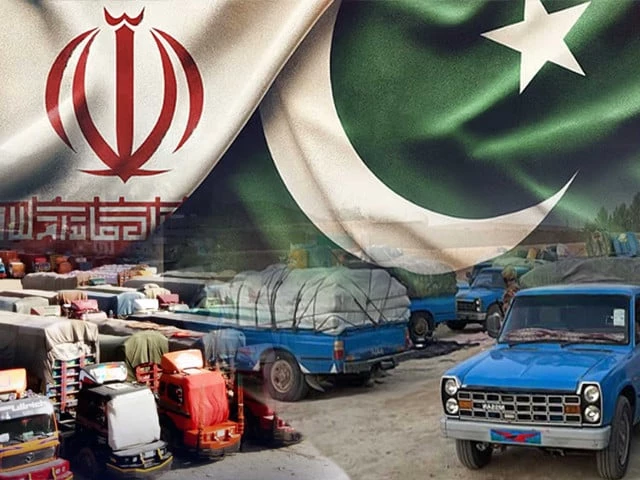
Iran’s Consul General in Quetta has assured Balochistan’s business community that Tehran treats their trade concerns as its own, adding fresh momentum to efforts aimed at nearly tripling Pakistan-Iran trade volume from its current level of roughly $3 billion to a shared $10 billion target.
Background
Pakistan-Iran relations rest on one of the region’s oldest and most stable borders, formalized when the Pakistan Iran border agreement was signed in Tehran on February 6, 1958. That agreement clarified the 909-kilometer boundary separating Balochistan from Iran’s Sistan-Baluchestan province, based on earlier British-Iranian accords.
Despite this long-standing relationship, Pakistan-Iran trade news has for decades centered on one persistent theme: trade volumes falling well short of potential. According to Pakistan’s Federation of Chambers of Commerce and Industry, bilateral trade during the 2023-24 fiscal year reached only about $2.8 billion, made up of roughly $684 million in Pakistan exports to Iran and $2.1 billion in imports.
International sanctions on Iran, limited formal banking channels, and weak border infrastructure have consistently constrained Pakistan-Iran trade 2022 and subsequent years from reaching the ambitious targets both governments have repeatedly set. Officials on both sides have pointed to the same $10 billion figure for years without seeing trade volumes come close to that mark.
Details
The latest push began in earnest following Iranian President Masoud Pezeshkian’s visit to Pakistan in June, during which both countries signed a series of new economic agreements. Iranian Interior Minister Eskandar Momeni followed up with a visit to Islamabad in July, calling for bilateral trade to rise from around $3 billion to $10 billion and proposing a logistics corridor capable of handling at least 2,000 trucks and cargo containers daily.
Balochistan Chief Minister Sarfraz Bugti has separately met with Iran’s Sistan-Baluchestan Governor Mansour Bijar to discuss strengthening trade, border cooperation, and regional stability, part of a broader diplomatic push involving provincial as well as federal officials on both sides of the border.
Most recently, Iran’s Consul General Mohammad Karimi Todashki addressed concerns raised by Balochistan’s business community directly, stating that Iran considers their concerns as its own and pledging continued efforts to resolve them. His comments come as traders in border areas like Taftan and Gabd-Rimdan continue to report disruptions tied to inconsistent customs procedures and periodic border closures.
On the infrastructure side, Pakistan’s Federal Board of Revenue has formally notified the Taftan railway station as a land customs station, a move officials say will help formalize trade that has long moved through informal channels. Pakistan has also designated the Pak Iran Investment Company as a vehicle to support joint ventures, alongside Iranian offers of incentives for industrialists willing to invest in Iran’s Mirjaveh Free Zone.
Rail connectivity has entered the conversation too. Pakistan’s Federal Minister for Railways and Iran’s Interior Minister agreed to expand railway cooperation and cross-border links, with work on the ML-3 rail upgrade project expected to begin this fiscal year and finish by December 2029. Officials say that could meaningfully boost Pakistan exports to Iran once it’s done.
Quotes
Iran’s Consul General Mohammad Karimi Todashki told Balochistan’s business leaders that Tehran regards their trade-related concerns as concerns of its own, and said Iran would continue making every effort to address the obstacles they face.
FPCCI President Atif Ikram Sheikh said existing Pakistan-Iran trade volume falls well below its true potential, arguing that stronger industrial partnerships and improved banking channels remain essential if the two countries are to reach the $10 billion target within the next three to five years.
Balochistan’s business community, represented through the Quetta Chamber of Commerce and Industry, has repeatedly stressed that road blockades, inconsistent vehicle clearance at border crossings, and security incidents continue undermining the province’s ability to fully benefit from expanded Pakistan-Iran trade.
Impact
For Balochistan specifically, the stakes are especially high. Economists note that the Makran and Rakhshan divisions of the province depend heavily on both formal and informal trade with Iran, meaning any disruption to Pakistan-Iran trade directly affects the availability of everyday goods, from cooking essentials to construction materials, in border communities.
Nationally, expanding Pakistan exports to Iran could offer a meaningful boost at a time when Pakistan remains one of the least regionally integrated economies in Asia. Trade experts have pointed out that Iran, despite being a large neighboring market, has never featured prominently among Pakistan’s top trading partners, unlike countries such as China and the United States.
The broader geopolitical backdrop also shapes how this trade relationship develops. Periodic tension in the region, including previous conflict involving Iran, has repeatedly disrupted border crossings and cross-border logistics, underscoring how closely Pakistan-Iran trade volume is tied to regional stability rather than economic factors alone.
Conclusion
With new agreements signed, infrastructure projects like the Taftan customs station and ML-3 railway underway, and repeated high-level engagement between Islamabad, Quetta, and Tehran, officials on both sides seem determined to finally close the long-standing gap between stated targets and actual Pakistan-Iran trade volume. Whether the $10 billion goal gets reached within the next few years will likely come down to how well both governments handle the border security, banking, and infrastructure barriers that have held bilateral trade back for decades.
Frequently Asked Questions
What are the major exports of Pakistan to Iran?
Pakistan’s exports to Iran have historically included rice, textiles, surgical instruments, sports goods, fruits, vegetables, and various processed food items, alongside cement and other construction materials that move through border crossings like Taftan. Much of this trade has traditionally occurred through informal or barter channels rather than formal banking systems, largely due to international sanctions on Iran limiting the use of standard financial transfer mechanisms. Officials on both sides have said that formalizing customs infrastructure, such as the newly notified Taftan land customs station, is intended to help shift more of this trade into recorded, formal channels going forward.
Who is Iran’s biggest trading partner?
China has long been Iran’s largest trading partner by a significant margin, accounting for a substantial share of Iran’s overall trade due to its continued purchases of Iranian oil despite international sanctions, along with exports of machinery, electronics, and consumer goods to the Iranian market. Other significant trading partners for Iran include the United Arab Emirates, Iraq, Turkey, and India, each playing a role in different segments of Iran’s import and export activity. Pakistan, despite sharing a long land border with Iran, has remained a comparatively smaller trading partner, which is precisely why officials from both countries have pushed so hard in recent months to expand the relationship toward the $10 billion target.
Who is Pakistan’s 2nd largest trading partner?
Pakistan’s trading partnerships have shifted over the years, but the United States and China have consistently ranked among its top trade partners, with the US typically Pakistan’s largest export destination and China its largest source of imports and overall trade volume. The United Arab Emirates has also featured prominently among Pakistan’s top trading partners due to re-export activity and energy imports. Iran, by comparison, ranks well below these countries in Pakistan’s overall trade portfolio, a gap officials on both sides have openly acknowledged and are now trying to narrow through the current wave of bilateral agreements and infrastructure investment.