


Politics of Possession
by Muhammad Mohsin Iqbal
There are certain facts buried deep within the annals of history that have been deliberately veiled, whether from motives of political expediency or to shield the interests of powerful parties, under such dense accumulations of silence that even the most diligent searcher after truth might labour long without bringing them fully to light. Yet time, that relentless uncoverer of hidden things, will not forever suffer such concealments to endure. Beneath these obscured realities often lie the misdeeds of individuals or of states—acts that were never meant for public scrutiny, or whose authors could not risk exposure. The history of Hawaii, that distant chain of islands now numbered among the American states, affords a striking illustration of this truth; a history little known to many, and until recently scarcely known even to myself. It reveals how an independent kingdom was wrested from its rightful sovereign, not by open purchase or free consent, but by calculated force and intrigue. And in our own day, the same expansive impulse appears undiminished, whether directed toward distant territories or toward the oil-rich shores of the Gulf and beyond.
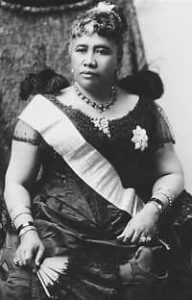
In the year 1893, Hawaii stood as a sovereign kingdom under the rule of Queen Liliuokalani, a monarch of exceptional accomplishment and deep affection among her people. She commanded five languages, possessed a keen intellect, and sought above all the welfare of her subjects. The islands, however, held treasures that stirred the appetites of distant powers: fertile soils yielding sugar and pineapples in abundance, and a strategic harbour in the Pacific of inestimable value. American missionaries had earlier arrived, bringing with them not only spiritual counsel but also a gradual acquisition of land under legal forms that favoured the newcomer. Their descendants, together with other businessmen of American and European stock, soon dominated the sugar industry, transforming the economy into one reliant upon plantation wealth. By the late nineteenth century these interests controlled vast tracts and wielded disproportionate influence in the kingdom’s affairs.
When Queen Liliuokalani sought to restore greater authority to the native monarchy and to restrict the franchise to Hawaiian subjects, thereby countering the Bayonet Constitution of 1887 that had been forced upon her predecessor, the planter elite formed a Committee of Safety. In January of 1893, they armed themselves and surrounded the royal palace. The American minister, John L. Stevens, summoned Marines and sailors from the USS Boston, who landed under the pretext of protecting American lives and property, though their presence served chiefly to intimidate the queen’s defenders. Faced with superior force and unwilling to risk the lives of her people, the queen yielded, writing that she did so “to the superior force of the United States of America,” in the hope that justice might later restore her throne. A provisional government under Sanford B. Dole, himself the son of missionaries, was promptly recognised by Stevens.
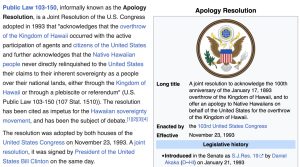
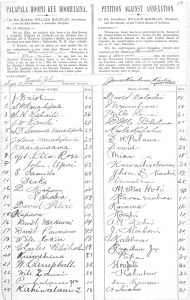
President Grover Cleveland, upon investigating the matter through Commissioner James Blount, concluded that the constitutional government had been subverted with the active aid of American representatives and the intimidation of armed naval forces. He withdrew a pending treaty of annexation and sought the queen’s reinstatement, yet the provisional authorities refused, and Congress declined to act. Native Hawaiians, for their part, gathered the Kūʻē Petitions bearing more than twenty-one thousand signatures—representing a majority of the adult native population—pleading that Congress reject annexation. These were ignored. In 1898, amid the Spanish-American War and the strategic calculations it inspired, the islands were annexed by joint resolution. In 1959 they became the fiftieth state. A century after the overthrow, President Bill Clinton signed Apology Resolution on November 23, 1993 acknowledging that the act had been illegal and that the Native Hawaiian people had never relinquished their claims to sovereignty. This resolution, formally known as Public Law 103-150. The resolution was passed by both houses of Congress. Yet the kingdom was never restored.
This episode is no isolated curiosity of the past. The same spirit of dominion, driven by valuable resources, has found expression elsewhere. In the Persian Gulf, where vast reservoirs of oil lie beneath the sands of sovereign states, American policy has long sought to secure control over the flow of that vital commodity. From the mid-twentieth century onward, arrangements with local rulers, military presence, and interventions have ensured preferential access for Western companies and markets. When threats to that access have arisen—whether from regional powers or from internal upheavals—force has been employed, as in the liberation of Kuwait or the broader campaigns that followed, all framed as defence of vital interests yet serving the practical end of guaranteeing the oil itself.
In more recent times the pattern has manifested with striking clarity in Venezuela, possessor of the world’s largest proven oil reserves. In January of 2026, American special forces seized President Nicolás Maduro and his wife, conveying them to New York to face charges of narco-terrorism and related offences. An interim administration under Delcy Rodríguez was installed, and within months a sweeping agreement was announced whereby the United States secured majority control over some sixty-five billion barrels of Venezuelan oil reserves through a private partnership, together with rights of first refusal on production and oversight of revenues channelled through American institutions. The wealth of the land, long the foundation of Venezuelan sovereignty, thus passed under effective external direction, while the former president remained in custody awaiting trial.
Nor has the appetite for territorial influence abated nearer home. Open declarations have expressed the desire to bring the Panama Canal once more under direct American administration, to draw Canada into closer subordination as a prospective fifty-first state, and to acquire Greenland for strategic command of the Arctic. These aspirations, voiced without concealment, echo the earlier seizure of Hawaii and the present dominion over Venezuelan petroleum: wherever resources or position promise advantage, the means of acquisition—whether by force, by pressure, or by arrangement under duress—are readily employed.
Thus the pattern persists across the generations: territories or resources deemed indispensable are drawn into the American sphere by means that history later judges irregular or unjust. Hawaii’s fertile lands and harbour once beckoned; the Gulf’s petroleum and Venezuela’s vast reservoirs continue to exert a similar pull, while neighbouring lands are contemplated for the same purpose. Time may yet reveal further layers of these transactions, but the essential character of the enterprise remains clear to those who examine the record without partiality.