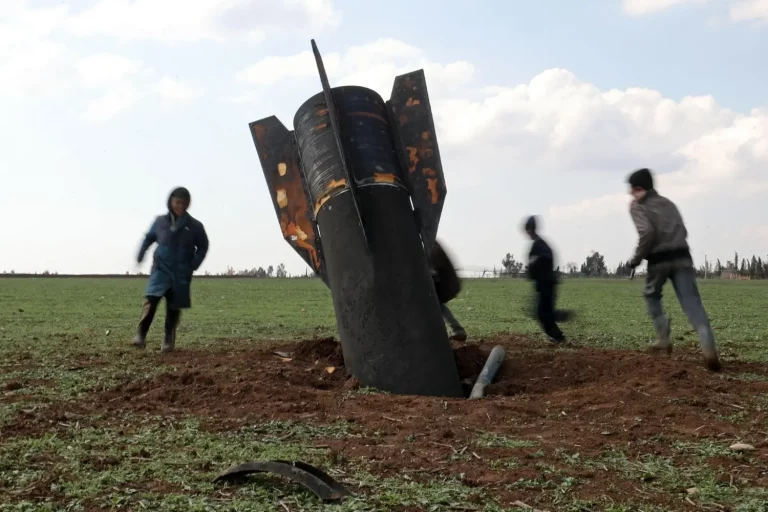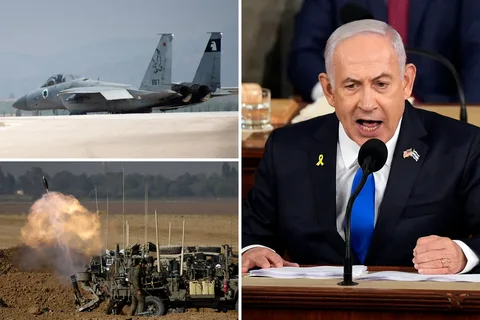

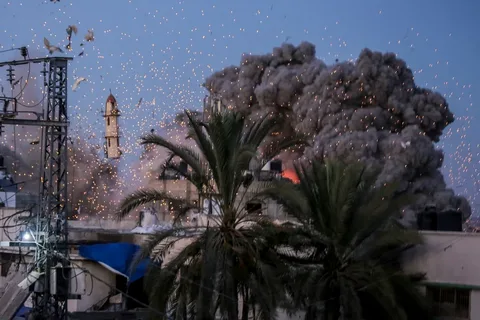
Israeli warplanes struck central and northern Gaza on Tuesday, killing at least one Palestinian, wounding more than a dozen others, and destroying a mosque along with tents sheltering displaced families. The strikes are the latest flashpoint in the Israel-Palestine conflict, a dispute whose roots stretch back more than a century.
Background
Understanding today’s violence requires looking at the Israel-Palestine conflict history as a whole, not just recent events. The modern dispute traces back to the late 19th and early 20th centuries, when growing Jewish immigration to Ottoman-controlled Palestine, driven partly by the Zionist movement seeking a homeland for Jewish people, began reshaping the region’s demographics.
Following World War I, Britain took control of the territory under a League of Nations mandate and issued the 1917 Balfour Declaration, expressing support for a Jewish homeland in Palestine while also stating that this should not prejudice the rights of existing non-Jewish communities. Tensions between Jewish and Arab residents grew steadily over the following decades, culminating in the 1947 UN Partition Plan, which proposed dividing the territory into separate Jewish and Arab states.
Israel declared independence in 1948, triggering a war with neighboring Arab states and the displacement of roughly 700,000 Palestinians, an event Palestinians refer to as the Nakba, or “catastrophe.” This marks a widely cited Israel Palestine conflict start date for the modern state-level dispute, though the underlying tensions predate it by decades.
Details
The question of who owned the land first, Israel or Palestine, remains one of the most contested points in the conflict’s history, and reasonable historians and advocates on different sides answer it differently. Those who emphasize Jewish claims point to thousands of years of continuous religious, cultural, and historical ties to the land, including ancient Israelite and Judean kingdoms recorded in historical and archaeological sources. Those who emphasize Palestinian claims point to centuries of continuous Arab Muslim and Christian presence in the region under Ottoman and earlier rule, and argue that demographic and political control in the modern era matters more than ancient historical ties. Most historians agree the honest answer is that both peoples have deep, long-standing connections to the land, and the “who was first” framing itself is often seen as an oversimplification of a genuinely complex history.
Since the 1948 war, the Israel-Palestine conflict has moved through several major phases forming a broader Israel-Palestine conflict timeline: the 1967 Six-Day War, after which Israel occupied the West Bank, Gaza Strip, and East Jerusalem; the First and Second Intifadas in the late 1980s and early 2000s; and repeated rounds of war in Gaza following Hamas’s takeover of the territory in 2007.
The current chapter of the Israel-Palestine conflict 2023 began on October 7, 2023, when Hamas-led fighters attacked southern Israel, killing around 1,200 people and taking roughly 250 hostages, according to Israeli figures. Israel responded with a sustained military campaign in Gaza that has continued, with periods of ceasefire, into 2026.
Tuesday’s strikes came just days after Israel’s security cabinet approved a measure allowing the first members of a US-brokered International Stabilization Force to enter Gaza, part of a ceasefire framework that took effect last October. Despite the ceasefire’s formal existence, Al Jazeera correspondents reporting from the ground describe near-daily Israeli strikes continuing across Gaza, alongside a documented rise in settler violence in the occupied West Bank.
Quotes
Al Jazeera’s Tareq Abu Azzoum, reporting from Deir el-Balah, said Israeli warplanes carried out a series of strikes focused on central and northern Gaza, adding that residents were given only a narrow window of time to evacuate after being warned.
Describing conditions in Gaza following the mosque strike, Abu Azzoum said Palestinians remain trapped in an ongoing cycle of fear, uncertain whether further strikes could come at any moment even as a nominal ceasefire remains in place.
Gaza’s Health Ministry, cited regularly by Al Jazeera and other outlets covering the Israel-Palestine conflict current status, has reported a death toll exceeding 73,000 Palestinians since October 2023, though this figure, like most wartime casualty counts, has not been independently verified by outside bodies and is disputed by Israeli officials.
Impact
The renewed strikes carry significant regional and global weight. For Gaza’s roughly two million residents, continued Israeli military activity despite the formal ceasefire has deepened an already severe humanitarian crisis, with hundreds of thousands still displaced and sheltering in tents that have themselves repeatedly come under fire.
Internationally, the strikes complicate the fragile ceasefire framework brokered with US involvement, raising questions about whether the planned International Stabilization Force can realistically operate under conditions where fighting continues on the ground. Diplomatic pressure on Israel has grown from several governments and international bodies, even as core allies continue providing military and political support.
The conflict also continues to shape online discourse far beyond the region itself. Discussion threads on platforms like Reddit dedicated to the Israel-Palestine conflict have become major hubs for debate, often echoing the same polarized narratives found in traditional media coverage. They’ve become something of a barometer for how public opinion keeps splitting along sharply different lines.
Conclusion
With strikes continuing despite the existence of a formal ceasefire, the path toward a lasting resolution to the Israel-Palestine conflict remains uncertain. The coming weeks will test whether the International Stabilization Force can actually deploy as planned, and whether renewed diplomatic pressure can translate into a genuine reduction in violence on the ground.
For now, both Palestinians in Gaza and the West Bank, and Israelis watching the security situation closely, face continued uncertainty about what the next phase of this decades-long conflict will bring.
Frequently Asked Questions
What is going on in Gaza?
Gaza remains in a state of ongoing crisis despite a ceasefire agreement reached in October of last year. Israeli strikes have continued intermittently since then, including recent attacks that destroyed a mosque and killed Palestinians in Gaza City and the Nuseirat refugee camp. Alongside the military activity, Gaza’s roughly two million residents continue facing severe humanitarian conditions, including widespread displacement, damaged infrastructure, and limited access to basic services, while international efforts to deploy a stabilization force and stabilize the ceasefire remain in early stages.
What exactly does Palestine want?
Palestinian political goals have generally centered on self-determination and statehood, though specific positions vary between factions. The Palestinian Authority, which governs parts of the West Bank, has historically supported a two-state solution based on pre-1967 borders, with East Jerusalem as the capital of a future Palestinian state. Hamas, which has controlled Gaza since 2007, has taken a harder line historically, though it has at times signaled openness to a long-term truce based on 1967 borders without formally recognizing Israel. Broadly, Palestinians across different political affiliations have consistently called for an end to occupation, the right of return for refugees displaced in 1948, and full sovereignty over Palestinian territory.
What countries support Israel?
Israel’s strongest and most consistent international support has historically come from the United States, which provides significant military aid and has generally backed Israel diplomatically at the United Nations and other international bodies. Other countries that have maintained strong ties with Israel include Germany, the United Kingdom, and several other European nations, alongside a growing number of Arab and Muslim-majority countries that normalized relations with Israel through the Abraham Accords, including the United Arab Emirates, Bahrain, and Morocco. Support for Israel varies significantly depending on the specific policy issue, however, and even close allies have at times publicly criticized specific Israeli military actions or settlement policies while maintaining broader strategic and diplomatic relationships.