
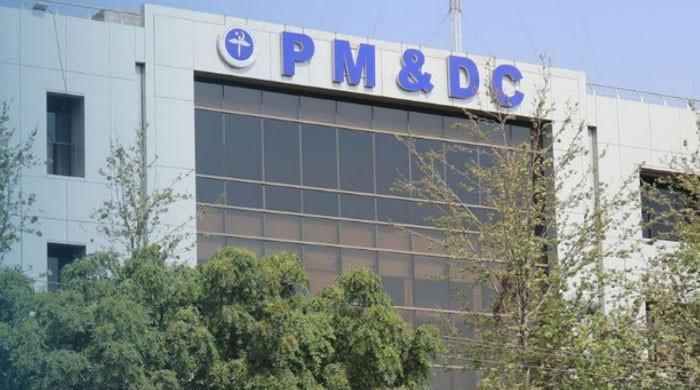

LAHORE: The Lahore High Court on Friday extended the suspension of a Pakistan Medical and Dental Council directive that had ordered Afghan medical students to return to Afghanistan, after lawyers for the council and one of the named universities asked for more time to file their written replies.
The order came from Justice Khalid Ishaq, who has been hearing the case since Afghan students first moved the court earlier this month. With this extension, the LHC suspension of PMDC directive now covers more than a hundred Afghan students enrolled in medical and dental colleges across Punjab.
Background
The dispute goes back to two letters issued by the PMDC, one on July 31 and a follow-up on September 1. Both told medical and dental colleges to stop admitting, placing, or otherwise facilitating Afghan nationals for the current academic session, and to send back students who were already enrolled.
Some institutions moved quickly on the instruction. King Edward Medical University asked around 20 Afghan MBBS students, several of them in their final year, to vacate their hostels within 24 hours and began processing paperwork for their departure.
That triggered a wave of petitions. Thirteen Afghan students, seven women and six men, filed the first set of cases through advocate Asad Jamal, arguing that PMDC had no legal authority under the PMDC Act to expel students who had studied in Pakistan for years. More petitions followed, eventually bringing the total number of affected students under the case well past a hundred.
Details
At the first hearing on September 11, the PMDC’s lawyer argued the matter touched on national security. Justice Ishaq rejected that argument and suspended the operation of both the July 31 and September 1 directives, ordering that students be allowed to continue attending classes, sit their examinations, and stay in their hostels.
The court also directed the PMDC, the health ministry, and the vice chancellors of the affected institutions to submit their formal replies by September 18. When that date arrived, counsel for PMDC and for one of the named colleges told the bench they needed additional time to prepare their responses, and Justice Ishaq agreed to extend the suspension rather than let it lapse while paperwork was pending.
Separately, a Sindh High Court bench has been hearing a related petition filed by three Afghan students, including arguments centred on the risks facing female students if sent back to Afghanistan under Taliban restrictions on women’s education. A similar case in Balochistan, by contrast, was rejected at an earlier stage, so the outcome for Afghan students studying medicine in Pakistan currently depends heavily on which province they are enrolled in.
Quotes
One affected student, speaking to AFP on condition of anonymity, described the initial PMDC order in blunt terms: “It was like the death of my hopes to become a doctor.”
Habib Rahman Afridi, who has helped coordinate student protests over the directive, framed the students’ position as one of appeal rather than confrontation: “We are neither against the government nor against the universities.”
Afghanistan’s ambassador to Pakistan, Sardar Ahmad Shakeeb, also weighed in after the first suspension order, calling it a welcome step for Afghan students pursuing medical training in the country.
Impact
For the students directly named in the petitions, the extension means classes, clinical rotations, and hostel accommodation continue uninterrupted for now, rather than being cut off mid-course. Several petitioners are in their final year, so a forced departure at this stage would have meant losing years of training just short of graduation.
The case also carries weight beyond the individual petitioners. Roughly 3,000 Afghan nationals are currently studying in Pakistan by various estimates, about a third of them in medical or dental programmes, so how this litigation resolves will likely shape how PMDC and provincial governments handle similar cases going forward.
There is a regional angle too. Pakistan has been pushing a broader repatriation drive affecting Afghan nationals generally, and the medical students’ case has become one of the more closely watched tests of how far that policy can reach into ongoing academic programmes without falling foul of due process requirements.
Conclusion
With the PMDC and university lawyers granted more time, the next hearing will need to address the substance of the petitions rather than just interim relief. Justice Ishaq did not fix a specific date for that hearing, according to court documents reviewed by AFP, leaving affected students in a period of extended but still temporary relief.
Whether the PMDC directive is eventually upheld, modified, or struck down will likely depend on how the council justifies its legal authority to remove enrolled students without an individual hearing, a question the court has already flagged as central to the case.
Frequently Asked Questions
Can Indian students get an MBBS degree in Afghanistan?
In practice, this is not a realistic or advisable path for Indian students. India’s National Medical Commission does not publish a specific list of approved countries, but it requires that any foreign medical degree come from an institution meeting minimum standards for course duration, clinical training, and infrastructure, and graduates must still clear the Foreign Medical Graduate Examination before they can practise in India. Given Afghanistan’s unstable security situation, the disruption to its higher education system since 2021, and the current restrictions the Taliban administration has placed on female enrolment, medical colleges there are not considered a viable or recognised option by Indian regulatory standards, and most education consultants steer Indian aspirants toward countries with established, verifiable accreditation instead.
Which medical colleges are blacklisted by PMDC?
PMDC periodically reviews medical and dental colleges for faculty strength, clinical training capacity, and infrastructure, and it has withdrawn or suspended recognition from a number of institutions over the years when they failed to meet these standards. The list is not static: colleges can lose recognition after an inspection and sometimes regain it once deficiencies are fixed, and PMDC also separately flags foreign universities, including some in Central Asia, whose degrees do not meet the requirements for later practice in Pakistan. Because the roster of restricted or blacklisted colleges changes as new inspections and notifications are issued, students and parents are best advised to check PMDC’s official website directly for the current list before taking any admission decision.
How many Pakistani students are in Afghanistan?
The number has fluctuated significantly depending on border conditions between the two countries. At various points over the past year, estimates from Pakistani student associations put the figure as high as 3,000 to 3,500, with a large share enrolled in medical programmes in Kabul and Jalalabad. However, the most recent official figure, given to Pakistan’s National Assembly in February 2026, put the number of Pakistani students still in Afghanistan at around 947, after roughly 1,100 others had already returned home following the closure of the Pakistan-Afghanistan border. Most of the remaining students are reported to be continuing their studies in Afghan medical colleges despite the border restrictions.