
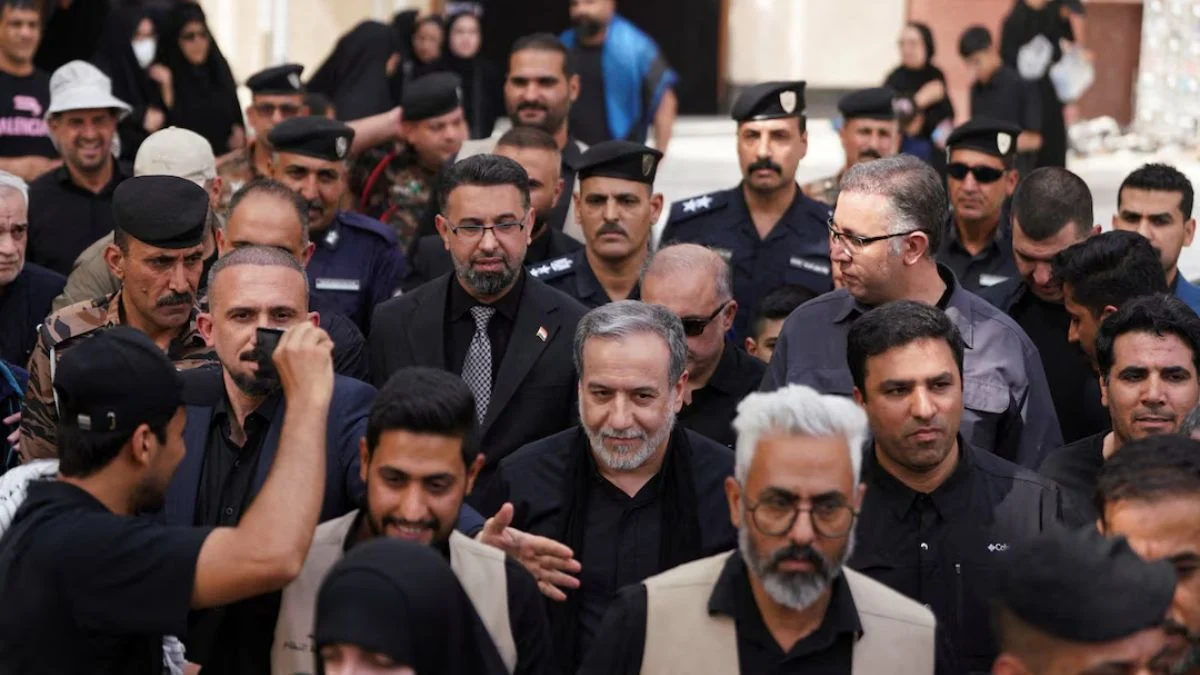

CAIRO: Iran said Sunday that an agreement with Oman to establish new shipping arrangements through the Strait of Hormuz has reached its final stages, but stressed that the strategically vital waterway will not fully reopen until the United States meets additional conditions set by Tehran.
Iranian Foreign Minister Abbas Araqchi said negotiations over the shipping arrangements were nearing completion. However, he reiterated that reaching an agreement on shipping lanes alone would not be enough to restore unrestricted commercial traffic through the strait.
The Strait of Hormuz is one of the world’s most important energy chokepoints. Before its closure, the waterway carried roughly one-fifth of global oil and liquefied natural gas shipments, making any disruption a major concern for international energy markets.
According to Iranian media, the proposed agreement would establish shipping routes to be used once the United States fulfils Tehran’s conditions and the strait is reopened. Iran and the US are not currently holding direct negotiations, although messages are reportedly being exchanged through intermediaries.
Iran Demands End to Sanctions and Compensation
Tehran has linked the reopening of the Strait of Hormuz to several broader demands, including compensation from the United States for military attacks, an end to sanctions and the lifting of restrictions on Iranian shipping.
Iranian officials have also called for an end to what they describe as US threats and military aggression against Iran and its regional allies.
A US official previously said Washington and Tehran were close to an arrangement that could allow commercial shipping through the strait to resume. The official said the reopening would be connected to Iran fulfilling its commitments under a potential agreement.
However, the exact terms and implementation mechanism remain uncertain, with Iran indicating that several political and security conditions must be addressed before normal shipping can resume.
Strait of Hormuz Remains Critical to Global Energy Markets
Any prolonged disruption in the Strait of Hormuz could have significant consequences for global energy supplies and international oil prices. Major oil and gas producers in the Gulf depend on the waterway to transport energy exports to international markets.
The uncertainty has also heightened concerns among shipping companies operating in the region, particularly as tensions between Iran, the United States and other regional powers remain high.
Meanwhile, the United Arab Emirates said Iran had attacked a vessel linked to its state oil company. Iran did not immediately comment on the allegation.
Houthi Attacks Add to Regional Tensions
The latest developments come amid increased attacks by Yemen-based Houthi forces on shipping and energy infrastructure in the wider region.
The Houthis claimed responsibility for a drone attack targeting Saudi Aramco’s Jazan refinery on Sunday. Saudi authorities confirmed that a fire occurred at the facility but said it was extinguished and that there were no reported injuries.
The refinery has a processing capacity of around 400,000 barrels of crude oil per day, making any disruption potentially significant for regional energy markets.
The developments have added to concerns over the security of major maritime routes linking the Gulf with global markets.
Pakistan, Saudi Arabia and Türkiye Sign Defence Pact
The regional tensions also come shortly after Saudi Arabia, Pakistan and Türkiye signed a new defence agreement aimed at strengthening security cooperation.
Turkish Foreign Minister Hakan Fidan said the arrangement was not directed against Iran or any other specific country, describing it instead as a broader commitment to regional security.
The latest developments highlight the increasingly complex security environment surrounding the Gulf and neighbouring maritime routes, with diplomatic efforts over the Strait of Hormuz now closely watched by energy markets, shipping companies and governments around the world.