

Nepal Flood Survivors Turn to Hindu Rituals as Thousands Remain Missing
Families Honour Loved Ones Who Disappeared in Deadly Flood
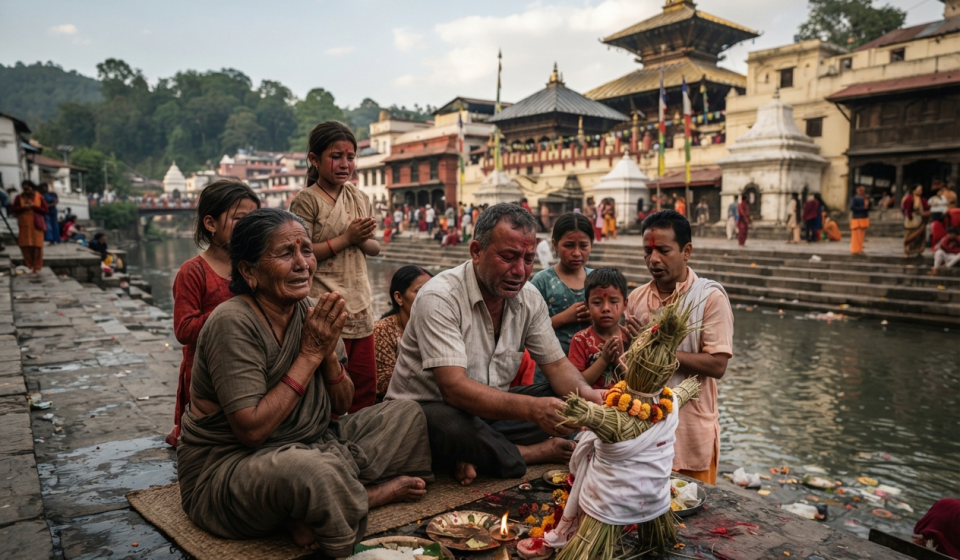
Kathmandu, Nepal: At the Pashupatinath Temple on the banks of the Bagmati River, families gathered to honour relatives who disappeared after a deadly flood struck the China-Nepal border last month.
Among them was Madan Lal Lawat, who joined other grieving families at the Hindu temple to perform rituals for loved ones whose bodies have not been recovered.
Sacred Grass Effigies Used for Last Rites
Under Hindu tradition, families can create symbolic effigies from sacred kusha grass when the body of a deceased person cannot be found. The representation allows relatives to carry out traditional last rites and rituals for those presumed to have died.
With more than 5,000 people still missing and authorities having ended rescue operations, the ritual has become one of the few ways families can formally honour their missing relatives.
Five of Lawat’s Relatives Are Still Missing
Lawat lost five relatives in the devastating floods, including his brother. He survived because he was away from his village of Betrawati, driving his bus when the floodwaters struck.
According to Lawat, the last information he received from survivors was that his brother Mangal died while moving from house to house to warn residents to evacuate.
“I don’t know how to start over. Police say they’re still searching for the bodies, but I’m not sure they’ll ever be found,” Lawat said.
Lawat believes there is little chance that his missing relatives are still alive.
Nepal’s Missing-Person Law Creates Further Uncertainty
Although families may believe their loved ones died in the disaster, establishing their legal status is much more complicated.
Under Nepalese law, a missing person is generally not legally presumed dead until 12 years have passed. This leaves families facing not only grief and uncertainty but also a lengthy legal process before the deaths of missing relatives can be formally recognised.
For families such as Lawat’s, religious rituals provide a way to say goodbye even when there is no body to bury and no legal certainty over the fate of their loved ones.