
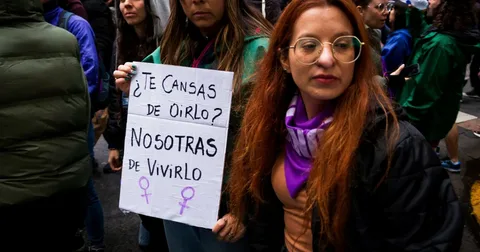
Argentina is facing growing national concern over rising cases of Argentina violence against women, triggering widespread protests and international attention. In recent weeks, the country has witnessed renewed anger over gender-based killings, forcing civil society groups and human rights organizations to demand urgent reforms. The issue of Argentina women rights has once again become central in national debate.
Reports from multiple regions show that violence against women continues to rise, creating fear among communities and raising questions about law enforcement effectiveness. Activists argue that Argentina domestic violence cases are being underreported, while victims struggle to access justice and protection services.
Background
The issue of Argentina violence against women is not new, but recent events have intensified public pressure on authorities. Over the past decade, Argentina has seen repeated cases of femicide, which refers to the killing of women because of their gender.
Activists say that despite legal reforms, enforcement remains weak. The concept of femicide in Argentina has become widely recognized in public discourse, but critics argue that prevention mechanisms are still insufficient. Human rights organizations, including Amnesty International Argentina, have repeatedly raised concerns about systemic failures.
Current Situation and Key Developments
The current wave of protests was sparked by a high-profile case that triggered outrage across major cities. Demonstrators filled streets demanding justice and calling for stronger protection laws. The situation reflects broader current issues in Argentina, including rising insecurity, economic pressure, and weak institutional response.
In many regions, Argentina domestic violence cases continue to be reported daily, with shelters and support centers overwhelmed. Authorities have pledged investigations, but activists claim responses are slow and inconsistent. The debate around Argentina women rights is now dominating political discussions nationwide.
Details of the Crisis
Human rights groups report that violence patterns include domestic abuse, sexual violence, and femicide cases that often go unpunished. The lack of reliable data makes it difficult to measure the full scale of Argentina violence against women, but experts believe the numbers are significantly higher than official statistics suggest.
There are also growing concerns about policing methods and judicial delays. Many victims’ families say cases take years without resolution, reinforcing public frustration. The crisis has become part of broader current issues in Argentina, including governance challenges and institutional trust deficits.
Quotes and Reactions
A spokesperson from a local women’s rights group stated that “violence against women in Argentina is not isolated incidents but a structural crisis that requires immediate national action.”
Human rights analysts linked to Amnesty International Argentina have emphasized that stronger legal enforcement is urgently needed. They argue that while laws exist on paper, implementation remains inconsistent across provinces.
Experts also warn that freedom of expression and mass surveillance in Argentina are increasingly linked to protests, as activists report monitoring during demonstrations, raising concerns about civil liberties.
Impact on Society and Region
The crisis is affecting not only Argentina but also influencing discussions across Latin America. The rise in Argentina violence against women has encouraged similar movements in neighboring countries, where activists are demanding stronger protections and justice systems.
Economically and socially, instability caused by protests is also affecting public services and governance. The issue of Argentina women rights is now being discussed in international forums, with calls for regional cooperation to address gender-based violence.
Human Rights and Surveillance Concerns
Alongside violence issues, concerns about freedom of expression and mass surveillance in Argentina are growing. Protesters claim that digital monitoring and police surveillance during demonstrations may discourage public participation.
Human rights organizations argue that such practices could weaken democratic freedoms. Reports submitted in the human rights report Argentina highlight both violence against women and increasing restrictions on civil activism as interconnected issues.
Conclusion and Future Outlook
The situation in Argentina remains critical as public pressure continues to build. Authorities are expected to introduce new measures addressing Argentina violence against women, but activists remain skeptical about implementation.
The coming months will be crucial in determining whether legal reforms and enforcement mechanisms improve. Until then, Argentina domestic violence and femicide cases remain central challenges for the government and society.
FAQs
1. Does the Pakistan government support the Taliban?
Pakistan officially maintains diplomatic engagement with the Taliban-led administration in Afghanistan. However, the relationship is complex and often influenced by regional security concerns, border management issues, and international diplomatic pressure.
2. Does Pakistan have good relations with Afghanistan?
Pakistan’s relations with Afghanistan fluctuate depending on political developments, security conditions, and border tensions. While there is cooperation in trade and diplomacy, challenges such as militancy and migration issues often strain relations.
3. Has Pakistan accepted the Taliban government?
Pakistan has not formally recognized the Taliban government as the official state authority in Afghanistan, but it continues to engage with it on practical diplomatic and security matters.