
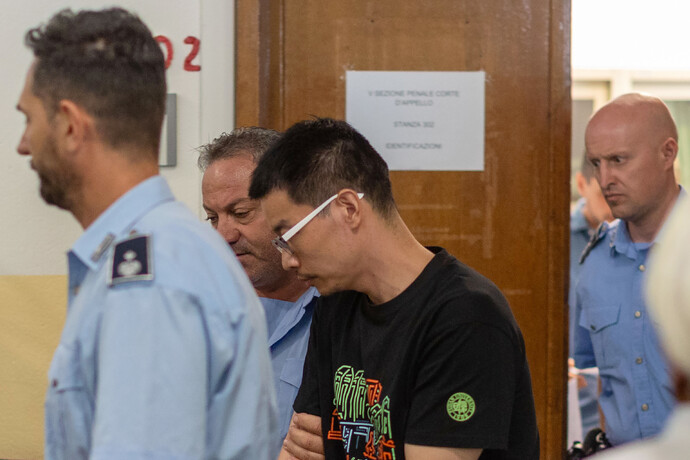

In a significant blow to cyber espionage operations targeting the United States, Italy has handed over 34-year-old Xu Zewei to American authorities. He is accused of carrying out cyberattacks on US universities and research institutions during the COVID-19 pandemic. This case is one of the most high-profile recent FBI cases involving foreign state-sponsored cyber crime against the United States.
Background
Cyber attack news today USA continues to spotlight the growing threat of state-sponsored hacking. Over the past several years, cyber crime cases in the United States have increasingly involved foreign actors targeting sensitive sectors like healthcare, defense, and academic research. The FBI has been at the forefront of investigating these threats, and recent cyber crimes 2024 and beyond have shown that no sector is immune.
The COVID-19 pandemic created a particularly high-value target environment. Vaccine research, immunology data, and virology studies became prime targets for foreign intelligence services looking to gain a competitive edge. Italian authorities arrested the suspect in Milan last July on suspicion of conducting cyberattacks against universities and other institutions engaged in COVID-related research.
Details of the Case
Italy extradited an accused Chinese hacker wanted in the United States for allegedly stealing vaccine research at the height of the COVID-19 pandemic.The Italian National Police described him as a “dangerous foreign hacker” before handing him over to US custody.
The suspect and his co-conspirators allegedly exploited cybersecurity flaws in email software to target thousands of computers in a Chinese state-sponsored cyber espionage campaign dubbed “Hafnium.”This campaign is one of the most documented recent examples of cyber crime involving a foreign government targeting US infrastructure and institutions.
The US Department of Justice said the suspect, Xu Zewei, had targeted universities, immunologists, and virologists under the direction of China’s Ministry of State Security while employed at the company Shanghai Powerock Network.This detail places the case squarely within the broader pattern of state-directed cyber crime cases in the United States.
Prosecutors said the targeted institutions included a university in southern Texas and a law firm with offices in Washington, DC, and worldwide.These institutions held sensitive research and legal data that would be of significant intelligence value.
Xu appeared in the US District Court in Houston, Texas, on Monday to face nine criminal counts, including wire fraud and conspiracy to obtain information by unauthorized access to protected computers.This court appearance marks the beginning of what is expected to be a high-profile federal trial drawing global attention to recent FBI cases involving cyber espionage.
Official Quotes
US officials were direct and firm in their response to this cyber attack news in the USA today. Assistant Attorney General for National Security John A. Eisenberg stated that the United States is committed to pursuing hackers who steal information from US businesses and universities and threaten national cybersecurity, adding that he commended the prosecutors and investigators who worked hard for years on this investigation.
These statements reflect the US government’s long-standing position that cyber crime cases in the United States especially those tied to foreign governments will be prosecuted with the full weight of federal law. The FBI cyber news surrounding this case has been building since the pandemic years, and this extradition signals that US authorities are now seeing results from those long investigations.
China’s Response
Beijing has, as expected, denied any involvement. The Chinese Embassy in Washington, DC, did not immediately respond to a request for comment. Beijing has previously denied conducting hacking operations in the US and elsewhere, labeling such claims as “groundless accusations” and “smears.”This denial follows a familiar pattern seen in recent cyber crimes 2024 and 2025, where Chinese officials have consistently rejected allegations of state-sponsored hacking despite mounting evidence presented by US and allied intelligence agencies.
Impact: What This Means for Cybersecurity
This case carries major implications well beyond one individual’s arrest. It is a landmark moment in the ongoing battle against cyber espionage targeting the United States and its allies.
First, it demonstrates that the FBI and international partners are working effectively together to pursue cyber crime cases across borders. Italy’s cooperation in this arrest and extradition, categorized under “nulled to news” in cyber crime circles, sets a strong precedent for allied nations acting against state-sponsored hackers.
Second, this case highlights how academic institutions remain vulnerable to sophisticated cyber attacks. Universities conducting COVID-19 vaccine research were treated as soft targets by the Hafnium campaign, exposing a gap in cybersecurity protections for research organizations.
Third, the case reinforces the FBI’s role as the lead agency in recent FBI cases involving foreign cyber espionage. The bureau’s years-long investigation into the Hafnium campaign shows both the difficulty and the determination required to bring such actors to justice.
For ordinary Americans, recent examples of cyber crime like this serve as a reminder that the consequences of these attacks go far beyond data loss. Stolen vaccine research during a global pandemic could have delayed life-saving treatments, putting millions at risk.
Potential Consequences
If convicted, Xu could face up to 20 years in prison for each count of the most serious charges against him.With nine criminal counts filed, the legal exposure is enormous. This potential sentence sends a clear message to other state-sponsored hackers operating under the direction of foreign governments.
The severity of the charges also reflects how seriously US authorities are treating cyber attack news today in the USA. Wire fraud and unauthorized computer access are federal offenses that carry substantial penalties, and the DOJ’s decision to pursue all nine counts underscores the gravity of the alleged crimes.
Conclusion
The extradition of Xu Zewei from Italy to the United States is more than just one arrest it is a signal that the global community is increasingly unified in confronting the threat of state-sponsored cyber espionage. FBI cyber news in 2026 shows a pattern of intensifying enforcement, with recent FBI cases revealing the deep reach of foreign cyber operations into American institutions.
As cyber crime cases in the United States continue to grow in complexity and scale, cases like this remind policymakers, institutions, and individuals that cybersecurity is not just a technical issue it is a matter of national security. The trial of Xu Zewei in Houston will be closely watched by governments, security experts, and legal scholars worldwide as a defining moment in the fight against recent cyber crimes targeting the United States.
FAQs
What is cyber espionage in the US?
Cyber espionage in the US refers to state-sponsored or organized efforts by foreign governments or groups to illegally access American computer systems, databases, and networks to steal sensitive information including government secrets, defense technology, and academic or medical research. The FBI investigates and prosecutes these cases under federal law. Recent FBI cases show that universities, government agencies, and corporations are the most frequent targets.
What is cyber espionage?
Cyber espionage is the practice of using digital tools and techniques such as hacking, malware, and phishing to secretly gather intelligence or steal data from individuals, organizations, or governments. Unlike traditional espionage, which requires physical access, cyber espionage can be conducted remotely from anywhere in the world. It is one of the fastest-growing categories of cyber crime cases in the United States and globally.
What is an example of cyber espionage?
One of the most well-known recent examples of cyber espionage is the “Hafnium” campaign, in which Chinese hackers allegedly exploited flaws in email server software to break into thousands of computers across the United States. In the case of Xu Zewei, hackers targeted universities and medical researchers during the COVID-19 pandemic to steal vaccine research a clear act of cyber espionage directed by a foreign government. This is now at the center of one of the most high-profile recent FBI cases in the area of cyber crime in the United States.