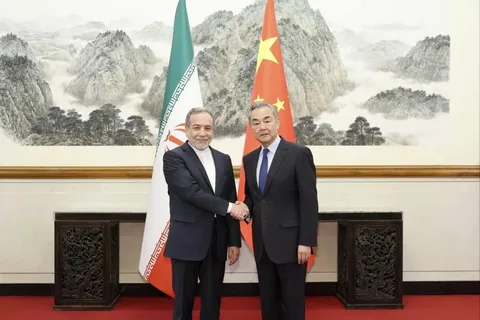
Iran’s Foreign Minister Abbas Araghchi flew to Beijing on May 6, 2026, for urgent face-to-face talks with Chinese Foreign Minister Wang Yi. The visit came at a moment of acute regional tension with a US naval blockade on Iranian ports still in effect and a fragile ceasefire hanging by a thread. The central question gripping analysts and governments alike: Is China genuinely backing Iran, or is Beijing playing both sides for its own strategic gain?
Background
To understand where China-Iran relations stand today, you have to look at the history behind them. China and Iran have maintained close ties for decades, rooted in trade, energy, and a shared resistance to Western dominance. The relationship became far more formalized in 2021 when the two countries signed a sweeping 25-year cooperation agreement the so-called China-Iran deal worth $400 billion.
Under the China-Iran deal $400 billion framework, China committed to investing heavily in Iran’s oil, gas, infrastructure, and banking sectors. In return, Iran agreed to supply China with discounted crude oil for decades. This deal was widely seen as a lifeline for Iran, which had been suffocating under US sanctions. It also gave China a reliable, sanctions-immune energy source in its neighborhood, bolstering Beijing’s long-term energy security.
The two nations also share geography in a broader geopolitical sense the Iran China map shows Tehran sitting at the crossroads of the Middle East and Central Asia, making it a vital node in China’s Belt and Road Initiative. Beijing has spent years building infrastructure ties with countries along this route, and Iran fits perfectly into that vision.
Details
Iran’s Foreign Minister Araghchi arrived in Beijing for talks with Wang Yi amid escalating tensions in the Strait of Hormuz. This was the first time since the start of the US-Israeli war on Iran that Araghchi had travelled to China, a close ally of Tehran. The two officials had previously spoken by phone at least three times following the start of the war.
The timing of the visit is significant. It came just one week before US President Donald Trump’s scheduled summit with President Xi Jinping in Beijing on May 14 and 15. Iran is deeply anxious about what Beijing might agree to with Washington and whether any Chinese concessions to the US could leave Tehran diplomatically isolated.
Al Jazeera’s correspondent in Beijing reported that two main issues dominated the agenda: maintaining the ceasefire and reopening the Strait of Hormuz. Iran had closed the strait — a critical chokepoint for global energy supplies after the war began, triggering a spike in oil and fertilizer prices worldwide.
China has been openly critical of the US naval blockade on Iranian ports, calling it dangerous. However, Beijing has also grown increasingly critical of Iran’s continued closure of the Strait of Hormuz. This dual position reveals something crucial about China-Iran relations: Beijing is a supporter, but not an unconditional one. China’s own massive oil imports pass through the strait, so its closure directly harms Chinese economic interests.
China-Iran Military Cooperation: How Far Does It Go?
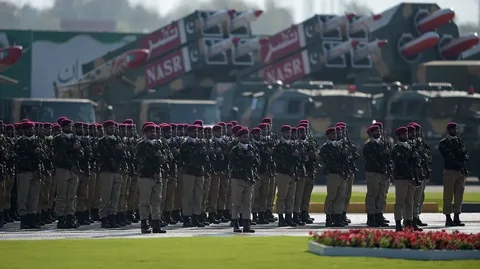
The question of China-Iran military cooperation is one of the most sensitive in global geopolitics. China has historically supplied Iran with weapons technology, missile components, and dual-use equipment often through indirect channels to sidestep US sanctions. However, Beijing has been careful never to cross into direct military alliance territory.
China does not have a mutual defense treaty with Iran. Unlike Russia, which has shown more willingness to provide arms to sanctioned states, China prefers to operate through economic leverage and diplomatic cover. China-Iran military cooperation remains real but deliberately limited enough to keep Iran capable, but not enough to drag China into open conflict.
When it comes to the question of will China support Iran in war the answer, based on current evidence, is: not militarily. China will back Iran at the United Nations, shield it from the worst sanctions, continue buying its oil, and offer diplomatic cover. But China will not send troops, warships, or fighter jets to fight alongside Iran.
Quotes
Al Jazeera’s Katrina Yu, reporting from Beijing, explained that Iran needs Chinese backing at the United Nations to block any additional sanctions imposed because of its closure of the Strait of Hormuz.
She also noted that the Iranian foreign minister was reportedly seeking clarity from Beijing regarding what China would put on the table when Xi meets with Trump and whether Beijing would make any concessions to Washington that could make Tehran nervous.
In Washington, US Secretary of State Marco Rubio expressed hope that Beijing would urge Tehran to release its grip on the Strait of Hormuz, describing it as a vital waterway for global energy.
China, for its part, wants assurances that Iran will not take any escalatory or dramatic action ahead of the Xi-Trump summit, according to Al Jazeera’s correspondent.
Is China Supporting Iran Against Israel?
This is where the picture becomes nuanced. China has not taken Israel’s side at any point in the ongoing conflict. Beijing voted against US-backed resolutions that favored Israel at the UN Security Council and has repeatedly called for a ceasefire. Chinese state media has been consistently critical of Israeli military operations in Gaza and beyond.
At the same time, China has not provided Iran with direct military support against Israel either. Beijing’s official position on the US-Israel war on Iran is one of non-interference combined with calls for dialogue and diplomacy. China wants to be seen as a peacemaker, not a warmonger. That positioning gives it leverage with both sides and that leverage is precisely what Beijing is milking right now.
Impact
The stakes of China-Iran relations in 2025 and 2026 are extraordinarily high for the entire world. The Strait of Hormuz remains closed, and global energy markets remain rattled. The China-Iran deal $400 billion continues to serve as the economic backbone of the relationship, ensuring Tehran has a financial lifeline even as Western sanctions bite harder.
Pakistan has been leading peace mediation efforts between Iran and the US. Direct talks were held in Islamabad in April but ended without an agreement, with key sticking points being US demands for Iran to halt all nuclear enrichment and Tehran’s insistence on retaining control over the Strait of Hormuz.
If the Xi-Trump summit on May 14–15 produces a deal that throws Iran under the bus, China-Iran relations could face their most serious test in decades. Tehran is watching Beijing very closely. Any Chinese concession to Washington on Iran’s nuclear program or on the strait would be seen in Tehran as a betrayal.
Conclusion
China-Iran relations remain one of the most complex and consequential partnerships in the world today. The $400 billion deal, shared opposition to US hegemony, and deep energy ties bind the two nations closely. Yet Beijing’s self-interest means it will never be a fully committed ally not in the way Iran sometimes needs.
As the Xi-Trump summit approaches and ceasefire negotiations continue, China faces a defining diplomatic moment. Will it stand firmly with Tehran, or will it trade Iranian interests for a better deal with Washington? The answer will shape not just China-Iran relations, but the entire architecture of the Middle East for years to come.
For now, Wang Yi and Araghchi have met. Words have been exchanged. But in geopolitics, words are only as valuable as the actions that follow.
FAQs
Who is the closest ally of Iran?
China and Russia are considered Iran’s closest strategic allies. China-Iran relations, anchored by the $400 billion cooperation deal, make Beijing Iran’s most important economic partner. Russia provides diplomatic cover and limited military cooperation. However, neither nation has a formal mutual defense treaty with Tehran.
Is China supporting Israel or Iran?
China is not militarily supporting either side, but Beijing’s diplomatic posture tilts toward Iran. China has blocked or opposed UN resolutions favoring Israel, criticized US-Israeli military operations, and maintained its robust economic relationship with Tehran through the China-Iran deal. China has not provided weapons or troops to either side.
Why is Iran so important to China?
Iran is critical to China for several reasons. First, Iran sits along the Iran China map corridor that is central to Beijing’s Belt and Road Initiative. Second, Iran supplies China with discounted sanctioned oil, which Beijing buys in large volumes, reducing its dependence on politically volatile Gulf states. Third, Iran’s strategic position on the Strait of Hormuz means that its stability or instability directly affects global energy flows that China depends on. The China-Iran deal $400 billion reflects just how deeply Beijing values this relationship.