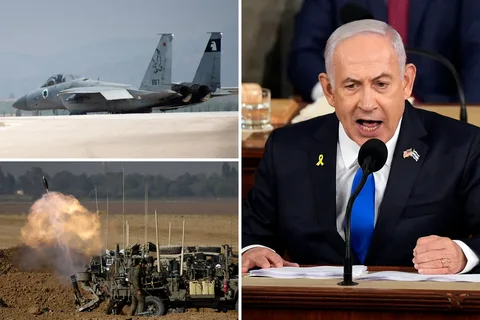

The Palestine war shows no signs of ending despite a fragile ceasefire. Israel has now taken control of nearly 60 percent of the Gaza Strip while threatening to resume full-scale military operations. What is happening in Gaza today is deeply alarming drone strikes, demolitions, and displacement continue daily across the territory.
Background
The Israel attack on Palestine began on October 7, 2023, after Hamas launched a surprise assault into southern Israel, killing around 1,200 Israelis. Israel responded with a massive military campaign in Gaza. A ceasefire was reached on October 10, 2025, but it has been repeatedly violated. What is happening in Palestine today is a continuation of that war just under a different name.
What Is Happening in Gaza Today Full Details
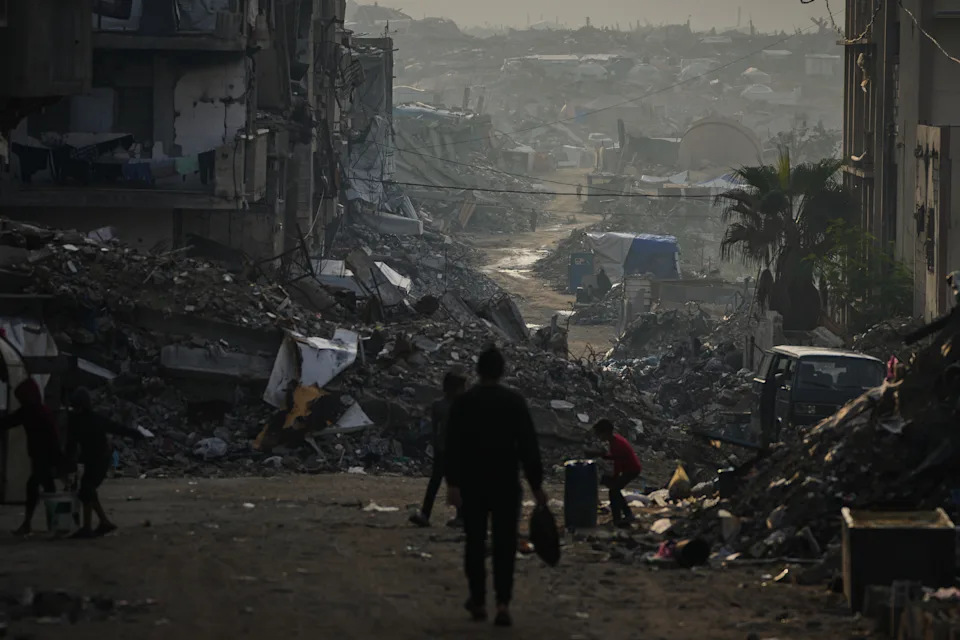
Despite the so-called ceasefire, Israeli forces have steadily been enlarging the territory they control in the besieged enclave, pushing the ceasefire-established “Yellow Line” westwards and expanding territorial control to 59 percent of the Gaza Strip.
The Israeli military has been expanding the “yellow line” in eastern Gaza, particularly in the Tuffah, Shujayea, and Zeitoun neighbourhoods, squeezing Palestinians into ever smaller clusters of the enclave and pushing closer to the key artery of Salah al-Din Street.
This is what is happening in Gaza and Israel today a military occupation that grows inch by inch while diplomatic talks stall in Cairo.
In the shattered neighbourhoods of Khan Younis and Deir el-Balah, the roar of Israeli drones and the concussive thud of controlled demolitions are daily reminders that the war has never really ended. Families continue to pull bodies from the rubble.
Palestine War Update: Death Toll and Casualties
The human cost of the Israel attack on Palestine has been catastrophic. As of May 4, 2026, the death toll from Israel’s war on Gaza has surged to 72,612 martyrs, according to the Gaza Health Ministry, with the total number of wounded reaching 172,457. Since the ceasefire agreement took effect on October 10, 2025, at least 832 Palestinians have been killed and 2,354 others injured.
As of April 6, 2026, at least 75,498 people including over 73,459 Palestinians and 2,039 Israelis have been reported killed, including 270 journalists, 120 academics, and over 560 humanitarian aid workers.
Scholars estimate that 80 percent of Palestinians killed were civilians. These numbers define what is happening in Palestine today and why the Palestine war update draws global concern.
Disarmament Demand and Hamas Response
At the heart of the current diplomatic standoff is a demand for Hamas to disarm. Mediators in Cairo have been pushing a roadmap that would require the complete disarmament of Hamas within 281 days over five stages.
A unified front of Palestinian factions including Hamas, and the Popular Front for the Liberation of Palestine has universally rejected the disarmament prerequisite. The groups insisted on full implementation of the first phase of the ceasefire, which Israel has repeatedly violated by blocking the agreed-upon entry of 600 aid trucks daily.
This deadlock is central to understanding what is happening in Gaza today and why fears of renewed war are growing.
Quotes From Officials and Experts
Mamoun Abu Amer, an expert on Israeli affairs, offered a sharp analysis of the Israel and Palestine situation. He told Al Jazeera that Israeli threats to resume war are a “smoke screen” designed to pressure mediators and salvage Netanyahu’s political standing before upcoming elections.
Abu Amer also noted that the Israeli military is deeply exhausted, with reservists serving an average of 80 days a year in 2026, making a full-scale Gaza offensive extremely difficult.
Political analyst Wissam Afifa added that Hamas is navigating diplomatic pressure by linking security arrangements directly to comprehensive political rights.
Israel and Palestine Map What the Ground Looks Like
To understand what is happening in Palestine today, you need to look at the Israel and Palestine map. Gaza is a narrow strip of land about 365 square kilometers. Israel now physically controls more than half of it through military buffer zones and the expanded Yellow Line. The remaining population over one million displaced persons is crammed into the southern and central portions of the Strip with limited food, water, and medical access.
Since the 2025 ceasefire, Israeli forces have pushed beyond the so-called Yellow Line the boundary meant to separate areas under Israeli control from the rest of Gaza raising fears of a more permanent occupation or even a renewed incursion.
Global Impact of the Palestine War
The Palestine war update carries serious consequences far beyond the region. Life expectancy in Gaza fell by nearly half in 2024 compared to what it would have been without the war equivalent to a loss of over 36 years of life expectancy.
Gaza now has the highest number of child amputees per capita in the world. Many operations are conducted without anesthetic and antibiotics, as the healthcare system has been devastated.
Internationally, the conflict has strained US-European relations, affected Strait of Hormuz shipping, and drawn condemnation from the United Nations and human rights organizations worldwide.
Who Is Right Israel or Palestine?
This is among the most-searched questions: who is right, Israel or Palestine? The answer is not simple, and responsible journalism requires presenting both perspectives.
Israel says it has the right to defend itself after the October 7 Hamas attack and argues that disarming militant groups is necessary for regional peace. The Israeli government frames its military operations as counter-terrorism measures.
Palestine and its supporters argue that the response has been disproportionate, that collective punishment of civilians violates international law, and that the blockade of Gaza constitutes a humanitarian crime. The UN, Amnesty International, and multiple independent researchers have raised serious concerns about violations of international humanitarian law.
The question of who is right, Israel or Palestine, is ultimately a legal, moral, and political one with global institutions, governments, and populations holding sharply divided views.
Conclusion What Comes Next
The Palestine war update as of May 5, 2026, suggests a dangerous moment. Ceasefire talks are strained, military positions are expanding, and civilian suffering continues. What is happening in Gaza today may determine whether a broader war reignites or a genuine peace process begins.
Diplomats in Cairo, Washington, and Doha are working against the clock. The coming days will be critical in deciding whether the Israel attack on Palestine escalates once more or whether a path toward lasting resolution can be found.
FAQs
Is the Gaza war over?
No, the Gaza war is not over. A ceasefire was signed in October 2025, but it has been repeatedly violated. Israeli military operations, drone strikes, and territorial expansion have continued. Since the ceasefire, at least 832 Palestinians have been killed and 2,354 injured. The situation remains active and deeply unstable.
Who is Israel’s best friend?
The United States is widely considered Israel’s closest ally. The US provides Israel with military aid, diplomatic backing at the United Nations Security Council, and strong political support. Other close partners include Germany and the United Kingdom, though relations have been strained during the current Gaza conflict.
Which 9 countries voted against Palestine?
In the United Nations General Assembly vote in 2024 on Palestinian statehood and rights, the countries that voted against included the United States, Israel, and several Pacific Island nations that have historically aligned with the US on such votes including Micronesia, Nauru, Papua New Guinea, and others. The exact lineup has varied across different UN resolutions. It is worth noting that the overwhelming majority of the world’s nations have consistently voted in support of Palestinian rights, with opposition limited to a small bloc.