
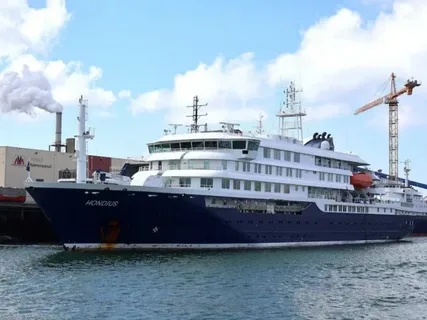
Three passengers have died and at least three others are seriously ill following a suspected hantavirus outbreak aboard the cruise ship MV Hondius, currently anchored off Cape Verde in the Atlantic Ocean. The World Health Organization (WHO) has confirmed the public health event and is actively coordinating the emergency response.
Three people are dead and at least three others are sick after a suspected outbreak of hantavirus aboard the cruise ship MV Hondius, sailing in the Atlantic Ocean, the World Health Organization confirmed on Sunday. The hantavirus cruise ship incident has triggered international alarm, with health authorities from multiple countries now involved in managing the crisis.
Of the six affected individuals, one case of hantavirus infection has been laboratory confirmed, while there are five additional suspected cases. Three have died and one is currently in intensive care in South Africa.
Background: What Is the MV Hondius?
The MV Hondius is a Dutch-flagged passenger cruise ship. It left Ushuaia in Argentina about seven weeks ago, made stops in Antarctica and the British overseas territory of Saint Helena, before anchoring in Praia, the capital of Cape Verde.
The vessel holds 170 passengers and 71 crew, including one doctor, according to Oceanwide Expeditions, the company that operates the ship. It is an expedition cruise line focused on remote and polar travel.
The MV Hondius hantavirus incident is being treated as one of the most unusual and alarming cruise ship outbreaks in recent history, as hantavirus is rarely associated with maritime travel.
Details: How Did the Hantavirus Outbreak Unfold?
The first person to develop symptoms was a 70-year-old passenger. He died on board the ship, and his body was taken to the island of Saint Helena, a British territory in the South Atlantic.
His 69-year-old wife also fell ill on board and was evacuated to South Africa, where she later died in a Johannesburg hospital. A source close to the case indicated that a Dutch couple were among the dead.
A passenger from the United Kingdom who became ill while the cruise ship was traveling from St. Helena to Ascension Island was being treated at a hospital in South Africa. His lab results tested positive for hantavirus.
As of late Sunday, authorities in Cape Verde had not authorized the disembarkation of passengers requiring medical treatment or broader medical screening. Local health officials boarded the vessel to assess the situation but had not yet approved the transfer of symptomatic individuals to land facilities.
How Did People Get Hantavirus on the Cruise Ship?
This is the key question baffling global health experts. It is highly unusual for there to be a hantavirus outbreak on a ship that has not traveled anywhere where the virus is endemic, according to Dr. Scott Miscovich, family physician and President and CEO of Premier Medical Group.
Two plausible explanations exist: one, the ship could have become contaminated with rat or mice feces or urine; or two, one of the passengers could have picked up the Andes variant of hantavirus, for which there is some limited evidence of human-to-human transmission.
Just one type of hantavirus the Andes virus is known to be capable of spreading between people, though this is rare. It is primarily found in Chile and Argentina, the region where the ship’s voyage originated.
WHO Statement and Expert Quotes
The World Health Organization issued a formal statement regarding the hantavirus cruise line incident.
The WHO stated: “Hantavirus infections are typically linked to environmental exposure — specifically exposure to infected rodents’ urine or faeces. While rare, hantavirus may spread between people, and can lead to severe respiratory illness and requires careful patient monitoring, support and response.”
The WHO also confirmed: “Detailed investigations are ongoing, including further laboratory testing and epidemiological investigations. Medical care and support are being provided to passengers and crew. Sequencing of the virus is also ongoing.”
Oceanwide Expeditions stated that “the priority is to ensure that the two symptomatic individuals on board receive adequate and expedited medical care.”
What Is Hantavirus? Symptoms and Risks
Hantavirus can cause a severe and often deadly respiratory illness called hantavirus pulmonary syndrome. Early symptoms include fatigue, fever, and muscle aches, as well as headaches, dizziness, chills, and abdominal problems in some patients. Later symptoms include coughing, shortness of breath, and tightness in the chest.
There is no cure for hantavirus infection, beyond treatment of symptoms. Patients with severe breathing difficulties may need to be intubated, according to the CDC.Cruise ship deaths from hantavirus are extraordinarily rare. The virus is not easily transmitted between people, and most infections occur through direct exposure to rodent droppings or contaminated environments on land not aboard ships.
Global Impact of the MV Hondius Hantavirus Outbreak
This hantavirus cruise ship event has sent shockwaves through the global travel and public health communities. Dr. Miscovich told CNN that if the evidence points to human-to-human transmission in this case, it “will change the future of travel medicine and infectious disease and tropical medicine.”The WHO has notified global health authorities under international health regulations and is continuing to support the response on the ground.
The incident has also reignited concern among cruise passengers and health authorities about the adequacy of medical facilities and disease surveillance on long-haul expedition vessels. With only one doctor on board a 241-person ship, questions are now being asked about minimum healthcare standards for remote ocean voyages.
Also in the News: Hinglaj Mata Temple in Balochistan
In a separate but significant story, the Hinglaj Mata temple in Balochistan recently made headlines for an entirely different reason a celebration of faith and interfaith harmony.
The annual Hinglaj Mata festival in Balochistan concluded after drawing around 300,000 Hindu pilgrims. Officials and participants described the gathering as a symbol of interfaith harmony and religious tolerance.
The Hinglaj Mata Temple is located in a narrow gorge in the remote, hilly area of Lyari Tehsil in Balochistan, within Hingol National Park, near the town of Hinglaj on the Makran coast in Lasbela district. It is one of the 51 Shakti Peethas in Hinduism.
The Balochistan government has also decided to declare the historic Hinglaj Mata Temple a world tourism site, a decision taken during a meeting between Chief Minister Sarfraz Bugti and Senator Danesh Kumar, as part of efforts to promote minority religious tourism in the province.
Conclusion: What Happens Next?
The hantavirus cruise ship crisis aboard the MV Hondius remains an active and evolving situation. Authorities in Cape Verde, South Africa, and the Netherlands are all involved in coordinating the response. Laboratory sequencing of the virus is ongoing, and the source of the outbreak whether rodent contamination on board or person-to-person transmission has not yet been conclusively determined.
Health officials globally are monitoring the situation closely. If human-to-human transmission of hantavirus is confirmed in this case, it would represent a landmark development in infectious disease history one that could fundamentally alter how maritime health safety is regulated worldwide.
Travelers and cruise passengers are advised to follow WHO and CDC guidance, and to report any unusual respiratory symptoms to medical authorities without delay.
FAQs
How did people get hantavirus on cruise ships?
The exact source is still under investigation. Experts believe the infection may have come from contaminated rodent droppings aboard the ship, or through the Andes variant of hantavirus, which has limited evidence of person-to-person spread. The MV Hondius traveled from Argentina a region where the Andes virus is found making both scenarios plausible.
Which cruise ship has hantavirus?
The cruise ship involved is the MV Hondius, operated by Oceanwide Expeditions, a Dutch expedition cruise line. The ship was anchored off Praia, the capital of Cape Verde, as of May 3–4, 2026, while the outbreak was being investigated.
How common is death from hantavirus?
Hantavirus is rare but deadly. Hantavirus pulmonary syndrome has a fatality rate of approximately 35–40%, according to the CDC. There is no specific antiviral cure treatment focuses on managing symptoms. Cruise ship deaths from hantavirus are extremely uncommon and this event is considered highly unusual by global health experts.