
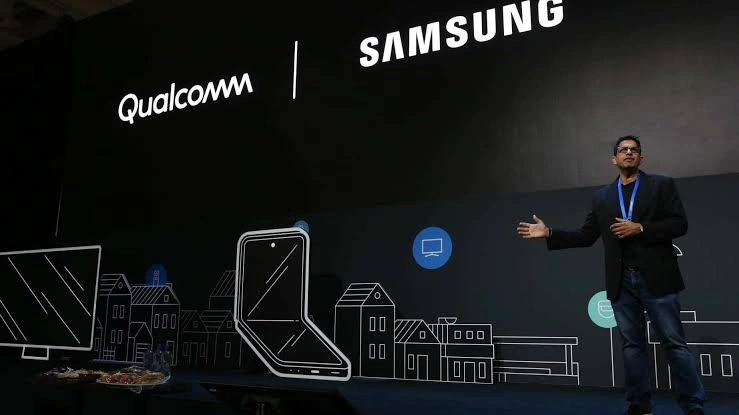
Samsung and Qualcomm Deepen Partnership as AI Expands Across Smartphones and Wearables

Samsung and Qualcomm are expanding their long-standing technology partnership, with Snapdragon platforms continuing to play an important role across Samsung’s growing ecosystem of AI-powered smartphones, wearables and connected devices.
The deeper collaboration reflects a broader shift in the consumer electronics industry, where artificial intelligence is increasingly becoming a central feature rather than an optional software capability.
Qualcomm’s Snapdragon technology has powered a wide range of Samsung devices, while Samsung has continued expanding its Galaxy AI ecosystem across smartphones and other connected products.
AI Becomes a Major Focus for Samsung Devices
Samsung has been investing heavily in artificial intelligence as it seeks to make AI a core part of the Galaxy experience.
AI-powered features can assist users with tasks such as communication, photography, content creation, productivity and device personalization. The company has also been working to bring AI capabilities across a broader range of products instead of limiting them to smartphones.
This strategy requires powerful and energy-efficient processors capable of handling increasingly complex AI workloads.
That is where Qualcomm’s Snapdragon platforms play a key role.
Qualcomm Provides Advanced Processing Technology
Qualcomm develops semiconductor platforms used in smartphones, computers, wearables and other connected devices.
Its Snapdragon platforms combine processing, graphics, connectivity and AI capabilities, allowing manufacturers to build increasingly sophisticated devices while maintaining a focus on battery efficiency.
For Samsung, access to advanced mobile processors can help support AI features that increasingly depend on on-device computing.
On-device AI can process certain tasks directly on a smartphone or wearable instead of sending all information to cloud-based servers.
Why On-Device AI Matters
One of the most important developments in consumer technology is the move toward on-device artificial intelligence.
Instead of relying entirely on remote data centers, smartphones and other devices can perform some AI functions locally.
This approach can offer several potential advantages, including faster responses, reduced dependence on an internet connection and improved privacy for certain applications.
Power efficiency is particularly important for smartphones and wearable devices because they operate on relatively small batteries.
The processor therefore needs to deliver significant AI performance without dramatically increasing power consumption.
AI Expands Beyond Smartphones
The Samsung-Qualcomm relationship is also relevant as AI moves into more categories of consumer electronics.
Smartwatches, wireless devices, smart glasses and other connected products are increasingly incorporating AI-powered features.
Wearable devices can potentially use AI for voice assistance, health and fitness-related analysis, translation, personalization and other applications.
As these products become more capable, semiconductor technology will play an increasingly important role in determining their performance and battery life.
Samsung and Qualcomm Face Growing Competition
The expanding partnership comes as competition in the AI-device market intensifies.
Apple, Google, MediaTek and other technology companies are also developing hardware and software designed to support AI directly on consumer devices.
The industry is increasingly focused on creating AI ecosystems in which smartphones, computers, watches, earbuds and other products can work together.
Samsung’s broad hardware portfolio gives it an opportunity to integrate AI across multiple product categories, while Qualcomm’s chip technology provides an important foundation for many mobile and connected devices.
The Future of AI-Powered Devices
The next phase of consumer technology is expected to focus increasingly on personal AI assistants and intelligent devices.
Instead of simply responding to commands, future devices could understand context, anticipate user needs and perform more tasks automatically.
Achieving that vision will require advances in both software and hardware.
The Samsung-Qualcomm partnership demonstrates how major technology companies are positioning themselves for this shift. As AI becomes more deeply integrated into smartphones and wearable technology, processors will need to deliver greater AI performance while maintaining efficiency and connectivity.
For consumers, the result could be a new generation of devices that are more personalized, intelligent and capable of performing complex tasks directly at the edge.
The continued collaboration between Samsung and Qualcomm is therefore likely to remain significant as the global technology industry moves toward an AI-first device ecosystem.