

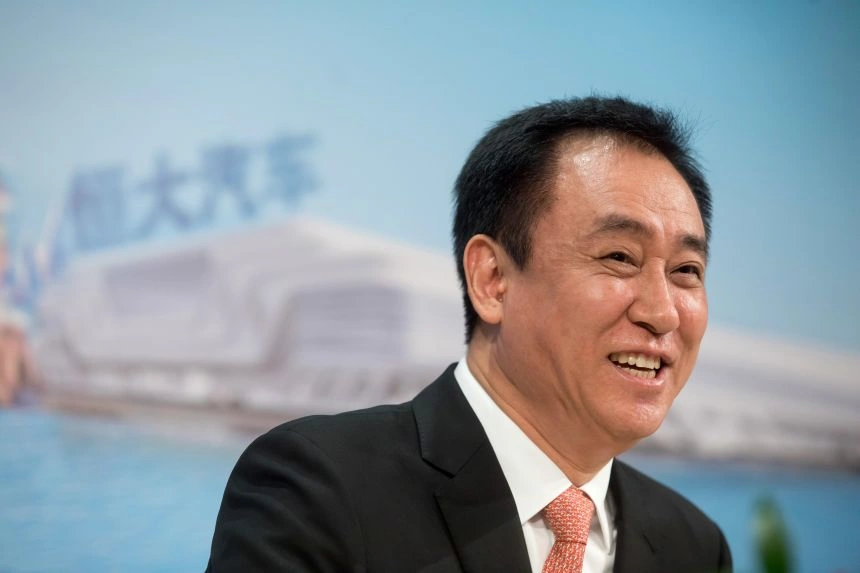

The founder of Chinese property giant Evergrande, Hui Ka Yan, has been sentenced to life in prison after being found guilty of multiple financial crimes linked to the company’s collapse.
The Shenzhen Intermediate People’s Court also ordered the confiscation of Hui’s personal property. His sentencing marks a major development in the fallout from Evergrande’s financial crisis, which became one of the most significant corporate failures in China’s property sector.
Hui, also known as Xu Jiayin, pleaded guilty in April to several charges, including embezzlement of assets and corporate bribery.
Evergrande Companies Fined Billions
The court imposed combined fines of 15.82 billion yuan ($2.35 billion) on Hui’s former companies for multiple offences, including falsifying financial records and concealing debt.
According to the court, Hui and his businesses had seriously disrupted China’s property market, causing substantial economic losses.
The case highlights the enormous consequences of Evergrande’s collapse, which affected investors, homeowners, financial institutions and domestic banks while adding pressure to China’s already struggling property market.
Other Evergrande executives were also sentenced in connection with the company’s financial crimes. State media reported that Hui’s two sons, Xu Zhijian and Xu Tenghe, received prison sentences ranging from 22 months to 18 years.
From Asia’s Richest Man to Life Imprisonment
Hui’s dramatic fall represents one of the most striking reversals in China’s corporate world.
He rose from humble beginnings in rural China and was reportedly raised by his grandmother before entering the property industry. In 1996, he founded Evergrande, which eventually grew into one of China’s largest property developers.
At the height of his success, Hui was ranked among Asia’s richest people, with a vast business empire spanning property and other sectors.
However, Evergrande’s rapid expansion was heavily dependent on borrowing. As China’s property market weakened and the company struggled to meet its financial obligations, its debt problems intensified.
The crisis eventually contributed to the collapse of one of the country’s best-known property developers and sent shockwaves through China’s wider financial system.
Hui’s life sentence now places a dramatic end to the rise of a businessman who once symbolised China’s property boom. His conviction also underscores Beijing’s increasingly tough approach to corporate misconduct as authorities seek to contain the economic and financial consequences of the country’s prolonged property crisis.