
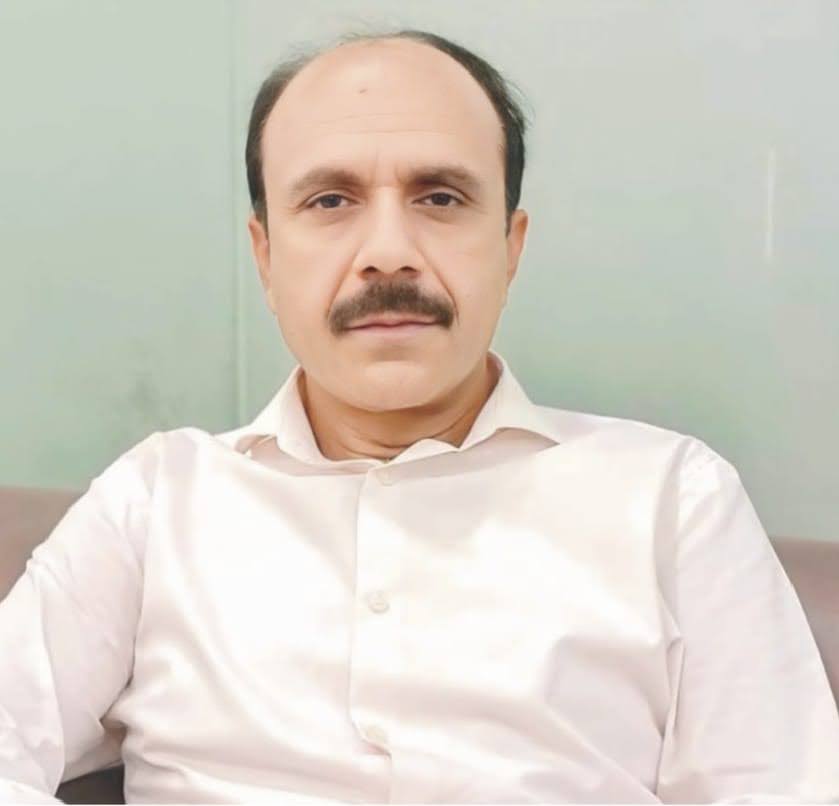
Faisalabad’s Journey Towards Modern Public Transport
(Maqbool Malick, Director Public Relations Faisalabad)
Faisalabad is one of Pakistan’s major industrial and commercial centres. With its rapidly growing population, expanding industrial and business activities and the steady spread of educational institutions and residential areas, the number of people travelling across the city every day continues to increase. In such circumstances, the need for a safe, comfortable, reliable and modern public transport system has become more pressing than ever. The Mass Transit/Metro Bus Project in Faisalabad represents an important step towards meeting this need.The project, initiated by the Punjab government under the leadership of Chief Minister Maryam Nawaz Sharif has the potential to place Faisalabad among the major cities offering modern public transport facilities. Following the experience of mass transit systems in Lahore, Rawalpindi and Multan, the introduction of a similar facility in Faisalabad is also a step towards fulfilling a long-standing demand of the city’s residents.Every day, thousands of people travel between Faisalabad’s industrial areas, markets, educational institutions, government offices and residential neighbourhoods. A large proportion of them rely on motorcycles, rickshaws, vans and other modes of transport. Growing traffic congestion, rising fuel costs, parking difficulties and the time spent on daily commuting have further highlighted the need for an efficient public transport system that can provide safe and comfortable travel to a large number of people at an affordable cost.
The significance of a mass transit project, however, goes well beyond transportation. An efficient public transport system can influence urban life, economic activity, employment and access to education. It can be particularly beneficial for students, employees, women, senior citizens and people who do not have access to private cars or motorcycles.
Chief Minister Maryam Nawaz Sharif has placed particular emphasis on completing the project within the stipulated timeframe. She has assured citizens that the Mass Transit Project in Faisalabad will be completed according to the given schedule and that the timeline will not be extended. At the same time, she has acknowledged the difficulties being faced by citizens because of the ongoing construction work and expressed the government’s commitment to providing modern, comfortable and quality transport facilities once the project is completed.
It is a reality that major development projects often create temporary difficulties for citizens during construction. Road construction and expansion, changes in traffic routes, dust and restricted access to commercial areas can affect everyday life. Faisalabad’s residents are currently experiencing some of these challenges. The important consideration, therefore, is to ensure that construction-related difficulties remain temporary and that the project is completed within the announced timeframe and to the required standards.
The district administration and relevant departments have an important role to play during this phase. Continuous monitoring of construction activities, timely resolution of bottlenecks and effective traffic management can help minimise inconvenience to citizens. Every effort should also be made to ensure that business activities and access to markets, educational institutions, offices and residential areas are disrupted as little as possible.
The real test of any major public transport project is not simply its inauguration. Its success will ultimately depend on efficient, safe and sustainable operations. Once the system becomes operational, regular availability of buses, cleanliness of stations, security arrangements, transparent ticketing, facilities for women and persons with disabilities, and reliable service schedules will be equally important. Affordable fares and effective integration with other modes of public transport will also determine how widely the system is used.
Given Faisalabad’s strong industrial and commercial identity, easy access to industrial estates and business centres should be an important consideration in the city’s future transport planning. If the mass transit system is eventually connected with feeder routes and other public transport services, it could develop into a broader and more integrated urban mobility network rather than remaining limited to a single corridor.
Future planning should also take into account the city’s continuing population growth, expansion of residential areas and development of new industrial zones. A transport system designed today must have the flexibility to respond to Faisalabad’s needs tomorrow.
An efficient public transport system can also encourage citizens to reduce unnecessary dependence on private vehicles. If people have access to reliable, safe, comfortable and reasonably priced public transport, it can help reduce traffic congestion, fuel consumption and environmental pollution. For this to happen, however, the Mass Transit Project should eventually become part of a broader and integrated urban transport policy.
The people of Faisalabad have high expectations from the project. They want the temporary difficulties caused by construction to end within the promised timeframe, the project to be completed according to high standards, and its benefits to reach different segments of society without discrimination. Equally important will be transparent oversight, regular maintenance and efficient management after completion.
For Faisalabad to emerge as a more modern, organised and economically vibrant city, good roads alone are not enough. The city needs efficient public transport, better urban planning, environmentally sustainable mobility and integrated infrastructure. The Mass Transit Project can become an important milestone in that journey.
The current construction-related difficulties are, by their nature, temporary. Their real justification, however, will lie in the timely completion of the project and the quality of services delivered afterwards. If the project is completed within the stipulated timeframe and according to the required standards, and if citizens are provided with safe, comfortable and affordable transportation, it can bring a meaningful and lasting improvement to the daily lives of millions of people.
In the longer term, integration with feeder routes and other modes of public transport could further expand its benefits. The Mass Transit Project, therefore, should not be viewed merely as a transportation scheme. It has the potential to become an important component of Faisalabad’s future urban development, economic activity and quality of life.
For a city that is constantly expanding and evolving, modern public transport is not simply a convenience—it is an essential part of sustainable urban growth. Faisalabad’s journey towards a more efficient transport system has begun; the priority now should be to complete that journey on time, with quality, transparency and a clear focus on the needs of its citizens.