

The Latino Vote: Profiling America’s Changing Electorate
First in a Series Ahead of the 2026 Midterms
American Community Media National News Briefing | Friday, 28 August 2026
One Briefing, One Question: What Moves Latino Voters
American Community Media hosted “The Latino Vote: Profiling America’s Changing Electorate,” the opening instalment in a national briefing series examining the electorate ahead of the 2026 midterms, on 28 August 2026. Rather than a single storyline, the hour long conversation among Republican strategist Mike Madrid, Equis Research’s Maria Isabel Di Franco Quinonez, Virginia Union University’s Eli Valentin, and UnidosUS’s Clarissa Martinez De Castro kept circling back to one central question: what words actually move Latino voters, and which party currently owns them?
A Genuine Swing Constituency
The starting point was Trump’s collapsing approval among Hispanic voters, down significantly within roughly a year, according to figures cited during the session. But panellists resisted reading that slide as an automatic gain for Democrats. Instead, several speakers described Latino voters as an increasingly genuine swing constituency rather than a bloc returning home. Eli Valentin addressed a related tension directly when asked by Nestor Fantini whether cultural flashpoints such as transgender rights or the conflict in Gaza factor meaningfully into Latino voting decisions, framing the community’s calculus as weighted far more heavily toward material, pocketbook concerns than ideological ones.
Messaging Battle: “Back to Basics” vs “Abolish ICE”
That material framing shaped the panel’s most pointed exchange, over campaign language on immigration. Equis Research’s Maria Isabel Di Franco Quinonez shared polling, in response to a question from Peter Schurmann about whether “Abolish ICE” still resonates, showing a markedly more effective alternative: a “back to basics” message centred on opportunity for hardworking people, community safety, and enforcement directed narrowly at violent offenders rather than broad removal. Fellow panellists agreed this reframing captures where a large share of Hispanic voters actually sit, wary of enforcement overreach that has separated families, as several attendees noted from personal community experience, yet unpersuaded by slogans that sound like open borders.
Closing a Targeting Gap
Mike Madrid’s central argument was about targeting. He and other panellists agreed Republicans have spent nearly a decade tailoring outreach to specific national origin groups, Cuban, Venezuelan, Mexican American, South American, rather than addressing Latinos as one audience, and that this precision has repeatedly paid off in Florida, Texas and beyond. Martinez De Castro offered a real world illustration from the Rio Grande Valley, where longtime Democratic voters described receiving persistent door to door Republican canvassing while their own party managed little beyond a robocall, a gap panellists said Democrats are only beginning to close.
The Myth of Inherited Party Loyalty
Generational assumptions also came under scrutiny. Panellists noted that the old pattern of inherited party loyalty, voting Democratic or Republican the way one inherits a religion, no longer reliably holds for Latino voters, if it ever fully did. Nancy Tran asked whether the community’s periodic drift toward Republicans reflects superior GOP messaging or the pull of misinformation and extremism on frustrated voters; panellists leaned toward the former explanation, arguing that both major parties are competing for a genuinely undecided electorate rather than one being misled.
Where Democratic Socialism Fits
The ideological wing of the Democratic Party drew particular attention. Citing June Pew Research data putting Latino enthusiasm for Democratic Socialist candidates at roughly twenty per cent, Jaya Padmanabhan asked how that squares with attention grabbing wins such as Zohran Mamdani’s in New York. Panellists suggested the answer lies in delivery rather than doctrine: candidates such as Mamdani and Arizona’s Senator Ruben Gallego succeed, in Martinez De Castro’s words, by speaking plainly about economic pain and meeting voters where they are, not by running on a socialist label.
The Risk of Overreach
Democratic overreach also drew a pointed question. Peter Schurmann asked what risk Democrats run of overplaying their hand on immigration if they retake power and move to unwind the current administration’s enforcement agenda, and whether pressure from immigrant advocacy groups could push the party further than the electorate is willing to follow. Panellists agreed the disaggregation of immigration reform from border security in current polling, a distinction Martinez De Castro said her organisation tracks deliberately through the Hispanic Electorate Data Hub, will matter more to persuadable Latino voters than sweeping promises in either direction.
Neither Party Can Assume the Vote
The panel closed on a caution for both parties: with Hispanic voter turnout still lagging and suppression tactics an ongoing concern, according to Martinez De Castro, neither Republicans nor Democrats can bank on the Latino vote breaking cleanly their way in November. American Community Media said the briefing marks the first in a continuing series profiling the electorate ahead of the midterms, with future sessions expected to examine other communities shaping the 2026 vote.
About the Speakers
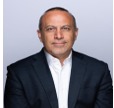 |
Mike Madrid
Republican political strategist and nationally recognised expert on Latino voting trends, with two decades of work shaping election outcomes and campaigns across the U.S. A graduate of Georgetown University, Madrid built his career in strategic Latino communications and outreach in California, Texas, Florida and nationwide, holding roles with the California Republican party, the League of California Cities and the California Redevelopment Association. In 2020 he co-founded the Lincoln Project, a Republican anti-Trump organisation. He was an adjunct lecturer on Race, Class and Partisanship at the University of Southern California and is currently a Senior Fellow at UC Irvine School of Social Ecology. Madrid is the author of The Latino Century (Simon and Schuster, 2024) and founder of The Latino Working Class Project. |
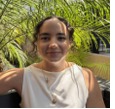 |
Maria Isabel Di Franco Quinonez
Senior Research Director at Equis, where she leads projects aimed at understanding and engaging Latino voters nationwide. She runs Equis’ flagship electoral research project, the Equis State Series, and contributes to wider research helping elected officials, partners and campaign practitioners better engage Latino communities. Before joining Equis in 2021, she served as a field director for a local race in New York City and as a field organiser for the Democratic Party of Georgia and the Arizona Democratic Party’s Latino organising programme. Originally from Venezuela, she is a graduate of the University of California, Berkeley. |
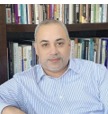 |
Eli Valentin
Assistant Dean of Graduate and Leadership Studies and Executive Director of Latino Initiatives at Virginia Union University’s Graduate Center in Harlem. For over sixteen years, Valentin has served as a political advisor to numerous elected officials across the nation. He is the author of Politicking in the Barrio: Essays on Latino Politics in New York, with a second book under contract with Palgrave Macmillan. He writes regular columns for City Limits and has contributed to City and State New York, Gotham Gazette and El Diario/La Prensa, and is a frequent guest political analyst at Univision NY. He has twice been named by City and State among the top 100 Latinos in New York politics and policy. |
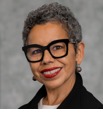 |
Clarissa Martinez De Castro
Vice President of the Latino Vote Initiative at UnidosUS, the largest national Latino civil rights and advocacy organisation in the U.S., where she leads efforts to advance accurate understanding of Hispanic voters and to expand campaign and civic engagement approaches that increase Latino electoral participation. Her work has produced the Hispanic Electorate Data Hub, a public resource tracking the Latino electorate, and has supported the registration of over one million voters in each of the last two cycles. A graduate of Occidental College and Harvard’s Kennedy School of Government, she is a naturalised U.S. citizen who came to the country as a teenager. |