
Government extends flagship Nashonuma programme by three years as malnutrition remains a national emergency
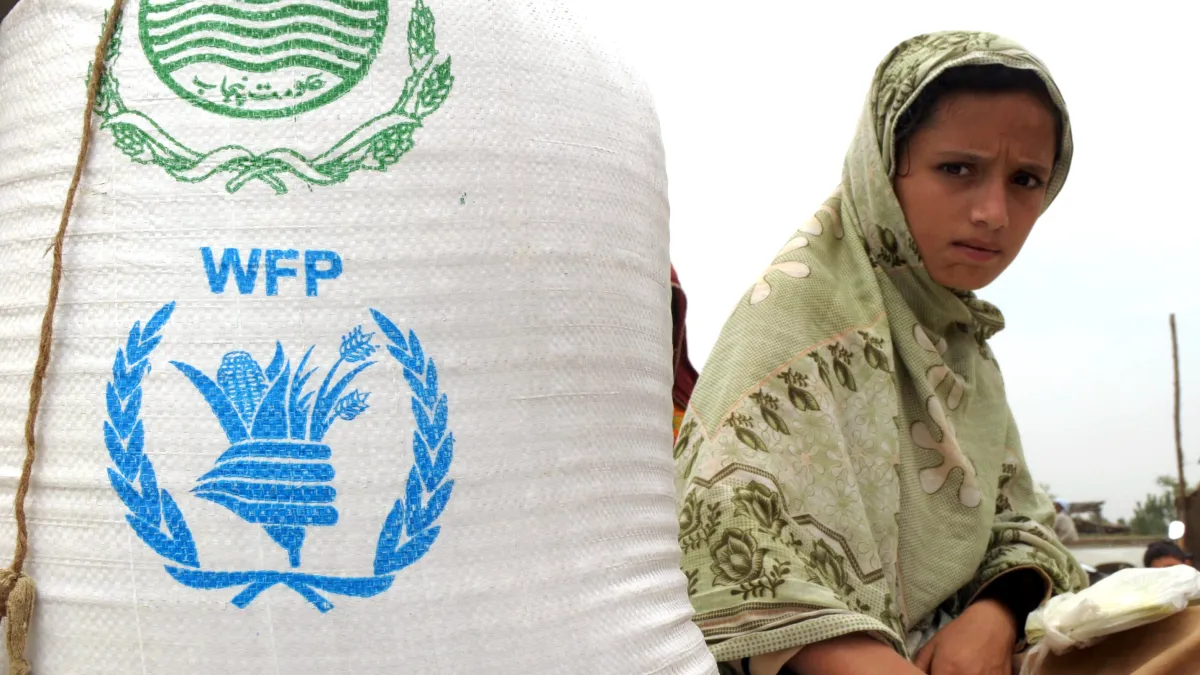
Pakistan’s government has extended one of its largest nutrition programs in Pakistan for another three years, teaming up with WFP Pakistan, UNICEF and the World Health Organization to protect an extra 3.3 million pregnant women, new mothers and young children from malnutrition. The extension pushes the total number of people covered by the Benazir Nashonuma Programme toward 8 million since it first launched in 2020.
The announcement was made in Islamabad by the Benazir Income Support Programme, working alongside WFP Pakistan and its UN partners. Officials described the renewal as proof that the country’s biggest social protection scheme can double as a frontline defence against chronic child malnutrition.
Background: A programme built inside Pakistan’s safety net
The Benazir Nashonuma Programme is not a stand-alone charity effort. It sits inside BISP, the country’s largest cash transfer scheme, which already reaches millions of low-income households. That structure lets WFP Pakistan and its government partners deliver nutrition services through a system that families already know and trust.
Since 2020, the programme has grown into a nationwide network of 578 facilitation centres and 224 nutrition stabilization centres. These sites offer specialised nutritious food, maternal and child health checks, immunization and cash support to pregnant women, breastfeeding mothers and children under the age of two. This age group matters because the first 1,000 days of a child’s life largely determine whether stunting can still be prevented.
Pakistan has struggled with high rates of child stunting for decades, and past nutrition programs in Pakistan often ran as short-term projects with limited government funding. The Nashonuma model tried a different approach by folding nutrition directly into an existing, permanent welfare programme rather than running it as a separate donor-funded pilot.
Details: What the extended programme actually delivers
Under the renewed agreement, WFP Pakistan continues to provide technical and operational support to the government, while BISP manages enrollment and cash disbursement through its existing network. The programme’s earlier phase, running from September 2024 through June 2026, involved a $194 million contribution from the Government of Pakistan to WFP, bringing total government investment in the scheme to nearly $500 million since its launch. Officials have called it the largest government-funded nutrition programme in WFP’s history anywhere in the world.
Independent evidence collected from the programme’s earlier phases found that children enrolled were 22 percent less likely to be stunted by six months of age compared with children outside the programme. Researchers also recorded improved maternal nutrition, more antenatal care visits, healthier pregnancy weight gain and better birth outcomes among participating families.
Beyond Nashonuma, WFP Pakistan runs several other nutrition projects in Pakistan, including school meal support through the McGovern-Dole International Food for Education and Child Nutrition Programme, food fortification initiatives, and resilience-building work tied to disaster preparedness. In 2025 alone, WFP reported reaching more than 3.3 million people across nutrition, school meals, resilience and emergency assistance activities, working both directly and through national government systems.
Quotes: What officials are saying
Rubina Khalid, Chairperson of BISP, welcomed the renewed partnership at the launch event, saying the government was “proud to strengthen this vital partnership with WFP.” She added that the goal was to give every child in Pakistan the chance of a healthy start in life.
Dr Luo Dapeng, the WHO Representative in Pakistan, framed the programme’s results as evidence of “the power of integrated, whole-of-government and science-based approaches” that bring together health, nutrition, social protection, clean water and food systems under one roof. WFP’s Country Director in Pakistan, Anita Hirsch, said the extension would let the agency keep supporting the government in reaching more mothers and children with the services they need.
Impact: Why this matters beyond Pakistan’s borders
Pakistan’s malnutrition burden is one of the most severe in South Asia, and international donors watch programmes like Nashonuma closely because they double as a test case for how nutrition programs in Pakistan can be woven into national welfare systems rather than run as isolated aid projects. A model that works at this scale could influence how other lower middle-income countries structure their own nutrition spending.
The extension also matters for global humanitarian planning. WFP Pakistan’s partners include the Bill and Melinda Gates Foundation, the governments of Australia, Canada, China, Germany, Japan, Norway, Saudi Arabia, Switzerland, the United Kingdom and the United States, along with several UN pooled funds. Continued government co-financing at this scale, alongside international donor support, gives the programme a degree of financial stability that many nutrition projects in Pakistan have historically lacked.
Conclusion: What comes next
With the three-year extension now confirmed, attention will shift to whether the expanded programme can maintain the same results at a larger scale. Reaching an additional 3.3 million people brings its own logistical demands, from staffing facilitation centres to keeping supply chains for nutritious food running smoothly across remote districts.
Officials from WFP Pakistan, BISP, UNICEF and WHO are expected to publish updated coverage and outcome data as the new phase rolls out. For now, the extension keeps one of the country’s most closely watched nutrition programs in Pakistan running at a moment when child malnutrition remains a pressing national concern.
Frequently Asked Questions
What is the Benazir Nashonuma Programme and how does WFP Pakistan support it?
The Benazir Nashonuma Programme is a government-run nutrition scheme embedded inside Pakistan’s largest social protection programme, the Benazir Income Support Programme. WFP Pakistan provides technical and operational support, helping design the nutrition package, train staff and monitor outcomes, while the government funds and manages day-to-day delivery through hundreds of facilitation centres across the country. The programme specifically targets pregnant women, breastfeeding mothers and children under two, since this window offers the best chance of preventing long-term stunting.
How many people has the WFP Pakistan nutrition programme reached so far?
Since its 2020 launch, the Benazir Nashonuma Programme has reached about 4.7 million people. With the newly announced three-year extension, officials expect that number to grow to roughly 8 million people, covering an additional 3.3 million pregnant women, mothers and young children across all provinces and regions of Pakistan.
Why does Pakistan rely on WFP for its nutrition programs instead of running them entirely through government departments?
WFP brings technical expertise in nutrition programming, supply chain management for therapeutic and fortified foods, and experience running similar nutrition programs in Pakistan and other countries facing high rates of child malnutrition. Rather than replacing government systems, WFP Pakistan works alongside BISP, provincial health departments and other ministries, helping strengthen government capacity so that nutrition projects in Pakistan can eventually be sustained with less external support over time.
Are there other nutrition projects in Pakistan besides the Nashonuma Programme?
Yes. WFP Pakistan also supports school meal programmes for children in food-insecure districts, food fortification efforts aimed at reducing micronutrient deficiencies, and emergency nutrition assistance during floods, droughts and other disasters. These sit alongside programmes run by UNICEF, WHO, provincial governments and non-governmental organisations, all working toward the same broader goal of reducing malnutrition across the country.