
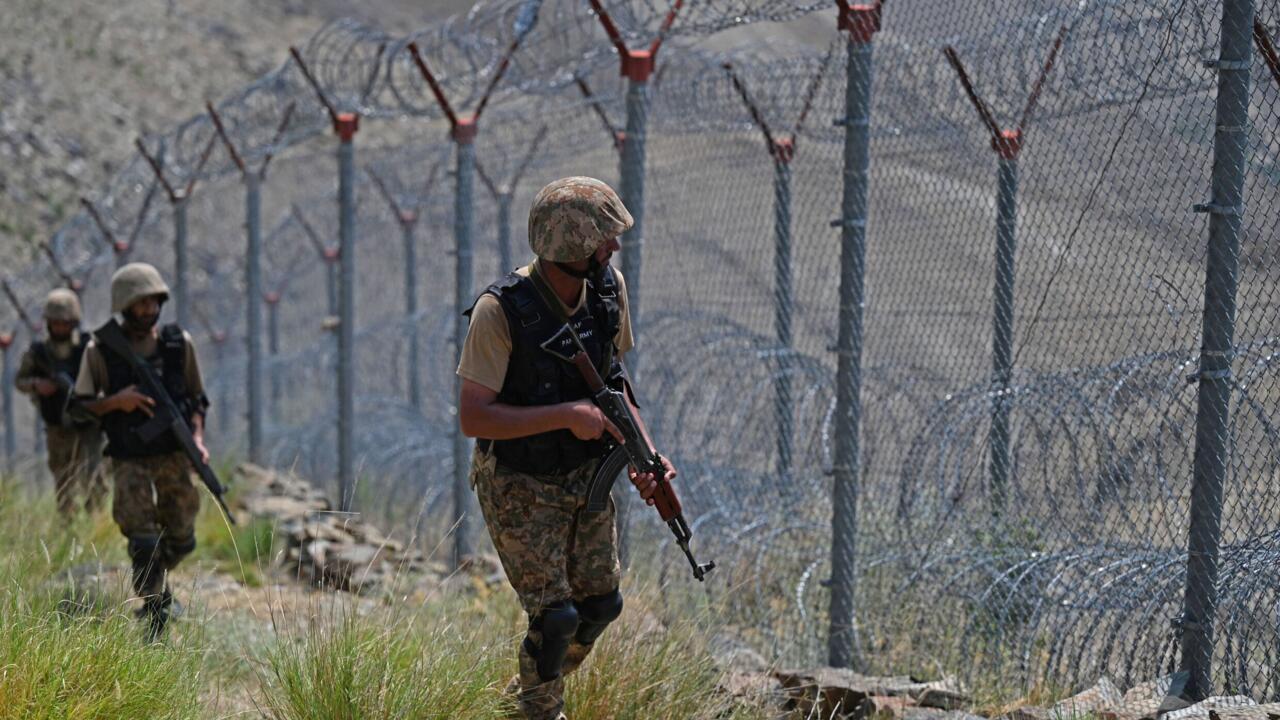

Pakistan’s security forces have killed 15 terrorists who attempted to sneak into the country through the Pakistan-Afghanistan border. The operation took place opposite North Waziristan District late Sunday night into Monday morning. The military’s media wing, ISPR, confirmed the development on Thursday.
Summary: What Happened
Security forces detected a group of terrorists moving across the Pak-Afghan border and responded with a coordinated operation. The engagement lasted roughly 36 hours before troops neutralized the entire group. All 15 militants belonged to the Indian-sponsored network known as Fitna al Khwarij, according to the official statement.
Background: A Recurring Threat Along the Border
Cross-border infiltration attempts have become a near-constant feature of security operations in Pakistan’s northwestern tribal districts. North Waziristan, sharing a long and rugged frontier with Afghanistan, has repeatedly served as an entry point for militants linked to banned outfits. Pakistan has consistently accused the Afghan Taliban government of failing to police its side of the border, a complaint that resurfaces after nearly every major incident.
The term “Fitna al Khwarij” is the official label Pakistan’s state and military now use for fighters affiliated with the Tehreek-i-Taliban Pakistan (TTP), reflecting Islamabad’s position that the group has strayed from religious and national loyalty.
Details of the Operation
According to the ISPR statement, the infiltration attempt was picked up during the night of 31 August into 1 September. Troops responded “professionally and with patience,” engaging the group over an extended period rather than rushing the confrontation. The prolonged nature of the operation, lasting about a day and a half, points to a deliberate and calculated response rather than a hasty firefight.
Once the engagement ended, security forces launched a sanitization operation in the area. This follow-up phase is standard procedure after such incidents and is meant to clear any remaining threats. During this phase, troops recovered a significant quantity of weapons and ammunition from the militants who were killed.
Official Statement
The ISPR statement did not mince words about who it holds responsible for the recurring infiltration attempts. The military’s media wing said the incident “once again vindicates Pakistan’s persistent stance regarding the abject failure of the Afghan Taliban regime to deny the use of Afghan soil” to militant groups operating under its patronage.
The statement added that “the Afghan Taliban regime has consistently failed to ensure effective border management and honor its international obligations,” a direct reference to commitments Kabul has made regarding cross-border security cooperation.
ISPR further stated that Pakistan’s security forces “remain resolute and unwavering in their commitment to defend the nation’s frontiers,” signaling that operations of this nature will continue without pause.
Regional Impact
Incidents like this one continue to strain the already tense relationship between Islamabad and Kabul. Pakistan has repeatedly raised the issue of cross-border militancy at diplomatic forums, arguing that safe havens across the border directly fuel attacks inside its territory. For residents of North Waziristan and neighboring districts, these operations mean an ongoing security presence and periodic disruption, even as officials describe the outcomes as successes for the state.
The recovery of weapons and ammunition during the sanitization phase also reinforces Pakistan’s broader argument that militants crossing the border are well-equipped, suggesting organized backing rather than isolated, small-scale infiltration.
Conclusion: What Comes Next
ISPR confirmed that the counterterrorism campaign, run under the banner of “Azm-e-Istehkam” and approved by the Federal Apex Committee on the National Action Plan, will continue at full pace. Security officials have signaled that further sanitization operations are likely in the coming days as troops work to confirm the area is clear of any remaining militants. Pakistan is also expected to keep pressing Kabul diplomatically over what it calls a continuing failure to prevent cross-border terrorism.
Frequently Asked Questions
How many terrorists were killed by Pakistan security forces?
Pakistan’s security forces killed 15 terrorists during the operation. All of them were identified by ISPR as belonging to the Indian-sponsored network referred to as Fitna al Khwarij. The engagement took place over an extended period of roughly 36 hours before the group was fully neutralized, and a follow-up sanitization operation was later carried out in the area to recover weapons and ammunition left behind.
Where did the attempted infiltration take place?
The infiltration attempt occurred along the Pakistan-Afghanistan border, opposite North Waziristan District in Khyber Pakhtunkhwa. This area has long been considered a sensitive frontier zone due to its rugged terrain and history of cross-border movement by militant groups seeking to enter Pakistan from Afghan territory.
Who confirmed the operation?
The operation was officially confirmed by the Inter-Services Public Relations (ISPR), which is the media affairs wing of Pakistan’s armed forces. ISPR released a detailed statement on Thursday outlining the timeline of the engagement, the outcome, and the subsequent sanitization effort, along with renewed criticism of the Afghan Taliban government’s handling of border security.