
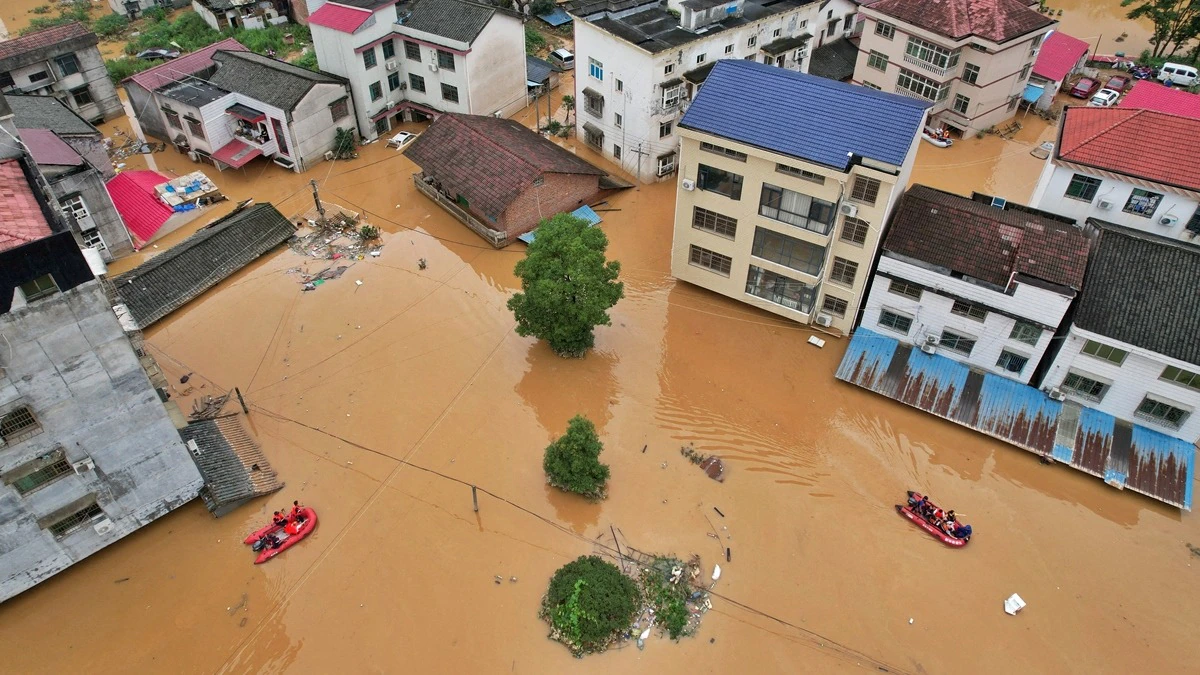
Typhoon Saudel China Flooding Triggers Building Collapse, Mass Evacuations in Fujian and Guangdong

Torrential Rain Swamps Vehicles and Streets Along the Southern Coast
China’s southern coastline is under renewed alert this week as Typhoon Saudel continues to dump heavy rain across Fujian and Guangdong provinces. Officials in both regions have warned residents to stay away from rivers, hillsides, and low-lying streets as floodwaters keep rising in several coastal cities and townships.
The storm has already caused serious damage on the ground. A three-storey brick building came down in one of the affected villages, vehicles were swept along flooded roads, and rescue teams have spent days pulling stranded residents from rising water. Local authorities say the situation remains fluid, with more downpours expected through the weekend.
Background: A Season Already Battered by Storms
Typhoon Saudel is the seventh typhoon to strike China so far in 2026, arriving just weeks after Typhoon Narra soaked Guangxi, Hainan, and Guangdong provinces in late August. The back-to-back storms have left soil saturated and rivers running close to their warning levels, sharply raising the risk of further flooding and landslides even from moderate rainfall.
Fujian’s coastal geography, with its many small rivers and hilly terrain, has historically made it vulnerable to typhoon-driven flash floods. Saudel made landfall along the Fujian coast for a third time after re-intensifying over the South China Sea, catching some communities off guard with how quickly it regained strength before moving inland.
Details: Flooding in Fuding, Jinxi, and Putian
In Fuding, a Fujian city known for its tea plantations, firefighters waded through waist-deep water on Friday to carry elderly residents to safety, according to footage verified by Reuters. In the nearby village of Jinxi, a tea-growing community surrounded by mountains, raging floodwater swept through homes and brought down a three-storey house.
Further south in Putian, where the Mulan River cuts through the city center, floodwaters spilled over major highways and damaged bridge infrastructure. State broadcaster CCTV reported that rescue crews were working to reach residents trapped by the rising water, and that some people remained unaccounted for as of Friday.
Local governments have responded by shutting schools, suspending public transport, and activating emergency flood protocols across multiple coastal districts. Hundreds of thousands of residents have already been relocated across Zhejiang and neighboring provinces since late August, including more than 83,000 people evacuated in Fujian alone as Saudel tracked inland.
Quotes: Officials Warn of Secondary Disasters
China’s Ministry of Natural Resources has cautioned that the combination of saturated ground and continued rainfall poses a high risk of landslides and mudslides in hilly areas. The ministry noted that several rivers have already crossed warning thresholds, adding pressure on local emergency services already stretched thin from earlier storms this season.
Provincial flood control offices in Fujian and Guangdong have echoed that warning, urging residents in mountainous and low-lying zones to follow evacuation orders without delay and avoid returning home until officials confirm it is safe.
Impact: Regional Disruption and Economic Strain
Beyond the immediate danger to life, the flooding has disrupted transport networks, closed schools, and damaged homes and farmland across a stretch of coastline that supports fishing, tourism, and tea cultivation. Coastal shipping and ferry services have also faced delays as ports adjust to rough seas and safety protocols.
The broader pattern of repeated typhoons this season is adding up. With Saudel following closely on the heels of Typhoon Narra, recovery efforts in some communities are being complicated by the fact that infrastructure has not yet been repaired from the previous storm before new flooding arrives.
Conclusion: What Comes Next
Forecasters expect Fujian and Guangdong to see further heavy rain into the coming days, keeping flood alerts active across the region. Authorities have signaled that evacuation orders could expand if rainfall intensifies or if river levels continue climbing past warning marks.
For now, rescue operations continue in the hardest-hit villages, and local governments are expected to issue updated damage assessments once the rain eases. Residents and businesses along the coast are being advised to monitor official alerts closely as the situation develops.
Frequently Asked Questions
How many died in the Nepal-China mudslide?
The mudslide disaster along the Nepal-China border, triggered by a mass of ice, mud, and rock collapsing into a Himalayan river in late August, has been one of the deadliest events in the region in recent years. Reports from the affected districts indicate the death toll has climbed toward the hundreds, with many victims still listed as missing and buried under thick layers of mud. Search and rescue teams from both Nepal and China have continued digging through debris in villages near the border, though the difficult mountain terrain and continued flooding alerts have slowed recovery efforts considerably.
What was the deadliest flood in China’s history?
The deadliest flood in China’s recorded history struck in 1931, when the Yangtze, Huai, and Yellow Rivers all overflowed within the same season after an unusual mix of heavy snowmelt and prolonged monsoon rain. Historians estimate that the disaster affected roughly a tenth of China’s population at the time, submerging an area comparable in size to England and Scotland combined. Death toll estimates vary widely because many victims died later from famine and disease rather than drowning, but most historical accounts place the total loss of life in the millions, making it one of the deadliest natural disasters ever recorded anywhere in the world.
Why does China have so many floods?
China’s flood risk comes down to a combination of geography and climate. Much of the country’s population and farmland sits along major river systems, including the Yangtze and Yellow Rivers, which are fed by seasonal monsoon rains and, in some years, by snowmelt from the Tibetan Plateau. The southern and southeastern coasts, including Fujian and Guangdong, also sit directly in the path of the western Pacific typhoon belt, meaning multiple tropical storms can strike the same region within a single season. Rapid urban development along low-lying coastal and river areas has further increased the number of people and amount of property exposed when heavy rainfall or storm surges occur, while aging drainage infrastructure in some cities struggles to keep pace with increasingly intense rainfall events linked to shifting weather patterns.